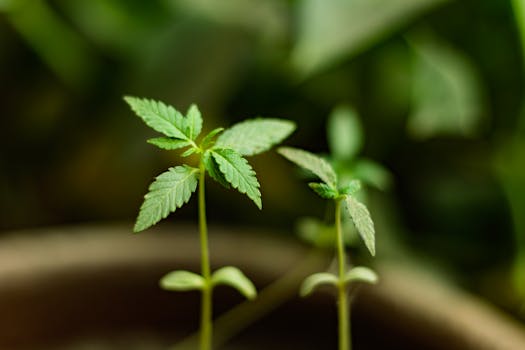
Early finishing cannabis seeds are the key to outdoor success in Canada. The race against autumn frost determines whether you harvest premium buds or lose your crop.
This guide covers the fastest genetics, compares autoflower and photoperiod options, and provides province-by-province frost date tables.
Table of Contents
What Are Early Finishing Cannabis Seeds
Early finishing seeds complete their flowering cycle in the shortest possible time. Standard strains need 9-12 weeks of bloom, but early finishers wrap up in 6-8 weeks.
Fast genetics come from several backgrounds.
- Indica-dominant landraces: Mountain genetics evolved to finish before winter.
- Fast version crosses: Breeders crossed photoperiods with autoflowers for speed.
- Selected phenotypes: Years of choosing the earliest-finishing plants each generation.
- Ruderalis hybrids: Ruderalis genetics naturally compress the flowering timeline.
The best early finishing seeds combine speed with quality, delivering potent buds in a compressed timeline.
Why Finishing Time Matters in Canada
Canada's latitude means outdoor cannabis does not flower until mid-August. This leaves only 6-10 weeks before first frost.
Slow-finishing strains create serious problems for outdoor growers.
- 10-week flowering strains: Not ready until late October, past frost in most provinces.
- Fall humidity: Dense buds in cool, damp conditions invite bud rot.
- 7-week flowering strains: Ready by early October, safely ahead of frost.
- Indoor starts: Combined with fast genetics, these make outdoor growing viable.
Early finishing seeds also mean harvesting in warmer, drier conditions for healthier flower.
Province-by-Province Frost Date Table
Knowing your local frost dates is essential when choosing early finishing seeds. This table shows approximate dates for major growing regions.
| Province / Region | Last Spring Frost | First Fall Frost | Frost-Free Days |
|---|---|---|---|
| British Columbia (Coast) | Mid-April | Late October | 180-200 |
| British Columbia (Interior) | Late May | Mid-September | 100-120 |
| Alberta (South) | Late May | Mid-September | 110-120 |
| Alberta (North) | Early June | Early September | 85-100 |
| Saskatchewan | Late May | Mid-September | 100-115 |
| Manitoba | Late May | Late September | 115-125 |
| Ontario (South) | Mid-May | Mid-October | 140-160 |
| Ontario (North) | Early June | Late September | 100-115 |
| Quebec (South) | Mid-May | Early October | 130-145 |
| Atlantic Provinces | Late May | Early October | 120-140 |
These are averages that can vary by 1-2 weeks. Microclimates near lakes or south-facing slopes may have longer windows.
Top Early Finishing Photoperiod Strains
Fast photoperiod strains offer larger yields than autoflowers while still beating frost. This table compares the best options.
| Strain | Flowering Time | Outdoor Harvest | Yield | THC |
|---|---|---|---|---|
| Northern Lights | 6-7 weeks | Late September | High | 16-21% |
| Early Skunk | 7-8 weeks | Early October | Very High | 15-19% |
| Critical Mass | 7-8 weeks | Early October | Very High | 19-22% |
| Frisian Dew | 7-8 weeks | Late September | High | 14-18% |
| Quick Critical+ | 6-7 weeks | Late September | High | 18-22% |
Look for "fast version," "early," or "quick" in feminized seed strain names for reduced flowering time.
Top Early Finishing Autoflower Strains
Autoflowering seeds are the fastest option for Canadian growers. They flower based on age and can be harvested by mid-summer.
These are the fastest autoflowers from seed to harvest.
- Quick One Auto: 8 weeks from seed, one of the fastest available.
- Northern Lights Auto: 9-10 weeks with excellent cold tolerance.
- Royal Dwarf: 8-9 weeks, compact size for discreet outdoor growing.
- Critical Auto: 9-10 weeks with high yields for its speed.
- White Widow Auto: 10-11 weeks, worth the extra time for potency.
- Blueberry Auto: 9-10 weeks with fruity flavour and solid yields.
Plant autoflowers in late May and harvest by August. Then start a second round for a September harvest, eliminating frost risk entirely.
Autoflower vs Fast Photoperiod Comparison
Your choice depends on priorities and experience. This table helps Canadian growers decide.
| Factor | Autoflower | Fast Photoperiod |
|---|---|---|
| Total time (seed to harvest) | 8-12 weeks | 16-20 weeks outdoors |
| Yield per plant | 30-150g | 150-500g+ |
| Plant size | 30-100cm | 100-250cm |
| Frost risk | Very Low | Low-Moderate |
| Trainability | Limited (LST only) | Full (top, FIM, SCROG) |
| Multiple harvests | Yes (2 per season) | No |
| Beginner friendly | Very | Moderate |
| Potency | Moderate-High | High-Very High |
Autoflowers are safer for beginners and the coldest provinces. Experienced growers in southern BC, Ontario, or Quebec should consider fast photoperiods.
Light Deprivation for Earlier Harvests
Light deprivation forces photoperiod plants to flower weeks earlier. You manually simulate shorter days by covering plants.
Here is how to use light deprivation outdoors in Canada.
Step 1: Build a Blackout Cover
Use opaque tarps that completely block all light. The cover must prevent any light from reaching the plants.
Step 2: Start Covering in July
Give plants 12 hours of darkness daily to trigger flowering. Consistency is critical for proper bud development.
Step 3: Maintain a Strict Schedule
Even minutes of light leak can disrupt flowering. Monitor for heat buildup under covers on warm days.
Light dep triggers flowering in early July for a mid-September harvest. Combined with early finishing genetics, it produces outstanding results.
How to Calculate Your Harvest Window
Planning your harvest window requires knowing when flowering starts and how long it lasts. The formula is straightforward.
Photoperiod Strains
Cannabis begins flowering around August 10-20 in Canada. Add the strain's stated flowering weeks to that trigger date.
Compare the result against your province's first frost date for a safety buffer.
Example: Flowering starts August 15 + 7 weeks = harvest around October 3. If first frost is October 10, you have a 1-week buffer.
Autoflower Strains
Add the breeder's seed-to-harvest time to your planting date. Include a 1-2 week buffer since outdoor conditions slow things slightly.
Ensure harvest falls before the first frost in your province.
Always build in at least a 1-week buffer. Weather is unpredictable in Canada.
Signs Your Cannabis Is Ready to Harvest
Knowing when to harvest early finishing cannabis is crucial. Too early loses potency, and too late risks frost damage.
Watch for these key harvest indicators.
- Trichome colour: Milky with 10-20% amber is the ideal harvest window.
- Pistil colour: 70-80% darkened and curled inward signals readiness.
- Bud density: Buds should feel firm when gently squeezed.
- Fan leaf yellowing: Natural yellowing means energy is moving to buds.
- Calyx swelling: Pod-like structures should be visibly swollen at maturity.
If frost threatens and plants are close, harvest anyway. Slightly early cannabis still has excellent quality.
Drying and Curing in Cool Fall Weather
Canadian growers harvesting in September and October face unique drying challenges. Cool temps and higher humidity require adjustments.
Follow these tips for fall drying conditions.
- Temperature: Aim for 18-21°C in a cool basement or spare room.
- Humidity: Keep between 55-65% using a dehumidifier if needed.
- Airflow: Use a fan pointed at the wall, not directly at the buds.
- Duration: A proper dry takes 7-14 days in cool conditions.
- Curing: Cure in airtight glass jars at 60-65% humidity, burping daily.
Cool Canadian fall temperatures actually preserve terpenes and cannabinoids. Managed properly, fall drying produces superior flower.
Frequently Asked Questions
What are early finishing cannabis seeds?+
What is the fastest finishing photoperiod cannabis strain?+
Are autoflowers faster than early finishing photoperiod strains?+
When is the first frost in Ontario for cannabis growing?+
Can I force flower outdoor cannabis to finish earlier?+
What happens if cannabis gets hit by frost before harvest?+
How do I know when my early finishing strain is ready to harvest?+
What early finishing strains work best in British Columbia?+
Should I start early finishing seeds indoors?+
Ready to beat the frost? Browse our fast-finishing cannabis seeds.
Royal King Seeds Editorial Team
Editorial Team
Our editorial team cites public breeder documentation, lab COAs (SC Labs and Steep Hill), Health Canada guidance, and aggregated grower journals. We do not fabricate first-party trial data.