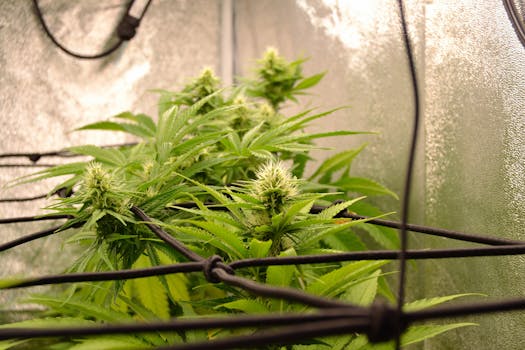
Home cannabis cultivation has been legal in Canada since 2018. This guide covers everything beginners need to grow quality cannabis at home.
With good genetics and basic plant care, anyone can harvest their own cannabis. Follow this step-by-step guide from seed selection to curing.
Table of Contents
What You Need to Grow Cannabis
Gather your essential supplies before planting. Your exact equipment depends on whether you grow indoors or outdoors.
Essential Supplies Checklist
Every cannabis grower needs these core items to get started.
- Cannabis seeds: Source from a reputable Canadian seed bank with a germination guarantee.
- Growing medium: Soil, coco coir, or hydroponics depending on your experience level.
- Containers: Fabric or plastic pots with drainage holes in 3-5 gallon sizes.
- Light source: LED grow lights for indoor grows or natural sunlight for outdoor.
- Nutrients: Cannabis-specific fertilizer in vegetative and bloom formulas.
- pH meter: Essential for monitoring water pH between 6.0 and 7.0 in soil.
The most important investment is quality cannabis seeds with strong genetics.
Startup Cost Comparison
Here is what indoor setups cost at two price points.
| Item | Budget Setup | Premium Setup |
|---|---|---|
| Grow Tent (2x2 or 3x3) | $60 - $100 | $150 - $300 |
| LED Grow Light | $80 - $150 | $300 - $600 |
| Soil & Pots | $20 - $40 | $50 - $100 |
| Nutrients | $25 - $50 | $60 - $120 |
| Fan & Carbon Filter | $50 - $80 | $100 - $200 |
| Seeds (4 pack) | $30 - $60 | $60 - $120 |
| Total Estimated Cost (CAD) | $265 - $480 | $720 - $1,440 |
Many growers start with a budget setup. You can always upgrade as your skills develop.
Choosing the Right Cannabis Seeds
Seed selection is the single most important decision. Your genetics determine growth pattern, flowering time, and yield.
Key Selection Factors
Weigh these factors when choosing seeds as a beginner.
- Strain type: Indica strains grow shorter and bushier, ideal for small spaces.
- Seed type: Feminized seeds guarantee female plants, and autoflowers are easier for beginners.
- Flowering time: Shorter flowering strains at 7-9 weeks are more forgiving.
- Climate suitability: For outdoor Canada grows, choose strains that finish before October frost.
Start with autoflowering seeds or easy-growing indica strains for the best first-grow experience.
Feminized vs Autoflowering Seeds
Each seed type has distinct advantages. Your setup and skill level determine the best choice.
This table compares the two main seed types side by side.
| Feature | Feminized (Photoperiod) | Autoflowering |
|---|---|---|
| Light Schedule | Requires 12/12 to flower | Flowers automatically |
| Total Grow Time | 14-20 weeks | 8-12 weeks |
| Plant Size | Medium to large | Compact |
| Yield Potential | Higher | Moderate |
| Difficulty | Intermediate | Beginner-friendly |
| Training Friendly | Yes — LST, topping, SCROG | Light LST only |
| Best For | Experienced growers, max yield | Beginners, fast harvests |
For your first grow, autoflowering seeds are the safest choice. They forgive mistakes and finish fast.
Once you gain confidence, feminized photoperiod seeds unlock bigger yields and more control.
Growing Mediums Explained
The growing medium is where your plant's roots live. Each type affects watering, nutrient delivery, and overall plant health.
Here are the three most common options for cannabis.
- Soil: Most forgiving for beginners because it buffers pH and nutrients naturally.
- Coco coir: Faster growth than soil but requires more frequent watering and precise nutrients.
- Hydroponics: Fastest results but demands the most knowledge and equipment.
Soil: Recommended for Beginners
Use a high-quality potting mix with perlite for drainage. Avoid miracle-grow type soils with time-release nutrients.
Soil acts as a natural buffer that protects your plant from minor feeding mistakes.
Coco Coir: The Step-Up Option
Coco is pH neutral and provides excellent root aeration. It works best for growers ready to manage precise feeding schedules.
Hydroponics: Advanced Growers Only
Hydro produces the largest yields and fastest growth. The steep learning curve makes it unsuitable for first-timers.
Start with soil and graduate to coco or hydro as your skills improve.
Indoor vs Outdoor Growing in Canada
Canada's climate presents unique challenges for growers. Your choice depends on province, budget, and desired control.
Indoor Growing
Indoor cultivation gives complete environmental control year-round.
- Year-round growing: Grow in any province regardless of winter conditions.
- Full control: Manage temperature, humidity, light, and airflow precisely.
- Privacy: Carbon filters eliminate odor for discreet cultivation.
- Consistent results: Higher electricity costs but predictable harvests every time.
Outdoor Growing
Outdoor growing uses free sunlight and is the lowest-cost option.
- Free sunlight: Reduces costs significantly compared to indoor LEDs.
- Larger plants: Cannabis grows much bigger with unlimited root space.
- Seasonal limits: Restricted to summer months in most Canadian provinces.
- Less control: Pests, weather, and privacy are harder to manage.
Most Canadian beginners start indoors for year-round capability and better control.
Light Cycles and Why They Matter
Light drives cannabis growth. Understanding light cycles is critical for indoor photoperiod growers.
Light Schedules by Stage
Cannabis requires different light schedules at each growth stage.
- Vegetative (18/6): Eighteen hours light and six hours dark encourages leaf and stem growth.
- Flowering (12/12): Twelve hours of uninterrupted darkness triggers bud production.
- Autoflower (18/6 or 20/4): No light change needed from seed to harvest.
- Dark period rules: Light leaks during flowering cause stress and hermaphrodite development.
Tip: Use a timer to automate your light schedule. Manual switching leads to inconsistent cycles and stressed plants.
Autoflowering seeds eliminate the need for light changes entirely. This is why they are recommended for beginners.
Cannabis Nutrients for Beginners
Cannabis needs three primary nutrients: Nitrogen (N), Phosphorus (P), and Potassium (K). The ratio changes by growth stage.
Nutrient Needs by Growth Stage
Feed the right ratio at each stage to prevent deficiencies.
- Vegetative stage: Higher nitrogen supports leaf and stem growth at a 3-1-2 ratio at half strength.
- Flowering stage: Switch to bloom fertilizer with more P and K, like a 1-3-2 ratio.
- pH management: Nutrients lock out at incorrect pH, so aim for 6.0-6.5 in soil.
- Deficiency signs: Yellowing, burned tips, and spotting indicate nutrient issues.
- Pre-harvest flush: Run plain water for 1-2 weeks before harvest for cleaner buds.
Start with half-strength nutrients and increase gradually. Overfeeding causes more problems than underfeeding.
Watering Your Cannabis Plants
Overwatering is the number one beginner mistake. Cannabis roots need oxygen, and constantly wet soil suffocates them.
Watering Best Practices
Use these guidelines for a healthy watering routine.
- Lift test: Water when the pot feels light and the top 2-3 cm of soil is dry.
- Runoff target: Water until 10-20% runs out the bottom for even saturation.
- No standing water: Never let pots sit in pooled water or root rot develops.
- Water temperature: Use room temperature water around 20-22°C.
- pH your water: Adjust to 6.0-6.5 for soil before every watering.
A consistent wet-dry cycle encourages roots to spread. This builds a stronger system for bigger yields.
The Vegetative Stage
The vegetative stage builds your plant's structure. It lasts 3-8 weeks and determines final plant size.
Ideal Conditions
Maintain these conditions during vegetative growth.
- Light schedule: Keep lights on 18/6 throughout the entire vegetative period.
- Temperature: Maintain 22-28°C for optimal growth rates.
- Humidity: Keep at 50-70% relative humidity.
- Nutrients: Feed with nitrogen-rich fertilizer at gradually increasing strength.
- Training: Use LST (low-stress training) for even light distribution.
Autoflowers have a fixed 3-4 week veg period. Photoperiod plants stay in veg as long as you maintain the 18/6 schedule.
The Flowering Stage
Flowering is when your plant produces buds. Photoperiod plants start when you switch to 12/12, and autoflowers begin automatically.
Flowering Best Practices
Follow these practices throughout the flowering period.
- Bloom nutrients: Switch to higher phosphorus and potassium formulas.
- Humidity control: Reduce to 40-50% to prevent bud rot.
- Temperature: Maintain 20-26°C for optimal trichome production.
- Stop training: Do not top or heavily bend once flowering begins.
- Branch support: Stake heavy branches to prevent snapping under bud weight.
Flowering lasts 8-11 weeks. Indica strains finish in 7-9 weeks, while sativas can take 10-14 weeks.
When and How to Harvest Cannabis
Harvest timing is critical for potency and flavor. Too early loses potency, and too late degrades THC into sedative CBN.
Signs Your Cannabis Is Ready
Check these indicators for the optimal harvest window.
- Trichomes: Milky white trichomes indicate peak THC, and amber adds a relaxing effect.
- Pistils: 60-80% of pistils should have darkened and curled inward.
- Swollen calyxes: Buds appear dense and rounded when fully mature.
- Breeder timeline: Use the strain's recommended flowering time as a baseline.
How to Harvest
Follow these steps for a clean, efficient harvest.
- Cut branches individually or chop the whole plant at the base.
- Remove large fan leaves immediately (wet trim).
- Hang branches upside down in a dark room with good airflow.
- Maintain 18-22°C and 45-55% humidity during drying.
Proper technique preserves trichomes and terpenes for the best final product.
Drying and Curing Your Harvest
Drying and curing make or break your cannabis quality. Rushing produces harsh, grassy-tasting buds.
Drying (7-14 Days)
Proper drying preserves cannabinoids while removing excess moisture.
- Setup: Hang branches in a dark room with gentle airflow at 18-22°C.
- Humidity: Maintain 45-55% relative humidity throughout drying.
- Ready test: Buds are ready when small stems snap instead of bending.
- Timeline: Expect 7-14 days depending on bud density and conditions.
Curing (2-8 Weeks)
Curing develops smooth flavor and full terpene expression.
- Jar storage: Place dried buds in glass mason jars filled about 75% full.
- Burping schedule: Open jars 2-3 times daily in week one, then once daily after.
- Target humidity: Maintain 58-62% inside jars using humidity packs if needed.
- Mold check: Inspect for mold during week one, as it means buds were not dry enough.
Properly cured cannabis stores for months without quality loss. Four to eight weeks produces the best results.
Frequently Asked Questions
Is it legal to grow cannabis in Canada?+
Yes. Under the Cannabis Act 2018, Canadian adults can grow up to 4 cannabis plants per household for personal use in most provinces. Quebec and Manitoba currently restrict home growing. Always check your provincial and municipal regulations before starting.
How long does it take to grow cannabis from seed?+
Autoflowering strains take 8-12 weeks from seed to harvest. Photoperiod strains typically take 14-20 weeks depending on the vegetative period and flowering time you choose.
What is the easiest cannabis strain for beginners?+
Autoflowering strains are the easiest for beginners because they flower automatically without light schedule changes and finish faster. Indica-dominant autoflowers are especially forgiving of minor mistakes.
Do I need expensive equipment to grow cannabis?+
No. A basic indoor setup with a grow tent, LED light, soil, pots, and nutrients can cost $200-400 CAD. Outdoor growing requires even less investment. Start simple and upgrade as you learn.
Should beginners grow indoor or outdoor cannabis?+
Indoor growing gives more control over environment and is recommended for beginners in Canada. You can grow year-round regardless of the harsh Canadian winters, and control light, temperature, and humidity precisely.
How much cannabis can one plant produce?+
Indoor plants typically yield 30-150 grams each depending on light, training, and genetics. Outdoor plants can produce 100-500 grams or more with full sunlight and a long growing season.
What nutrients do cannabis plants need?+
Cannabis needs nitrogen (N), phosphorus (P), and potassium (K) as primary nutrients. During vegetative growth, plants need more nitrogen. During flowering, they need more phosphorus and potassium. Always start at half the recommended dose.
When should I harvest my cannabis plant?+
Harvest when 60-70% of trichomes appear milky white under magnification and most pistils have darkened. This usually occurs 8-11 weeks into flowering for most strains. Use a jeweler's loupe or digital microscope to check trichomes.
Can I grow cannabis in a small apartment?+
Yes. A 2x2 foot grow tent fits in a closet and can grow 1-2 plants comfortably. Autoflowering strains stay compact and are ideal for small space growing. A carbon filter will manage odor in apartment settings.
What is the best time to start growing cannabis outdoors in Canada?+
Start seeds indoors in late April and transplant outdoors after the last frost, typically late May to early June in most Canadian provinces. Autoflowering seeds can be planted outdoors from June through mid-July for a fall harvest.
Ready to Start Your First Cannabis Grow?
Choose the right seeds and start growing. All orders ship discreetly across Canada with a germination guarantee.
Royal King Seeds Editorial Team
Editorial Team
Our editorial team cites public breeder documentation, lab COAs (SC Labs and Steep Hill), Health Canada guidance, and aggregated grower journals. We do not fabricate first-party trial data.