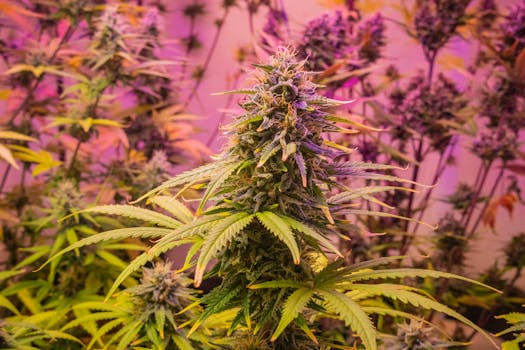
Your growing medium is the foundation of every successful cannabis grow. It determines how plants access water, nutrients, and oxygen.
This guide compares soil, coco coir, and hydroponics for both autoflower and feminized seed grows.
Table of Contents
Soil vs Coco Coir vs Hydroponics Comparison
Each medium has clear strengths and trade-offs. This side-by-side comparison covers the key differences.
| Factor | Soil | Coco Coir | Hydroponics |
|---|---|---|---|
| Difficulty | Beginner | Intermediate | Advanced |
| Growth speed | Moderate | Fast | Very Fast |
| Yield potential | Good | High | Very High |
| Flavour / terpenes | Excellent (organic) | Very Good | Good |
| pH range | 6.0-7.0 | 5.5-6.5 | 5.5-6.5 |
| Watering frequency | Every 2-4 days | Daily or more | Continuous |
| Nutrient control | Low (buffered) | High | Very High |
| Setup cost | Low | Low-Moderate | Moderate-High |
| Error tolerance | Very Forgiving | Moderate | Low |
| Best for | Beginners, organic | Balanced performance | Max yield, experienced |
Soil is most forgiving and produces flavourful organic flower. Coco offers faster growth. Hydroponics pushes yield to the maximum.
Growing Cannabis in Soil
Soil is the most popular medium and the best choice for beginners. It provides a natural buffer for nutrient fluctuations.
What to Look For
- Light and airy texture: Cannabis roots need oxygen, so avoid heavy soil.
- Good drainage: Water should flow through in seconds with no pooling.
- Balanced pH: Pre-made cannabis soil should be in the 6.0-7.0 range.
- Appropriate nutrients: Mild for seedlings, richer for mature plants.
DIY Super Soil Recipe
Build a simple mix that feeds plants from seed to harvest.
- Base mix: 1/3 peat moss or coco peat for structure.
- Nutrition: 1/3 compost or worm castings for organic nutrients.
- Drainage: 1/3 perlite or pumice for aeration and drainage.
- Amendments: Dolomite lime, bone meal, kelp meal, and mycorrhizae.
Simply water with plain, pH-adjusted water and let the soil biology do the work.
Growing Cannabis in Coco Coir
Coco coir is made from coconut husks and provides an inert, pH-neutral medium. Many growers consider it the best balance of ease and performance.
Coco Coir Advantages
- Faster growth: Plants grow 10-20% faster due to better root oxygenation.
- Excellent drainage: Nearly impossible to overwater in coco coir.
- Reusable: Rinse, buffer, and reuse for multiple growing cycles.
- Pest resistant: Fewer soil-dwelling pests than traditional soil mixes.
Coco Coir Requirements
- Nutrients every watering: Coco contains zero nutrition on its own.
- Cal-Mag supplement essential: Coco naturally binds calcium and magnesium.
- Buffer before use: Rinse and buffer new coco with Cal-Mag first.
- More frequent watering: Daily watering is typical, sometimes twice daily.
For Canadian growers stepping up from soil, coco is the ideal next step with noticeable speed improvements.
Growing Cannabis in Hydroponics
Hydroponic growing eliminates the medium almost entirely. Roots are bathed by nutrient-rich water for the fastest possible growth.
These are the most common hydroponic systems for cannabis.
- Deep Water Culture (DWC): Roots sit in aerated nutrient solution continuously.
- Ebb and Flow: Containers are periodically flooded then drained on a timer.
- Drip systems: Nutrient solution drips onto the root zone at set intervals.
- NFT (Nutrient Film): A thin film of solution flows over exposed roots.
- Aeroponics: Roots hang in air and are misted for maximum oxygen.
Hydroponics produces the highest yields but requires careful pH, EC, and temperature monitoring. Start with a simple DWC bucket.
Understanding Cannabis Nutrients (NPK)
Cannabis requires three primary macronutrients known as NPK. Every nutrient product lists its ratio on the label.
Here is what each macronutrient does for your plants.
- Nitrogen (N): Drives vegetative growth and chlorophyll production.
- Phosphorus (P): Critical for root development and bud formation.
- Potassium (K): Supports water regulation and trichome production.
- Calcium: Builds cell walls and enables nutrient transport.
- Magnesium: Central component of chlorophyll for photosynthesis.
Match the NPK ratio to what plants need at each lifecycle stage for best results.
Nutrient Schedules by Growth Stage
Cannabis nutrient needs change dramatically through the lifecycle. This general schedule applies to any medium.
| Growth Stage | Duration | N-P-K Ratio | EC / PPM Range | Key Notes |
|---|---|---|---|---|
| Seedling | 1-2 weeks | None or very mild | 0.2-0.4 / 100-200 | Water only or 1/4 strength |
| Early Veg | 2-3 weeks | High N (3-1-2) | 0.4-0.8 / 200-400 | Half strength nutrients |
| Late Veg | 2-4 weeks | High N (3-1-2) | 0.8-1.4 / 400-700 | Full strength, increase with size |
| Transition | 1-2 weeks | Balanced (1-1-1) | 0.8-1.2 / 400-600 | Shift from veg to bloom |
| Early Flower | 2-3 weeks | High P-K (1-3-2) | 1.0-1.6 / 500-800 | Bloom nutrients, add PK booster |
| Peak Flower | 2-3 weeks | High P-K (0-3-3) | 1.2-1.8 / 600-900 | Maximum bud development |
| Late Flower | 1-2 weeks | Reduced all | 0.6-1.0 / 300-500 | Begin reducing nutrients |
| Flush | 1-2 weeks | None | 0 / 0 | Plain water only |
Always start low and increase based on plant response. Burnt leaf tips mean too high; yellowing lower leaves suggest more nitrogen.
pH Management for Cannabis
Proper pH is the single most important factor in cannabis nutrition. Wrong pH causes nutrient lockout even when nutrients are abundant.
These are the optimal pH ranges by medium.
- Soil: 6.0-7.0 with an ideal range of 6.3-6.5.
- Coco Coir: 5.5-6.5 with an ideal range of 5.8-6.2.
- Hydroponics: 5.5-6.5 with an ideal range of 5.8-6.0.
- Essential tools: Digital pH meter, pH Up/Down solutions, and calibration buffer.
Test pH after mixing nutrients but before feeding. Also test runoff periodically.
Canadian Tip: Many Canadian cities have alkaline tap water (pH 7.5-8.5). Always test and adjust your water pH before mixing nutrients.
Organic vs Synthetic Nutrients
Both types produce excellent cannabis. The choice depends on your medium and growing goals.
Organic Nutrients
- Source: Compost, guano, bone meal, kelp, and fish emulsion.
- Flavour benefit: Produces smoother flower with complex terpene profiles.
- Slow release: Nutrients release gradually, reducing burn risk.
- Best for: Soil-based cannabis growing environments.
Synthetic Nutrients
- Source: Manufactured from mineral salts, immediately plant-available.
- Precision: Exact control over NPK ratios and micronutrients.
- Required for hydro: Organic nutrients clog pumps and lines.
- Flushing needed: Thorough flushing before harvest improves smoothness.
Many experienced growers use a hybrid approach: organic base amendments with synthetic supplements during peak flower.
Common Nutrient Deficiencies and Fixes
Recognizing deficiencies early prevents serious damage. Most symptoms are actually caused by incorrect pH.
This table covers the most common issues and solutions.
| Deficiency | Symptoms | Common Cause | Fix |
|---|---|---|---|
| Nitrogen (N) | Yellow lower leaves, slow growth | Underfeeding, low pH | Increase N, check pH |
| Phosphorus (P) | Dark/purple leaves, stunted | Cold temps, high pH | Warm roots, lower pH, add P |
| Potassium (K) | Brown leaf edges, weak stems | Underfeeding in flower | Increase K in bloom feed |
| Calcium (Ca) | Brown spots, curling new growth | Low pH, soft water, coco | Add Cal-Mag, check pH |
| Magnesium (Mg) | Yellowing between veins | Low pH, excess potassium | Add Cal-Mag or Epsom salts |
| Iron (Fe) | Yellow new growth, green veins | High pH (above 7.0) | Lower pH to 6.0-6.5 |
Always check and correct pH before adding more nutrients. Overfeeding during lockout only makes things worse.
Water Quality for Canadian Growers
Water quality varies across Canada and directly impacts your nutrient program. Understanding your source is often overlooked.
Here is how different water sources affect cannabis.
- Municipal tap water: Most cities use chlorine or chloramine. Let sit 24 hours or filter.
- Well water: Common in rural Canada, often high in minerals. Get a water test.
- Reverse osmosis (RO): The gold standard for precise nutrient mixing.
- Rainwater: Generally soft and slightly acidic, excellent when collected properly.
Test your water EC/PPM to understand mineral content. Soft water under 100 PPM is ideal.
Best Growing Medium for Beginners
If you are new to cannabis growing, start with soil. Use a pre-made organic mix or a simple super soil recipe.
Here is why soil is the best starting medium.
- Forgiving of mistakes: Soil buffers pH fluctuations that would devastate hydro.
- Simple watering: Water when the top inch is dry, no daily pH testing needed.
- Low startup cost: A bag of soil and pots is all you need to begin.
- Natural pest resistance: Healthy soil biology competes with harmful organisms.
- Great results: Organic soil produces excellent flavour without complexity.
Once you have a few successful soil crops, experiment with coco or hydro. For your first grow with autoflower or feminized seeds, keep it simple.
Frequently Asked Questions
What is the best growing medium for cannabis?+
Can I use garden soil for growing cannabis?+
What pH should cannabis soil be?+
How often should I feed cannabis nutrients?+
Is organic or synthetic nutrients better for cannabis?+
What is super soil for cannabis?+
Can I grow cannabis in coco coir outdoors in Canada?+
What nutrients does cannabis need during flowering?+
How do I fix nutrient lockout in cannabis?+
Ready to grow? Browse our premium cannabis seeds for Canadian growers.
Royal King Seeds Editorial Team
Editorial Team
Our editorial team cites public breeder documentation, lab COAs (SC Labs and Steep Hill), Health Canada guidance, and aggregated grower journals. We do not fabricate first-party trial data.