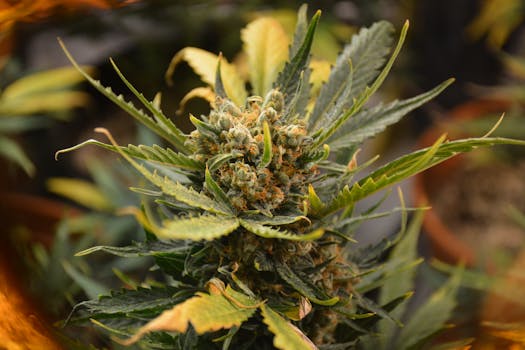
Autoflowering cannabis seeds are the fastest way to grow quality bud in Canada. They bloom based on age rather than light changes.
This guide covers every stage from seed to harvest. You will learn about lifecycle, light schedules, nutrients, training, and timing.
Table of Contents
What Are Autoflowering Cannabis Seeds
Autoflowering seeds produce plants that bloom automatically after three to four weeks. This trait comes from Cannabis ruderalis, a subspecies native to harsh northern climates.
Modern autoflowers rival photoperiod strains in potency. Today's autoflowering seeds regularly produce THC above 20%.
Defining Traits
Here are the key characteristics of autoflowering cannabis.
- No light schedule change: They flower regardless of how many dark hours they receive.
- Compact size: Most plants stay between 60 and 120 cm tall.
- Fast lifecycle: Seed to harvest takes just 8 to 12 weeks.
- Hardy genetics: Ruderalis heritage provides cold and stress resilience.
- Multiple harvests: Canadian outdoor growers can run two or three cycles per season.
These traits make autoflowers the top choice for beginners and small-space growers.
The Autoflower Lifecycle Explained
Autoflowers operate on a fixed timeline you cannot extend. Unlike photoperiod strains, you do not control veg length.
Understanding each stage helps you act at the right time. Every day matters with these plants.
This table breaks down each growth stage and its focus areas.
| Stage | Timeline | Key Focus |
|---|---|---|
| Germination | Days 1-3 | Moisture, warmth, darkness |
| Seedling | Days 3-14 | Gentle light, minimal nutrients |
| Vegetative | Weeks 2-5 | Strong light, nitrogen-rich feed, training |
| Pre-flower | Weeks 4-5 | Transition nutrients, stop training |
| Flowering | Weeks 5-9 | Bloom nutrients, phosphorus/potassium |
| Late Flower / Ripening | Weeks 9-11 | Flush, check trichomes, prepare harvest |
The vegetative stage is your most important window. Once flowering begins, vertical growth slows dramatically.
Best Light Schedule for Autoflowers
Autoflowers do not depend on light changes to flower. This gives you flexibility in choosing your schedule.
Popular Indoor Options
Three light schedules work well for autoflowers.
- 18/6 schedule: The most common choice, balancing growth with energy savings.
- 20/4 schedule: More light for faster growth with some rest time.
- 24/0 schedule: Maximum photosynthesis but higher electricity and heat costs.
Schedule Comparison
Use this table to pick the right schedule for your setup.
| Schedule | Pros | Cons | Best For |
|---|---|---|---|
| 18/6 | Energy efficient, plant rests | Slightly less light | Most growers |
| 20/4 | More light, good growth | Higher electricity | Maximizing yield |
| 24/0 | Maximum light exposure | No rest, high cost, heat | Cold environments |
Outdoors in Canada, autoflowers thrive on long summer days from May through September.
Choosing the Right Soil and Containers
Autoflowers need light, airy growing media for strong root growth. Heavy soil restricts roots and stunts plants before flowering.
The right container matters just as much as the soil. Plant directly in the final pot to avoid transplant shock.
Ideal Soil Mix
Build your autoflower soil from these key components.
- Base soil: A light potting mix or coco coir provides the foundation.
- Perlite: Add 20 to 30 percent for drainage and aeration.
- Worm castings: A small amount provides gentle, slow-release nutrition.
- pH range: Target 6.0 to 6.5 for soil or 5.5 to 6.5 for coco.
Avoid “hot” soils loaded with fertilizers. Many Canadian growers use ProMix HP with extra perlite.
Container Selection
These container choices work best for autoflowers.
- Fabric pots: Air-prune roots and prevent root binding.
- Size range: 11 to 19 litre pots balance root space and yield.
- No transplanting: Always start seeds in their final container.
- Drainage: Ensure pots drain freely to prevent waterlogging.
Fabric pots in the 15-litre range are the sweet spot for most autoflower growers.
Autoflower Nutrient Guide
Autoflowers are smaller than photoperiod plants and need fewer nutrients. Overfeeding is one of the most common mistakes new growers make.
Start light and increase gradually. Use half the dose recommended on the bottle.
Stage-by-Stage Feeding Plan
Follow this schedule for best results.
- Seedling (weeks 1-2): No nutrients needed in quality soil, just plain water.
- Early veg (weeks 2-4): Start at 25% strength, then increase to 50%.
- Late veg (weeks 4-5): Feed at 50 to 75% and begin transitioning to bloom nutrients.
- Flowering (weeks 5-8): Use 50 to 75% bloom nutrients with higher phosphorus and potassium.
- Late flower (weeks 8-10): Reduce nutrients and flush with plain water for the final 7 to 10 days.
Pro Tip: If you see burnt leaf tips, reduce feed strength by 25% immediately. Autoflowers are sensitive and recover slowly from overfeeding.
CalMag supplementation is often needed in coco coir or filtered water. Most Canadian tap water works fine for soil grows.
Watering Autoflowering Cannabis
Proper watering is critical for autoflowers. Overwatering is the number one killer of young cannabis plants.
Autoflowers have limited recovery time, so watering mistakes are costly.
Proven Watering Practices
Use these methods to water correctly.
- Lift test: Water when the pot feels light; if still heavy, wait another day.
- Finger test: Only water when the top 2 to 3 cm of soil feels dry.
- Water volume: Water until you see 10 to 20% runoff from the bottom.
- Water temperature: Use room temperature water at 20 to 23°C.
- pH adjustment: Always pH your water to 6.0 to 6.5 for soil.
During the seedling stage, water in a small circle around the plant. Never let pots sit in standing water.
Training Techniques for Autoflowers
Training autoflowers requires a careful approach. These plants have a fixed lifecycle and limited recovery time.
Stick to gentle methods unless you have experience. High-stress techniques can stunt growth if timed poorly.
Low Stress Training (LST) -- Recommended
LST is the safest way to boost autoflower yields.
- Method: Gently bend and tie branches to create a flat, even canopy.
- Timing: Start when the plant has 4 to 5 nodes and continue into early flowering.
- Benefit: Exposes more bud sites to light without causing damage.
- Risk level: Very low when done gently with soft ties.
Topping -- Use With Caution
Topping can increase yields but carries real risk with autoflowers.
- Method: Cut the main stem tip to create two main colas.
- Timing: Top early at the 3rd or 4th node during vigorous growth.
- Risk level: Moderate, as stunted recovery reduces final yields.
- Recommendation: Many experienced growers skip topping autoflowers entirely.
Defoliation -- Light Only
Only remove leaves blocking light to lower bud sites. Never strip more than 20% of leaves at once.
Important: Stop all training once flowering begins. The plant needs all its energy for bud production after the stretch period.
Growing Autoflowers Outdoors in Canada
Autoflowers are ideally suited for Canadian outdoor growing. They finish before cold weather arrives without depending on shortening days.
This makes them far more reliable than photoperiod strains in northern climates.
Canadian Outdoor Timeline
Plan your grow around this seasonal schedule.
- May (after last frost): Start seeds indoors or plant outside once nights stay above 10°C.
- June-July: Main vegetative and early flowering growth under long summer days.
- August-September: Harvest most autoflower strains before fall arrives.
- Multiple runs: In southern Ontario and BC, start a second round in June.
Choose fast-finishing strains for northern provinces. Many autoflowering seeds from Royal King Seeds are selected for Canadian climates.
Growing Autoflowers Indoors
Indoor growing gives you complete environmental control. Autoflowers stay compact and fit easily in small tents or closets.
A 60x60 cm tent holds one or two plants. A 120x120 cm tent fits four autoflowers comfortably.
Indoor Setup Essentials
Set up your indoor grow with these key components.
- Lighting: Use 100 to 150W LED for one or two plants, or 200 to 400W for a full tent.
- Ventilation: An inline fan with carbon filter controls odour and air exchange.
- Temperature: Maintain 22 to 28°C during lights on and 18 to 22°C during lights off.
- Humidity: Keep 60 to 70% during seedling and veg, then 40 to 50% during flowering.
Perpetual Harvests
Autoflowers skip the 12/12 light flip. You can have plants at different stages in the same tent for continuous harvests.
Pair autoflowers with feminized seeds to guarantee all-female plants and avoid wasting space.
Common Autoflower Growing Mistakes
Autoflowers have a fixed lifecycle, so mistakes cost more than with photoperiod strains. You cannot correct errors by extending veg time.
Avoiding these pitfalls will significantly improve your yields.
Top Mistakes to Avoid
Watch out for these common problems.
- Overwatering: Let the soil dry between waterings, especially early on.
- Overfeeding: Use half-strength nutrients for smaller autoflower plants.
- Transplanting: Always start in the final pot to avoid losing irreplaceable growing days.
- Excessive training: Heavy topping or defoliation during flowering reduces yields.
- Wrong pot size: Too small limits yield and too large causes overwatering.
- Late outdoor planting: Planting after August risks cold weather before harvest.
pH Matters
Ignoring pH is a silent yield killer. Check and adjust every watering, even with great soil and nutrients.
Harvesting and Curing Autoflowers
Harvest timing determines potency and effects. Too early reduces yield, and too late degrades THC into CBN.
Learning to read trichomes is the most reliable way to time your harvest.
Signs Your Autoflower Is Ready
Watch for these indicators that harvest time has arrived.
- Trichomes: Harvest when mostly milky with some amber under a loupe.
- Pistils: 70 to 80% of pistils should have darkened and curled inward.
- Fan leaves: Natural yellowing indicates the plant is finishing.
- Breeder timeline: Compare against the strain's expected harvest window.
Drying and Curing Steps
Follow these steps for the best flavour and smoothness.
- Trim: Remove large fan leaves and trim sugar leaves from each bud.
- Dry: Hang branches in a dark room at 18 to 21°C with 55 to 65% humidity for 7 to 14 days.
- Cure: Place dried buds in glass jars and burp daily for the first two weeks.
- Wait: Cure for at least two to four weeks for the best results.
Patience during curing is what separates average bud from exceptional flower.
Autoflower Yield Expectations
Autoflower yields vary based on genetics, light, and experience. Modern autoflowers produce impressive harvests when grown properly.
Your skill level is the biggest factor. Good technique can double your yields.
This table shows typical yields by experience level.
| Growing Skill | Indoor Yield (per plant) | Outdoor Yield (per plant) |
|---|---|---|
| Beginner | 30-80 g | 40-100 g |
| Intermediate | 80-150 g | 100-200 g |
| Advanced | 150-250 g | 200-350 g |
Key Yield Factors
These factors have the biggest impact on your final harvest.
- Strong light: Quality LED lighting is the single biggest yield factor indoors.
- Proper nutrients: Feed at the right strength for each growth stage.
- LST training: Creates an even canopy that exposes more bud sites.
- Stress avoidance: Keep conditions stable and avoid overwatering or overfeeding.
Growing high-THC seeds in autoflower form lets you achieve potency and speed in one cycle.
Frequently Asked Questions
How long do autoflowers take from seed to harvest?+
What is the best light schedule for autoflowers?+
Do autoflowers need nutrients?+
Can you top autoflowering plants?+
What size pots should I use for autoflowers?+
Can autoflowers grow outdoors in Canada?+
Should I transplant autoflowers?+
How much do autoflowers yield?+
Do autoflowers need darkness?+
What is the best soil for autoflowers?+
Start Your Autoflower Grow Today
Browse our curated selection of autoflowering cannabis seeds, carefully chosen for Canadian growers. Fast shipping, germination guarantee, and discreet packaging across Canada.
Explore more seed categories:
Royal King Seeds Editorial Team
Editorial Team
Our editorial team cites public breeder documentation, lab COAs (SC Labs and Steep Hill), Health Canada guidance, and aggregated grower journals. We do not fabricate first-party trial data.