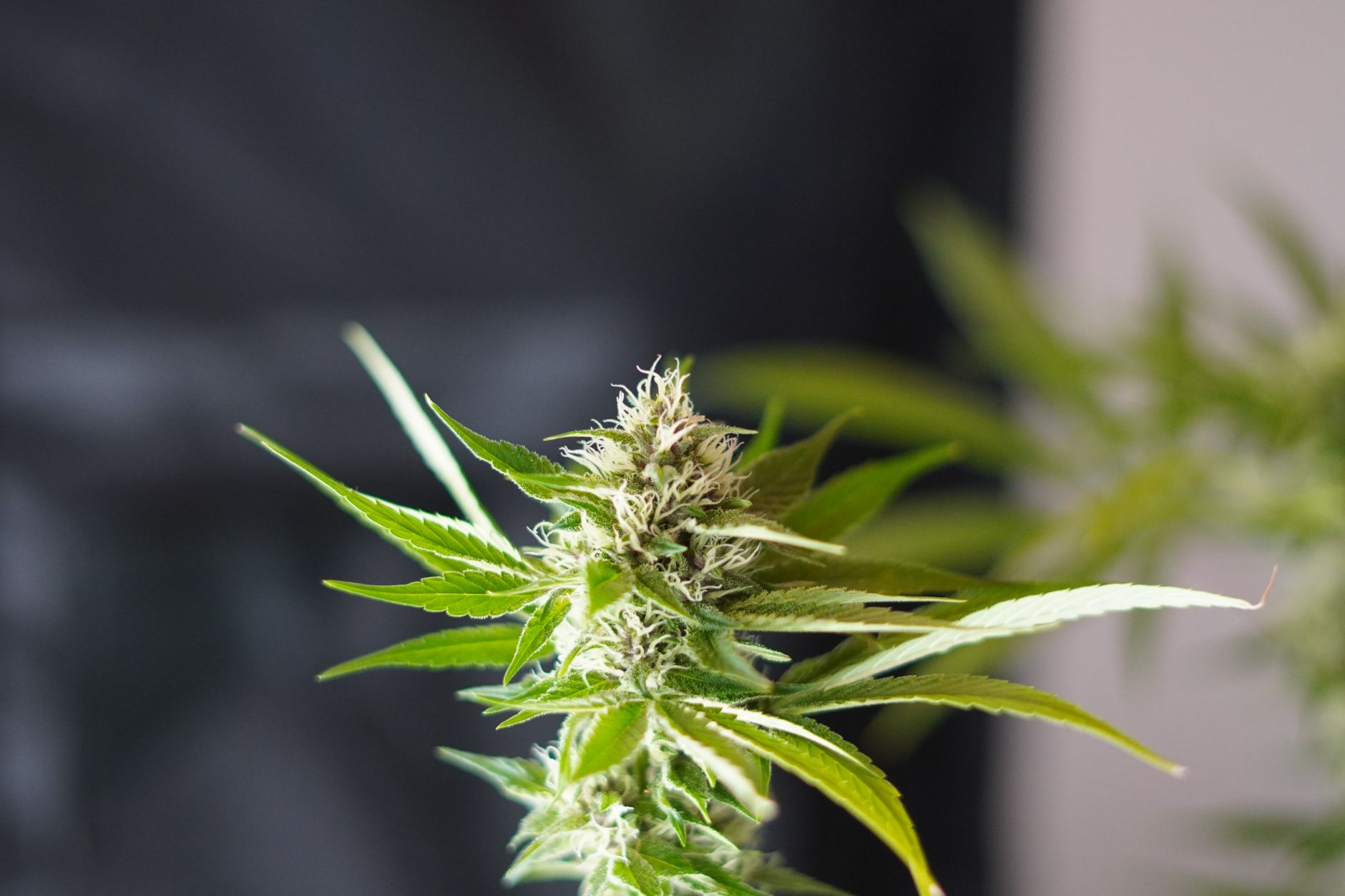
Cannabis foxtailing is a bud pattern where new calyxes grow in towers instead of dense buds. It is not always a problem.
This guide explains both types, their causes, and prevention strategies. Canadian growers running powerful LED grow lights will find this especially valuable.
Table of Contents
What Is Cannabis Foxtailing
Foxtailing occurs when new calyxes stack in elongated patterns. The growth resembles fingers or a fox's tail.
Here is how foxtailing affects buds.
- Location: Can appear on just the top colas or the entire plant.
- Pattern: Calyxes stack upward from specific points, not uniformly.
- Cause matters: Either genetic (harmless) or stress-induced (problematic).
- Not a disease: It is a growth pattern, not an infection.
Understanding the cause determines whether action is needed.
Genetic Foxtailing vs Stress Foxtailing
This distinction is the most important concept in this guide. One type is harmless; the other signals a problem.
| Feature | Genetic Foxtailing | Stress Foxtailing |
|---|---|---|
| Distribution | Even across entire plant | Only near the light source |
| Appearance | Uniform, consistent towers | Irregular, pale new growth |
| Colour | Matches rest of bud | Often lighter or bleached |
| Trichome development | Normal, frosty | Often sparse or underdeveloped |
| Cause | Strain genetics (sativa/Haze) | Heat, light intensity |
| Potency impact | None | Slight reduction possible |
| Action needed | None | Address the stress source |
Genetic foxtailing is how certain sativa varieties grow. Stress foxtailing means conditions exceed the plant's limits.
Heat Stress and Foxtailing
Heat stress is a primary cause of stress-induced foxtailing. Temps above 28-30°C disrupt normal bud development.
Watch for these signs of heat-stress foxtailing.
- Top-only growth: New calyxes appear only on buds closest to heat.
- Leaf taco-ing: Upper leaves curl upward at the edges.
- Pale new growth: Foxtail growth is often lighter than mature bud tissue.
- Normal lower buds: Buds further from heat develop with standard density.
Solutions include better ventilation, running lights at night, or adding air conditioning.
Light Stress and Foxtailing
Even with proper temps, foxtailing can occur when light is too intense. Modern LEDs produce more light than cannabis can use without CO2.
Reduce light stress with these adjustments.
- Increase light distance: Raise your LED 4-6 inches higher.
- Dim the light: Reduce intensity by 10-20% if dimmable.
- Add CO2: Supplementing to 1000-1500 PPM allows higher light levels.
- Use PPFD readings: Aim for 600-900 PPFD during flower without CO2.
Light stress foxtailing appears on the very top of colas and may include bleaching.
How to Identify Foxtailing Type
Correctly identifying the type determines your response. Work through these checks in order.
Check Strain Genetics
Is your strain sativa-dominant or a Haze cross? Genetic foxtailing is expected in these varieties.
Check Distribution
Even across the plant means genetic. Only on top colas means stress.
Check Colour
Growth matching the rest of the bud is genetic. Noticeably paler growth is stress.
Check Environment
Temperatures above 28°C or light too close points to stress.
Check Other Symptoms
Leaf taco-ing or bleaching confirms environmental cause.
Check Trichomes
Normal trichome development is genetic. Sparse trichomes indicate stress.
If genetic, relax. If stress-induced, take immediate corrective action.
Is Cannabis Foxtailing Bad
The answer depends entirely on the type. One is cosmetic; the other indicates a real problem.
Genetic Foxtailing -- Not Bad
Here is why genetic foxtailing is harmless.
- Potency unaffected: Trichome production is normal and frosty.
- Terpenes develop normally: Flavour and aroma are as expected.
- Cosmetic difference only: The bud is simply shaped differently.
- No action needed: This is how the strain naturally grows.
Stress Foxtailing -- Potentially Bad
Here is why stress foxtailing needs attention.
- Reduced trichomes: New growth may have less trichome coverage.
- Wasted energy: The plant grows new calyxes instead of maturing existing ones.
- Environmental indicator: The stress affects overall quality.
- Delayed harvest: New growth keeps appearing without fully maturing.
Even stress-induced foxtailed cannabis is perfectly usable. The quality reduction is typically modest.
How to Prevent Stress Foxtailing
Prevention comes down to managing your flowering environment. These practices keep buds developing normally.
- Temperature management: Keep 20-26°C lights-on and 18-22°C lights-off.
- Proper light distance: Follow manufacturer recommendations. When in doubt, go higher.
- Monitor PPFD: Keep canopy intensity between 600-900 umol/m²/s without CO2.
- Adequate airflow: Use oscillating fans to prevent heat pockets near the light.
- Run lights at night: Night-time operation lowers peak grow room temperature.
- Dim during heat waves: Reduce intensity by 10-20% when outdoor temps spike.
Canadian growers typically see foxtailing during June through August. Plan for summer heat in advance.
When Foxtailing Is Normal
Foxtailing is completely normal in many popular strains. It is simply part of natural bud structure.
These strain types commonly produce foxtailed buds.
- Sativa-dominant hybrids: Many sativa genetics produce naturally elongated buds.
- Haze crosses: Super Silver Haze, Amnesia Haze, and similar strains.
- Thai and Southeast Asian genetics: Equatorial sativas grow loose, elongated formations.
- African sativa varieties: Durban Poison and related genetics often foxtail.
Do not try to "fix" these strains. If temps and light are within range, it is genetic.
Strains Prone to Genetic Foxtailing
If you prefer dense, round buds, choose indica-dominant strains. This table shows foxtailing tendencies by strain.
| Strain | Genetics | Foxtail Tendency | Bud Structure |
|---|---|---|---|
| Amnesia Haze | 80% Sativa | High | Long, spire-shaped |
| Super Silver Haze | 70% Sativa | High | Elongated towers |
| Jack Herer | 55% Sativa | Moderate | Mixed, some foxtailing |
| Durban Poison | 100% Sativa | High | Loose, elongated |
| Chocolope | 95% Sativa | High | Tall, fluffy towers |
| Northern Lights | 95% Indica | Very Low | Dense, round |
| OG Kush | 75% Indica | Low | Dense, conical |
When shopping for feminized or autoflower seeds, check the strain's genetics. Indica-dominant strains produce the densest buds.
Harvesting Foxtailed Cannabis
Harvesting foxtailed cannabis requires a slightly different approach. Newest growth often has different maturity.
Genetic Foxtailing Harvest
Follow these guidelines for genetic foxtails.
- Check main bud body: Evaluate trichomes on mature calyxes, not newest tips.
- Milky with 10-20% amber: This is the ideal harvest window for most growers.
- Newest tips may be clear: This is normal and does not mean the plant is unready.
- Be patient: These strains often have longer flowering times.
Stress Foxtailing Harvest
Follow these guidelines for stress foxtails.
- Address stress first: Reduce heat or raise lights to stop new growth.
- Wait 1-2 weeks: Allow existing trichomes to mature after corrections.
- Check oldest parts: Evaluate trichomes on the most developed bud sections.
- Harvest if growth continues: Harvest when older trichomes are milky.
Trimming foxtailed buds takes extra work. Some growers leave mild foxtailing intact.
Frequently Asked Questions
What is foxtailing on cannabis?+
Is foxtailing bad for cannabis?+
What causes cannabis foxtailing?+
Can you fix foxtailing on cannabis?+
Do sativa strains foxtail more?+
Does foxtailing affect THC levels?+
How do I tell genetic foxtailing from stress foxtailing?+
Should I harvest if my cannabis is foxtailing?+
Can LED lights cause foxtailing?+
What temperature causes foxtailing?+
Choose quality genetics for your next grow. Browse our premium seeds.
Royal King Seeds Editorial Team
Editorial Team
Our editorial team cites public breeder documentation, lab COAs (SC Labs and Steep Hill), Health Canada guidance, and aggregated grower journals. We do not fabricate first-party trial data.