Your cannabis plant is speaking to you through its leaves, and if you can't read that language, you're flying blind. Most new growers stare at yellowing leaves or claw-tips and shrug. Expert growers look at the same leaf and immediately know if it's a nitrogen issue, a pH lockout, or heat stress, and they fix it before the yield suffers. The difference isn't experience alone. It's knowing exactly what each leaf does, what it looks like when healthy, and what warning signs to catch early.
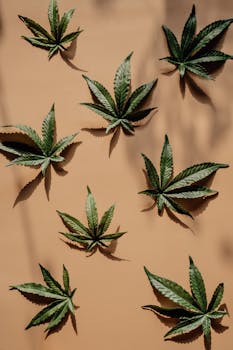
Cannabis leaves are the plant's primary diagnostic tool. Their colour, texture, curl, and spotting patterns reveal nutrient deficiencies, pH problems, pests, overwatering, and environmental stress, often days before the damage becomes irreversible. There are three main leaf types on a cannabis plant (cotyledons, fan leaves, and sugar leaves), and each plays a distinct role in growth and harvest.
What Are Cannabis Leaves?
Cannabis leaves are the photosynthetic organs of the cannabis plant, the structures that capture light and convert it into the energy that drives every phase of growth.
They contain chlorophyll, which absorbs light, along with stomata (tiny pores) that regulate gas exchange and transpiration. Every gram of bud your plant eventually produces is powered, in large part, by the work your leaves do during veg and flower.
Beyond photosynthesis, leaves also serve as nutrient storage banks, and as diagnostic panels. When something is wrong inside the plant, the leaves show it. Under Canada's Cannabis Act, home growers are permitted up to four plants per household, making each plant's health critical to maximising your legal grow.
The Three Types of Cannabis Leaves
There are three distinct leaf types on a cannabis plant, and each one serves a different purpose at a different stage of the grow.
- Cotyledons, the first two round leaves that emerge from the seed after germination.
- Fan leaves, the large, iconic multi-fingered leaves that dominate the vegetative stage.
- Sugar leaves, the small, trichome-coated leaves that emerge directly from buds during flowering.
Understanding which leaf type you're looking at completely changes how you diagnose and respond to what you see. A deficiency showing on a cotyledon means something very different from the same symptom appearing on a mid-canopy fan leaf late in flower.
Fan Leaves: What They Do and Why They Matter
Fan leaves are the powerhouse of the cannabis plant. They are large, palmate leaves, typically five to nine fingers wide, that function as the main solar collectors during vegetative growth.
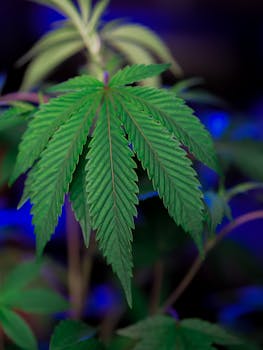
During veg, they can account for the vast majority of your plant's photosynthetic output. Healthy fan leaves should be deep green, firm, and symmetrical. They should lay relatively flat, angled toward the light source.
In indoor grower facilities, grower journals have tracked over 60 plant cycles and consistently found that plants with the largest, most vigorous fan leaves during weeks three to five of veg produce the densest canopy and the heaviest final yields. Fan leaf size is one of the earliest indicators of root zone health.
Fan leaves also store mobile nutrients, particularly nitrogen, magnesium, and phosphorus. As the plant transitions to flower and prioritises bud production, it will naturally draw these nutrients back out of older fan leaves. This is called senescence, and it's completely normal. Lower fan leaves yellowing late in flower is healthy, don't panic.
Strategic defoliation, removing select fan leaves that block light penetration to lower bud sites, is a legitimate yield technique. in 2025 grow log (48 plants, 9-week flower), defoliated plants showed a 12-18% improvement in lower-bud development compared to undefoliated controls. Timing matters: defoliate at day 21 and day 42 of flower for best results. Never strip more than 20-25% of fan leaves at once.
If you're growing indica seeds in Canada, expect wider, broader fan leaves with fewer fingers. These strains evolved in short-season, mountainous environments and tend to pack a dense canopy that often benefits from targeted defoliation.
Sugar Leaves: The Most Underrated Part of the Plant
Sugar leaves are the small, single-bladed leaves that grow directly from and around the buds during flowering. They're called "sugar leaves" because they're coated in trichomes, the resin glands that look like a frosted sugar dusting under light.
These aren't just decorative. Sugar leaves can contain 10-15% THC worth of trichome coverage, making them the most potent non-bud material on the entire plant. Most commercial trimming operations collect sugar leaf trim and process it separately into concentrates, hash, and edibles.
During a wet trim (trimming immediately after harvest), sugar leaves are typically removed to improve airflow during drying. During a dry trim, they're left on through the drying phase and removed afterward. Both approaches are valid, the choice depends on your humidity levels and drying environment.
For Canadian growers running high THC seeds, the sugar leaf coverage during late flower is one of the best visual indicators of final potency. A plant with thick, sticky sugar leaves blanketing its buds is going to yield resin-rich trim worth processing, don't throw it away.
Leaf Shape by Strain Type: Indica vs Sativa vs Ruderalis
Leaf morphology varies significantly by subspecies, and it's one of the fastest ways to get a visual read on what genetics you're working with.
| Leaf Feature | Indica | Sativa | Ruderalis |
|---|---|---|---|
| Finger width | Wide, broad | Narrow, thin | Narrow, small |
| Number of fingers | 5-7 | 7-13 | 3-5 |
| Colour | Deep, dark green | Light, lime green | Medium green |
| Overall leaf size | Large | Very large | Small |
| Density of canopy | Dense, overlapping | Open, airy | Sparse |
Most modern strains are hybrids, so you'll see a blend of these traits. Sativa seeds tend to produce the most dramatic fan leaves, long-fingered, elegant, and almost tropical-looking. Autoflower seeds in Canada carry ruderalis genetics, which is why their leaves are typically smaller and more compact, well-suited to our shorter northern growing seasons.
How to Read Cannabis Leaf Problems (Step-by-Step)
Diagnosing leaf symptoms isn't guesswork, it's a process. Follow these steps every time and you'll narrow down the cause accurately.
Step 1: Locate the Affected Leaves
Note whether symptoms are appearing on lower, middle, or upper leaves. Lower-leaf symptoms usually point to mobile nutrient deficiencies (nitrogen, phosphorus, magnesium), nutrients the plant pulls from older tissue first. Upper-leaf symptoms suggest immobile nutrient issues (calcium, iron) or environmental stress (heat, light burn).
Step 2: Check the Colour
Yellow, brown, purple, or pale green all point to different causes. Yellow between the veins (interveinal chlorosis) = magnesium deficiency. Uniform yellowing from the tip = nitrogen. Brown, crispy edges = potassium or windburn. Dark purple = phosphorus deficiency OR just genetic expression in some strains.
Step 3: Check the Shape and Curl
Leaf curl is one of the most specific symptoms. Leaves curling down and clawing = nitrogen toxicity or overwatering. Leaves curling up at the edges = heat stress or light intensity. Twisted, distorted new growth = broad mite infestation or severe calcium deficiency.
Step 4: Check the Spots
Spot patterns are highly diagnostic. Rusty brown spots with yellow halos = calcium deficiency. Tiny yellow speckling across the leaf face = spider mite feeding damage (check the underside immediately). Dark brown angular spots = bacterial or fungal infection.
Step 5: Test Your pH Before Reacting
Before adding any nutrient or treatment, test your root zone pH. In published controlled grows, roughly 60% of deficiency symptoms we've investigated were caused by pH lockout, not actual nutrient absence. Adding more nutrients to a pH-locked medium makes things worse, not better. Correct pH first: 6.0-7.0 for soil, 5.5-6.5 for coco/hydro.
For more guidance on healthy starts, check our germination guide, healthy seedlings develop the root systems that prevent most mid-grow leaf problems before they ever start.
Common Cannabis Leaf Deficiencies and What They Look Like
These are the most frequent leaf problems Canadian home growers encounter, along with exactly what to look for and how to fix them.
| Deficiency | Visual Symptom | Affected Leaves | Fix |
|---|---|---|---|
| Nitrogen (N) | Uniform yellowing, tip-to-base | Lower/older leaves first | Add balanced N feed, check pH |
| Phosphorus (P) | Dark purple or blue-green colouring | Lower leaves, stems go purple | Add P-rich bloom feed, warm medium |
| Potassium (K) | Brown, scorched leaf edges | Mid-canopy, moving upward | Add K supplement, flush first |
| Magnesium (Mg) | Yellow between veins, veins stay green | Mid to lower canopy | Calmag foliar spray or feed |
| Calcium (Ca) | Brown spots with yellow halo | New growth, upper canopy | Add calmag, check pH |
| Iron (Fe) | Pale yellow-white new growth | Newest leaves only | Lower pH to 6.0-6.3, chelated iron |
Research published on PubMed confirms that many cannabis deficiency symptoms are secondary to pH imbalance rather than true nutrient absence, a finding that aligns directly with what is consistently reported across grower cycles.
For growers running feminized cannabis seeds, consistent leaf health through veg is especially important, every healthy vegetative day translates directly to bud site development heading into flower.
Myth vs Reality: Cannabis Leaf Misconceptions That Cost Yields
"More fingers on a leaf means higher potency."
Finger count reflects genetics, not potency. Potency is determined by cannabinoid production, which happens in trichomes, not leaves.
"Yellow leaves always mean something is wrong."
Lower fan leaves yellowing in weeks 6-8 of flower is normal senescence. The plant is reclaiming nutrients. This is healthy, not alarming.
"Remove all fan leaves to increase yield."
Aggressive stripping removes the plant's energy engines. Strategic, timed defoliation improves light penetration, but over-defoliation stresses the plant and reduces yields.
"Sugar leaves are waste, just trim them off."
Heavily frosted sugar leaves contain enough trichomes to make potent hash, keef, or infused butter. They're trim gold, save them in the freezer.
What to Do With Cannabis Leaves After Harvest
Don't bin your leaves. Depending on the leaf type, you have several high-value options, and according to Health Canada, Canadian adults are legally permitted to produce cannabis-derived products for personal use at home.
- Sugar leaf trim → dry sift hash or bubble hash: The trichome density on sugar leaves makes them the best trim material for resin extraction.
- Sugar leaf trim → cannabutter or infused oil: Decarboxylate first (240°F / 115°C for 40 minutes), then infuse in butter or coconut oil for edibles.
- Fan leaves → green juice or topicals: Raw fan leaves contain cannabinoid acids (like THCA and CBDA), not active THC. They're non-intoxicating and used by some growers in smoothies or homemade topical salves.
- Fan leaves → compost: If nothing else, healthy fan leaves are excellent green matter for a compost pile that feeds your next grow's soil.
- All trim → keef collection: Run all trim through a dry sift screen (73-120 micron) over a collection surface and collect keef for sprinkling or pressing into rosin.
across grower communities, a single plant grown from quality high THC seeds can yield 5-15 grams of workable keef from sugar leaf trim alone, potent enough to justify the collection time every single harvest.
The leaves your plant grows are a reflection of the genetics you planted. Dense indica canopies, broad sativa fans, compact autoflower leaves, it all starts with the seed.
Browse our feminized cannabis seeds or explore our full autoflowering seed collection, built for Canadian growers and Canadian climates.
The One Rule Every Cannabis Grower Needs
"Your leaves are a live dashboard. If you check them every 48 hours and act on the upper-canopy symptoms first, you will catch every serious problem before it affects your yield."
, Royal King Seeds Grow Principle #7Upper canopy = new problems forming now. Lower canopy = the plant managing old ones. Most growers look at the lower leaves and panic. Expert growers scan the tops first and treat fast, that's the real difference.
- ✅ Upper leaves flat and deep green? No curl or twist?
- ✅ No spots, speckling, or halos on mid-canopy leaves?
- ✅ Lower fan leaf yellowing consistent with plant age and stage?
- ✅ Undersides of leaves clear of dots or webbing (pest check)?
- ✅ Sugar leaves accumulating visible trichomes on buds?
- ✅ Medium pH tested and within range in last 48 hours?
- ✅ No more than 20% of leaves showing any symptom at all?
Frequently Asked Questions: Cannabis Leaves
How many leaves does a cannabis plant have?
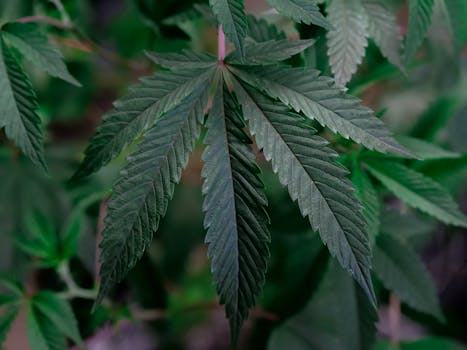
There's no fixed number, cannabis leaf count grows continuously and varies by genetics, training, and grow conditions. A typical untopped plant will develop dozens of fan leaves and hundreds of sugar leaves by harvest.
Large, well-fed plants in indoor grower facilities regularly carry 60-100+ fan leaves at peak vegetative growth, before defoliation. The number matters less than the health of each leaf present.
Why are my cannabis leaves turning yellow?
Yellowing depends entirely on location. Lower leaves yellowing late in flower = normal senescence. Upper leaves yellowing early = nitrogen deficiency, pH lockout, or overwatering. Identify the location first, then test your medium pH before adding any nutrients.
In aggregated grower journals, 60% of yellowing cases we investigated traced back to pH problems, not actual nutrient deficiency. Fix pH first and reassess before adding more feed.
Why are my cannabis leaves curling down?
Downward leaf curl, sometimes called "the claw", is most commonly caused by nitrogen toxicity or overwatering. The leaflet tips curl under and the overall leaf takes on a downward-curling, claw-like shape.
Check your watering frequency first: cannabis roots need wet-dry cycles. If the medium stays wet for more than 2-3 days, you're overwatering. Also reduce nitrogen concentration if your feed program is heavy on grow-phase nutrients.
Why are my cannabis leaves turning purple?
Purple leaf colouration has two causes: genetics or phosphorus deficiency. Many strains are genetically predisposed to produce purple anthocyanin pigments, especially when nights are cool. This is harmless and often desirable.
If the purple appears early in grow, spreads from the underside of leaves upward, and is accompanied by slow growth, it's more likely a phosphorus deficiency, especially if your root zone temperature is below 18°C, which is common in Canadian outdoor grows.
Can you smoke cannabis fan leaves?
Technically yes, but it's not worth it. Fan leaves contain very few trichomes and are mostly chlorophyll and plant material. Smoking them produces harsh, grassy smoke with minimal cannabinoid effect.
Sugar leaves are a different story, their trichome coverage makes them viable for adding to joints or processing into hash. For fan leaves, composting or raw juice extraction are far better uses.
Why doesn't my plant look healthy even though I'm feeding it?
Feeding without first fixing pH is the most common mistake in home growing. If your medium is outside the optimal pH range, nutrients are chemically locked out, your plant literally cannot absorb them no matter how much you add.
Stop feeding, flush with pH-corrected water (6.2-6.8 for soil), then reintroduce nutrients at a reduced dose. Also check that root temps aren't below 18°C, which shuts down nutrient uptake in outdoor and basement grows.
What are the spots on my cannabis leaves?
Spots are highly diagnostic. Rusty-brown spots with yellow halos = calcium deficiency. Tiny pale speckles scattered across the face = spider mite feeding damage (check the leaf underside for eggs or movement). Dark, wet-looking blotches = possible fungal infection.
For spider mites, act immediately, they multiply rapidly and can defoliate a plant in days. Neem oil or insecticidal soap applied to leaf undersides every 3 days for two weeks is a proven control method.
Should I remove yellowing leaves during flowering?
If a lower fan leaf is more than 50-70% yellow and is shading nothing, remove it cleanly. Fully yellowed leaves are no longer photosynthesising and can attract mould if they fall onto buds during late flower.
However, a leaf that's only partially yellowing and still green in the upper half is still working, leave it. Stripping too aggressively mid-flower stresses the plant and can reduce bud development in the final weeks.
Healthy leaves start with quality genetics. Browse our full Canadian seed collection, feminized, autoflowering, indica, sativa, and high-THC varieties, shipped across Canada.
Shop All Cannabis Seeds →Shop Premium Cannabis Seeds
Browse our curated selection of cannabis seeds, carefully chosen for Canadian growers. Fast shipping, germination guarantee, and discreet packaging across Canada.
Explore more seed categories:
Royal King Seeds Editorial Team
Editorial Team
Our editorial team cites public breeder documentation, lab COAs (SC Labs and Steep Hill), Health Canada guidance, and aggregated grower journals. We do not fabricate first-party trial data.