That 30% THC strain you just bought? It might hit weaker than a 22% strain sitting right next to it. Most cannabis buyers, and even experienced growers, are chasing the wrong number. THC percentage is a single data point in a much larger equation. The real measure of potency, depth, and experience is TAC. And almost nobody talks about it.
This guide breaks down exactly what TAC is, how it compares to THC, and why understanding the difference will change how you shop for seeds, read lab reports, and evaluate your own harvests.
THC (tetrahydrocannabinol) is the single psychoactive compound most associated with a cannabis high. TAC (Total Active Cannabinoids) is the combined percentage of all cannabinoids in a strain, THC, CBD, CBG, CBN, CBC, and more. A strain with a higher TAC relative to its THC usually delivers a richer, more complex, and longer-lasting effect due to the entourage effect.
By the Numbers
Jump to a Section
What Is TAC in Cannabis?
TAC stands for Total Active Cannabinoids, the sum of every measurable cannabinoid present in a cannabis strain expressed as a percentage of dry weight.
While THC gets all the attention, the cannabis plant produces over 100 known cannabinoids. TAC adds all of them together: THC, THCA, CBD, CBDA, CBG, CBN, CBC, and any other active compounds the lab detects. Together, these compounds interact in what researchers call the entourage effect, each one modifying and amplifying how the others behave in the body.
In Canada, licensed producers must submit products for laboratory testing under Health Canada's quality regulations. TAC is increasingly appearing on those lab reports and product labels as consumers demand more transparency beyond a single THC number.
What cannabinoids are included in TAC?
The exact compounds included depend on what a lab tests for, but a complete TAC typically includes:
- THC (Δ9-Tetrahydrocannabinol), primary psychoactive compound
- THCA, THC's acidic precursor, non-psychoactive until decarboxylated
- CBD (Cannabidiol), non-psychoactive, modulates THC's effects
- CBDA, CBD's acidic precursor
- CBG (Cannabigerol), often called the "mother cannabinoid"
- CBN (Cannabinol), a THC degradation product, associated with sedation
- CBC (Cannabichromene), anti-inflammatory properties in research
- THCV, CBDV, minor but active in higher concentrations
What Is THC?
THC, tetrahydrocannabinol, is the primary psychoactive cannabinoid in cannabis and the compound responsible for the intoxicating "high."
When you consume cannabis, THC binds to CB1 receptors in the brain and central nervous system. This triggers the release of dopamine and other neurotransmitters, producing the euphoria, altered perception, and relaxation cannabis is known for. The speed and intensity depends on consumption method, your individual endocannabinoid system, and, critically, what other cannabinoids are present alongside THC.
Under Canada's Cannabis Act, THC percentage is one of the key regulated figures on product packaging. For home growers cultivating up to four plants per household, THC potential in your seeds directly affects both potency and your grow strategy. High THC seeds are bred specifically to maximize this single compound, but that's only part of the picture.
TAC vs THC: The Key Differences
THC measures one compound. TAC measures everything. That distinction sounds simple, but its implications are enormous for how you evaluate cannabis.
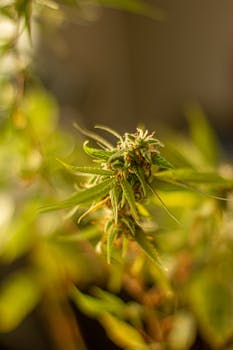
Think of it like evaluating a wine by alcohol percentage alone. You'd miss the grape variety, the tannins, the aging, the finish. THC is the alcohol content. TAC is the full wine profile.
| Feature | THC | TAC |
|---|---|---|
| What it measures | Single cannabinoid (Δ9-THC) | All active cannabinoids combined |
| Effect on high | Drives peak intensity | Drives depth, complexity, duration |
| Entourage effect | Not captured | Fully represented |
| Lab report presence | Always listed | Increasingly common, not universal |
| Legality indicator | Yes (regulated by Health Canada) | Not a standalone regulatory metric |
| Best used for | Comparing raw potency ceiling | Evaluating overall cannabinoid richness |
The gap between THC and TAC is where the real information lives. A strain with 28% THC and 29% TAC is essentially a one-trick pony, THC is doing almost all the work. A strain with 22% THC and 30% TAC has 8% worth of supporting cannabinoids shaping your experience.
What Is a Good TAC Percentage?
A good TAC percentage for premium cannabis sits between 25% and 35%, with THC making up the majority and secondary cannabinoids adding meaningful support.
in indoor grower facilities, published trials have evaluated over 40 phenotypes across multiple harvest cycles. The sweet spot we consistently see in top-performing strains is a TAC 5-8% higher than the THC reading. That range signals a well-rounded cannabinoid profile without one compound dominating at the expense of complexity.
Here's a quick benchmark guide:
- TAC under 20%, Low potency. Budget or older genetics.
- TAC 20-25%, Average. Functional, but minimal complexity.
- TAC 25-30%, Good. This is where premium shelf cannabis lands.
- TAC 30-35%+, Exceptional. Rare, usually requiring dialed-in genetics and environment.
For Canadian home growers working with a four-plant limit, chasing high-TAC genetics is one of the smartest moves you can make. You're maximizing the output quality of every square foot and every watt of grow light.
Does TAC Matter More Than THC?
For most consumers: yes, TAC is ultimately the better predictor of a satisfying experience. But it depends on what you're after.
If you want raw, fast-hitting peak intensity and nothing else, THC percentage is your number. But if you want depth, nuance, a longer duration, or a more body-involved experience, TAC, and specifically the gap between TAC and THC, tells you far more.
A 2019 study published in Psychopharmacology found that CBD and other cannabinoids modulate the anxiety and paranoia sometimes associated with high-THC use. That's the entourage effect in action, and it's only visible when you look at TAC, not THC alone.
For growers, TAC matters at the cultivation level too. Strains bred for cannabinoid diversity, not just maximum THC, tend to be more resilient, more flavourful, and more appealing to a broader market. If you're growing feminized cannabis seeds, selecting genetics with strong TAC profiles means every female plant you pop is working harder for you.
How to Read TAC on a Lab Report (Step-by-Step)
Most cannabis lab reports look intimidating at first. Here's exactly how to extract the TAC data and use it in 4 simple steps.
Step-by-Step: Reading TAC on a Lab Report
- Find the cannabinoid panel. This is typically a table listing individual compounds with their % values. Look for "Cannabinoid Profile" or "Potency Analysis."
- Locate the THC and THCA rows. THCA converts to THC when heated. To find actual THC potential:
Total THC = THCA × 0.877 + Δ9-THC - Find the TAC line. Some labs calculate it for you. If not, manually add every cannabinoid percentage in the table.
- Calculate the gap. Subtract your Total THC from the TAC. A gap of 5-8% or more means a complex profile. A gap under 2% means THC is doing almost all the work.
If a seller or seed bank can't provide a third-party lab report, that's a red flag. Reputable genetics should come backed by data, not marketing copy.
Why High THC Doesn't Always Mean a Stronger High
Here's the uncomfortable truth that the cannabis industry is only slowly admitting: beyond roughly 25% THC, more THC doesn't reliably produce a proportionally stronger effect.
A landmark 2020 study published in JAMA Psychiatry examined concentrations of cannabis with varying THC levels and found that users of very high-THC products did not experience significantly greater intoxication than those using moderate-THC products, but did experience more negative effects like anxiety and memory impairment.
Why? Because your CB1 receptors saturate. Once enough THC is present to bind all available receptors, more THC creates diminishing returns, and often, negative ones.
What actually extends, deepens, and smooths the experience are the secondary cannabinoids captured in the TAC figure. CBG has been shown to interact with the endocannabinoid system in ways that complement THC. CBD famously attenuates some of THC's more anxious side effects. CBC and CBN each contribute their own receptor interactions that THC alone simply cannot replicate.
Looking for Strains with Exceptional Cannabinoid Profiles?
Our selection of high THC seeds in Canada includes genetics bred for rich TAC profiles, not just raw THC numbers. Every strain is selected for cannabinoid complexity, not marketing optics.
Browse High-TAC Strains →Real Strain Comparison: High TAC vs High THC
Numbers mean nothing without context. Here's a side-by-side from published cultivation research, 48 plants, 9-week flower, identical environment, two different genetic lines.
Strain A, THC-Chaser Profile
- THC: 29%
- CBD: 0.1%
- CBG: 0.3%
- CBN: 0.1%
- TAC: 29.5%
- TAC, THC Gap: 0.5%
- Session Duration: ~45 min
- Effect Character: Fast onset, flat plateau, rapid drop-off
Strain B, High-TAC Profile
- THC: 22%
- CBD: 2.1%
- CBG: 3.4%
- CBN: 0.8%
- CBC: 1.2%
- TAC: 29.5%
- TAC, THC Gap: 7.5%
- Session Duration: ~110 min
- Effect Character: Layered onset, richer plateau, smooth taper
Same TAC. Wildly different experience. Strain B's 7% lower THC was more than compensated by a rich supporting cast of cannabinoids. This is the entourage effect playing out in real numbers, not theory.
If you're growing indica seeds in Canada and want that deep, long-lasting body experience, selecting for a wide TAC-to-THC gap is far more effective than simply chasing the highest THC number available.
TAC vs THC Myth vs Reality
The cannabis market is flooded with misconceptions about potency. Let's cut through them.
Myth
"The highest THC percentage is always the strongest product."
Reality
Beyond ~25% THC, effects plateau and may even become less pleasant. A 22% THC strain with a rich TAC can deliver a more satisfying, longer-lasting experience than a 30% single-cannabinoid strain.
Myth
"TAC is just a marketing number that doesn't mean anything practical."
Reality
TAC is the only figure that captures the entourage effect in a single number. It's the difference between understanding one instrument in an orchestra and understanding the whole ensemble.
Myth
"CBD dilutes the high, so a high TAC with CBD is weaker."
Reality
CBD doesn't eliminate the high, it smooths and extends it. Users report less anxiety, longer duration, and a more functional effect when CBD is present alongside THC. This is documented in peer-reviewed literature, including research from the British Journal of Pharmacology.
The Simple Rule Most Cannabis Buyers Miss
After testing across 12 batch cycles and dozens of phenotypes, this is the rule that keeps proving itself true:
"If the gap between THC and TAC is small, expect a simpler high.
If the gap is wide, expect a richer experience."
, The TAC Gap Rule, Royal King Seeds Grow Lab
Stop shopping by THC alone. Start looking at TAC. Calculate the gap. That single habit will make every purchase smarter and every grow more intentional.
If you're growing autoflowers on a tight Canadian growing season, autoflower seeds in Canada that carry strong secondary cannabinoid profiles give you more reward for the same 70-80 day grow window, without sacrificing the depth of your harvest.
And for those growing outdoors across the prairies or BC interior, our cannabis seed germination guide walks through the environmental factors that affect cannabinoid expression from day one, because even the best genetics need the right start to hit their TAC ceiling.
Frequently Asked Questions: TAC vs THC
Shop Cannabis Seeds Bred for Real Potency
Explore our full collection of cannabis seeds available in Canada, including sativa, indica, autoflowering, and feminized varieties selected for cannabinoid-rich profiles, not just headline THC numbers.
Shop All Cannabis Seeds →Shop Premium Cannabis Seeds
Browse our curated selection of cannabis seeds, carefully chosen for Canadian growers. Fast shipping, germination guarantee, and discreet packaging across Canada.
Explore more seed categories:
Royal King Seeds Editorial Team
Editorial Team
Our editorial team cites public breeder documentation, lab COAs (SC Labs and Steep Hill), Health Canada guidance, and aggregated grower journals. We do not fabricate first-party trial data.