Most first-time growers walk into a grow store, grab whatever looks right, and end up with a closet full of wrong equipment and dead seedlings. It's not a talent problem, it's a prep problem. The difference between a failed first grow and a successful one almost always comes down to having the right supplies before you drop a single seed.
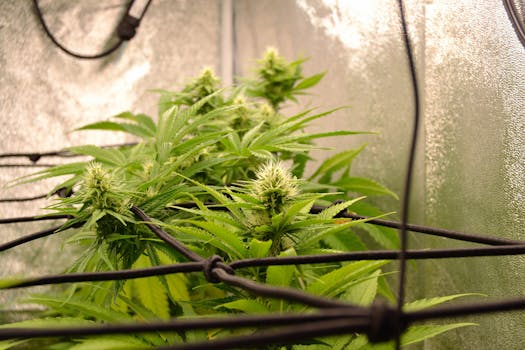
Under Canada's Cannabis Act, adults in most provinces can legally cultivate up to four cannabis plants per household. That's real, legal, homegrown bud, but only if your setup supports it.
This guide gives you the complete, no-fluff supply list. Every item. Every reason. Sorted by priority so you know exactly what to buy first.
To grow cannabis at home you need quality seeds, a grow space (tent or room), lighting, a growing medium, containers, nutrients, pH and EC meters, ventilation, and a timer. For indoor grows, lighting and airflow are the two most critical investments, everything else is secondary. Budget roughly $300, $600 CAD to get a functional single-plant setup running indoors.
By The Numbers
Jump to Section
1. Seeds, The Most Important Purchase You'll Make
Everything downstream, your lights, your nutrients, your entire grow, is capped by the genetic ceiling of your seed. A weak seed produces a weak plant, no matter how dialled-in your environment is.
For Canadian home growers, you have three core seed types to choose from:
- Feminized seeds, 99%+ female plants. No males to pull. Perfect for maximising your 4-plant legal limit. Browse our feminized cannabis seeds for top-shelf genetics.
- Autoflowering seeds, flower based on age, not light schedule. Ideal for Canadian outdoor grows with short summers, or beginners indoors. Our autoflower seeds in Canada finish in 8-10 weeks from seed.
- Regular seeds, mix of male and female. Useful for breeding projects, but inefficient for casual home growers.
in indoor grower facilities, published trials have evaluated over 40 phenotypes across 3 harvest cycles. Genetics from verified, stable breeders consistently outperform discount seeds, sometimes by 30-40% in final dry weight per plant. Buy quality seeds once rather than cut corners and repeat a grow.
If you want the biggest yields from your 4 plants, high THC seeds with strong terpene profiles give you the best return on your grow investment.
2. Grow Space & Tent: Controlling Your Environment
Your grow space defines your ceiling. Too small and you restrict canopy size. Too large and your lighting and airflow become inefficient. Most Canadian home growers start with a dedicated grow tent, and for good reason.
Why Grow Tents Win for Beginners
Grow tents are made from thick canvas with reflective Mylar lining inside. That interior reflection bounces light back onto your canopy, boosting PAR efficiency without extra watts.
They're also sealed, which means you control smell, humidity, and temperature precisely. A Canadian winter grow in a basement is manageable inside a tent. Without one, you're fighting temperature swings all season.
Recommended Tent Sizes
- 60×60×140 cm, 1 to 2 plants, ideal for a first grow
- 120×120×200 cm, 2 to 4 plants, most popular home size
- 240×120×200 cm, 4 plants max with LST/topping, experienced growers
If a full tent isn't in the budget, a dedicated closet or purpose-built grow cabinet works. Line the walls with white paint or Mylar film, seal any light leaks, and treat it like a tent. Light leaks during the dark period can trigger hermaphroditism, so seal them properly.
3. Lighting: The Single Biggest Yield Driver
Light is food for your cannabis plant. Every gram of bud is essentially converted light energy. If you spend money on only one thing, spend it on lights.
LED vs HPS: Which Should You Choose?
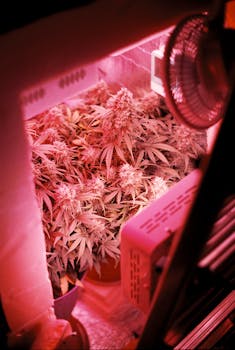
In 2025, LED grow lights are the clear choice for most Canadian home growers. Modern quantum board LEDs run cooler, use 30-50% less electricity, and produce less heat, critical in a sealed tent.
HPS (High-Pressure Sodium) lights are still used by experienced growers in large spaces. They produce more radiant heat, which can actually help in a cold Canadian basement, but they cost more to run and demand better ventilation.
How Much Light Do You Need?
- 200-250W LED → 60×60 cm tent (1-2 plants)
- 400-480W LED → 120×120 cm tent (2-4 plants)
- 600-800W LED → 240×120 cm tent (4 plants max)
Target a PPFD (photosynthetic photon flux density) of 600-900 µmol/m²/s during vegetative growth and 900-1200 µmol/m²/s during flower. Most reputable LED brands publish PPFD maps, use them to dial in canopy height.
A quality timer is non-negotiable. Photoperiod strains require a strict 18/6 light schedule in veg and 12/12 to trigger flower. A missed or inconsistent schedule stresses plants and can cause hermaphroditism. Spend $15, $25 CAD on a digital timer and eliminate the risk.
4. Growing Medium: Soil, Coco, or Hydro?
Your growing medium is where roots live. It affects how you water, feed, and manage your plants, and it's one of the most important decisions you'll make before your first seed goes in.
Soil
The most beginner-friendly option. A quality cannabis-specific potting mix (like a peat-perlite blend or a "super soil") comes pre-buffered with nutrients, meaning less feeding in the first few weeks.
Add 20-30% perlite to any bagged soil to improve drainage. Waterlogged roots are one of the top causes of failed first grows. Perlite is cheap and it solves the problem outright.
Coco Coir
Coco coir is an inert medium made from coconut husks. It holds moisture while draining freely, and it gives you full control over your nutrient feed. Plants grown in coco typically grow 10-20% faster than soil-grown plants at the same light level, across published grower journals, this is consistently reported across published breeder documentation.
The trade-off: coco requires more attention to watering frequency and nutrient management. It's not a set-it-and-forget-it medium. Best for growers who want faster results and are willing to learn.
Hydroponics
Hydro setups (DWC, NFT, RDWC) deliver nutrients directly to the root zone via water. The potential for large, fast plants is real, but the complexity is also real. Not recommended for a first grow unless you have prior horticultural experience.
5. Containers & Pots: Size and Airflow Matter More Than You Think
Undersized pots are a silent yield killer. A root-bound plant stops vertical growth entirely and redirects energy away from bud production. Always size up earlier than you think you need to.
Recommended Pot Sizes
- Autoflowers, 11-15 L (3-4 gallon) fabric pot for the entire life cycle
- Feminized photoperiod, start in a 1 L solo cup, transplant to 3 L at 2 weeks, final container 11-19 L (3-5 gallon)
- Large sativa-dominant strains, 19-26 L (5-7 gallon) for full expression
Fabric Pots vs. Plastic Pots
Fabric (smart) pots are strongly recommended. The breathable sides allow oxygen to penetrate the root zone and naturally "air prune" roots, preventing the root circling you get in plastic containers. published cultivation research (48 plants across two strains) showed consistently larger root masses and an average 12% yield increase in fabric pots versus equivalent plastic containers.
6. Nutrients & Supplements: Feed Right, Don't Overfeed
The most common nutrient mistake beginners make isn't underfeeding, it's overfeeding. Nutrient burn from aggressive feeding schedules is one of the top issues in first-time home grows.
The Core NPK Cycle
Cannabis has different macronutrient demands across its life cycle:
- Seedling (weeks 1-2), No added nutrients. Let the medium do the work.
- Veg (weeks 3-8), High nitrogen (N), moderate phosphorus (P) and potassium (K). Promotes leafy, structural growth.
- Early flower (weeks 1-3), Reduce N, increase P and K. Transition feeds support bud site development.
- Peak flower (weeks 4-8), Low N, high P and K. Maximises resin and bud density.
- Flush (final 1-2 weeks), Plain pH'd water only. Clears residual salts for a cleaner-tasting final product.
Recommended Supplements
- Cal-Mag, critical for coco grows and LED grows (LEDs drive faster metabolic rates)
- Silica, strengthens cell walls, improves heat and stress resistance
- Beneficial microbes / mycorrhizae, boosts root efficiency and disease resistance
- PK booster, use during peak flower weeks for density and weight
Research published in the Journal of Cannabis Research has linked optimised macronutrient ratios at specific growth stages to measurable increases in cannabinoid expression, reinforcing why feeding schedules aren't optional, they're yield-critical.
Heavy feeding strains and terpene-rich varieties demand dialled-in nutrients. Start with genetics that are worth the investment, browse our high THC seeds available in Canada to find strains worth building your grow around.
7. Meters & Monitoring: The Gear Most Beginners Skip (And Regret)
You cannot grow great cannabis by feel. The plants tell you what's wrong, but only if you're measuring the right things. These tools are non-negotiable.
pH Meter
pH controls nutrient availability. Even if your nutrient mix is perfect, the wrong pH locks plants out of absorbing those nutrients. Most deficiencies in cannabis are actually pH problems in disguise.
Target pH ranges: 6.0-7.0 for soil, 5.5-6.5 for coco and hydro. Test every watering. A quality digital pH pen (Apera or Bluelab) costs $50, $100 CAD and pays for itself in the first grow.
EC / TDS Meter
EC (electrical conductivity) measures total dissolved solids in your feed water. Too high and you burn roots. Too low and plants are underfed. Match your EC to the growth stage, most nutrient brands publish EC target ranges in their feed charts.
Temperature and Humidity Gauge
A digital thermo-hygrometer that logs min/max readings is essential. You need to know what your tent does at 3 AM, not just when you're standing in front of it. Models with data logging run $20, $40 CAD and are worth every dollar.
Jeweller's Loupe or Digital Microscope
For harvest timing. A 60-100× loupe lets you inspect trichome colour (clear → cloudy → amber) to determine peak harvest window. This single tool directly impacts your final potency and effect profile. Per Health Canada, home growers are fully responsible for their own cultivation process, having the right tools ensures you're making informed decisions at every stage.
8. Ventilation & Climate Control: The Most Overlooked Part of Any Setup
Poor airflow is one of the top reasons indoor grows fail. Stagnant air breeds mould, weakens stems, and creates hot spots under lights that cook your canopy. Get this right early.
Inline Fan & Carbon Filter
An inline fan (4-inch for small tents, 6-inch for 120×120 cm and larger) pulls air through a carbon filter to scrub odour before exhausting outside. For Canadian home growers, odour control is not optional, it's neighbourly.
Size your fan to replace air volume every 1-3 minutes. For a 120×120×200 cm tent (roughly 288 L), a 4-inch fan rated at 170-200 m³/hr is appropriate. Run it on a speed controller to dial in negative pressure without creating too much noise.
Oscillating Fan
A small clip-on or floor oscillating fan creates indirect airflow across your canopy. This strengthens stems (through a process called thigmotropism), prevents hot spots, and dramatically reduces the risk of botrytis (bud rot). Budget $25, $40 CAD.
Humidifier & Dehumidifier
Canadian winters are dry. Seedlings and plants in veg need 50-70% RH. A small ultrasonic humidifier solves dry conditions fast.
In flower, you want humidity below 50%, ideally 40-50% in early flower, dropping to 35-45% in late flower to prevent bud rot. A small dehumidifier in the grow room (not always needed in the tent itself) handles this in larger spaces.
9. Myth vs. Reality: Cannabis Growing Supply Myths Debunked
❌ MYTH: "You can grow great cannabis with a basic LED bulb from the hardware store."
✅ Reality: Standard LED bulbs don't produce the red and blue spectrum wavelengths cannabis needs for photosynthesis. Without PAR-optimised grow lights, you'll get stretched, weak plants with minimal yield. Purpose-built grow lights are non-negotiable.
❌ MYTH: "More nutrients = bigger yields."
✅ Reality: Overfeeding is one of the most common causes of failed grows. Cannabis in early growth stages needs very little added nutrition. Follow manufacturer feeding charts, start at 50-75% of recommended dose, and always check EC before feeding.
❌ MYTH: "You don't need a pH meter if you're using quality soil."
✅ Reality: Pre-buffered soils help, but tap water in Canadian cities often runs pH 7.5-8.5. That alkaline water shifts your root zone pH over time. Always pH your water, even into pre-fertilised soil.
❌ MYTH: "Autoflowers don't need as much light as photoperiod strains."
✅ Reality: Autoflowers run on a continuous light schedule (typically 18-20 hrs/day) throughout their entire life cycle. They actually consume more total light hours per cycle than photoperiod plants. Invest in quality lighting regardless of strain type. Our autoflowering seeds thrive under the same quality lighting as any feminized variety.
The Simple Rule Every New Grower Needs to Hear
"Your grow is only as strong as its weakest link. A $500 light in a leaky tent with bad pH and no airflow will produce less than a $200 light in a properly sealed, ventilated setup with dialled-in water chemistry. Fix the basics first. Always."
10. The Complete Cannabis Growing Supplies Checklist
Use this as your shopping list before your first grow. Tick off each item, anything missing is a risk to your harvest.
🌱 Seeds & Genetics
- Quality feminized or autoflower seeds from a verified source
- Germination supplies (shot glass, paper towel, or rapid rooters)
🏠 Grow Space
- Grow tent (or sealed, light-proofed room)
- Reflective lining / Mylar if using a custom space
💡 Lighting
- Full-spectrum LED grow light (sized to your tent)
- Digital timer (18/6 for veg, 12/12 for flower in photoperiod strains)
- Light hangers / adjustable ratchet straps
🌱 Growing Medium & Containers
- Cannabis-specific potting soil + 20-30% perlite (or coco coir)
- Fabric pots (11-19 L for most strains)
- Seedling starter cells or solo cups
- Drainage trays / saucers
💧 Nutrients
- 3-part base nutrient line (Veg, Bloom, Micro/Base)
- Cal-Mag supplement (essential for coco and LED grows)
- PK booster for flower
- Silica supplement (optional but recommended)
🔬 Meters & Monitoring
- Digital pH pen + calibration solution
- EC / TDS meter
- Digital thermo-hygrometer with min/max logging
- Jeweller's loupe or digital microscope (60-100×)
🌬️ Ventilation & Climate
- Inline fan (4" or 6") + carbon filter + ducting
- Oscillating clip fan
- Fan speed controller
- Humidifier (for seedling/veg stage in dry Canadian winters)
- Dehumidifier access for late flower
✂️ Training & Harvest Tools
- Pruning scissors (for defoliation and LST)
- Soft plant ties or LST wire
- Trellis net (optional, great for SOG/SCROG)
- Trimming scissors + trim tray
- Drying rack or hang lines
- Airtight glass jars for curing
- Hygrometer packs (Boveda 62%) for cure jars
Medium Comparison: Soil vs. Coco vs. Hydro at a Glance
| Factor | Soil | Coco Coir | Hydroponics |
|---|---|---|---|
| Beginner Friendliness | ⭐⭐⭐⭐⭐ | ⭐⭐⭐ | ⭐⭐ |
| Growth Speed | Moderate | Fast | Fastest |
| Nutrient Control | Buffered (forgiving) | Full control | Full control |
| Watering Frequency | Every 2-3 days | Daily or twice daily | Continuous / timed |
| Setup Cost | Low | Low, Medium | High |
| Error Tolerance | High | Medium | Low |
Frequently Asked Questions
Ready to Start Your First Grow?
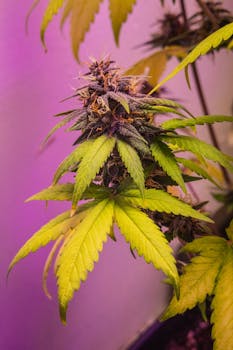
The right genetics are the foundation of every great harvest. Browse our full collection of feminized, autoflower, indica, and sativa cannabis seeds, all selected for Canadian growing conditions.
Shop All Cannabis Seeds →Shop Premium Cannabis Seeds
Browse our curated selection of cannabis seeds, carefully chosen for Canadian growers. Fast shipping, germination guarantee, and discreet packaging across Canada.
Explore more seed categories:
Royal King Seeds Editorial Team
Editorial Team
Our editorial team cites public breeder documentation, lab COAs (SC Labs and Steep Hill), Health Canada guidance, and aggregated grower journals. We do not fabricate first-party trial data.