Most indoor cannabis growers are leaving yield on the table , not because their lights are weak or their nutrients are off, but because their canopy strategy is wrong. The Sea of Green method routinely delivers 400 to 600 grams per square metre in 8 to 10 weeks from flip, making it one of the fastest and most space-efficient growing systems available. Yet the majority of first-time SOG runs fail in weeks 2 or 3 because of one of five fixable mistakes. This guide covers the full system honestly: what works, what doesn't, which strains actually suit it, and how Canada's 4-plant household limit under the Cannabis Act (2018) changes the math for every Canadian grower running this method.
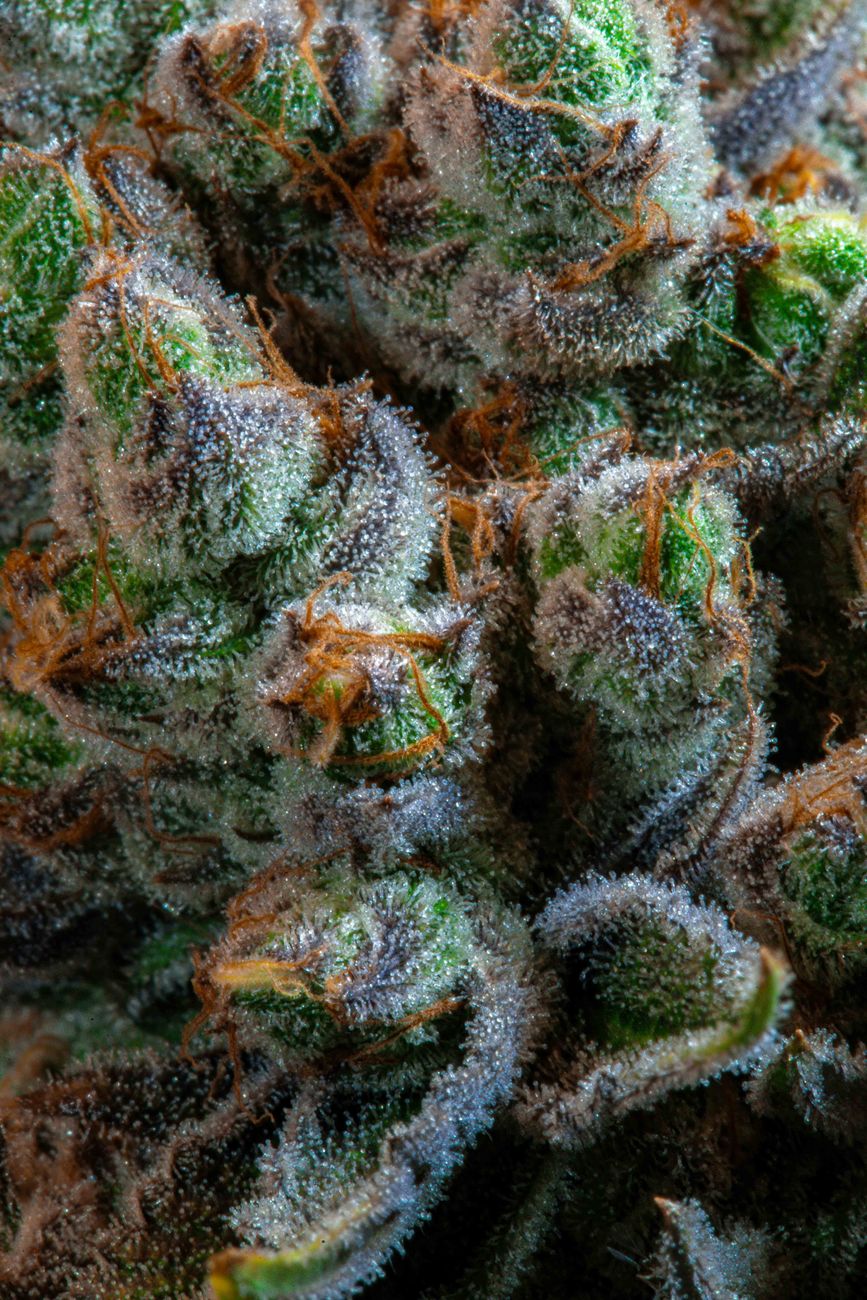
Sea of Green fills a grow space with many small plants instead of a few large ones. Each plant veg for just 10 to 21 days, then flips immediately to a 12/12 light schedule. The result is a dense, even canopy where every plant produces one main cola. Breeder documentation and aggregated grower journals consistently show SOG delivering harvest in 8 to 10 weeks from flip , 3 to 5 weeks faster than growing large photoperiod plants to full size. The trade-off is plant count management and canopy airflow, both of which this guide addresses directly.
- ✓ Indoor growers with limited tent or room space
- ✓ Canadian growers working within the 4-plant legal limit
- ✓ Growers who want faster turnaround cycles
- ✓ Anyone switching from single large-plant photoperiod grows
- ✓ Growers running feminized or autoflowering genetics
- ✗ Outdoor or greenhouse growers (SOG is an indoor method)
- ✗ Growers who prefer training-heavy methods like SCROG
- ✗ Anyone not legally permitted to grow in their province
- ✗ Growers with tents under 60×60 cm
What Is Sea of Green (SOG)?
Sea of Green is a cannabis cultivation method where many small plants are packed tightly together and flipped to flower early, creating an unbroken canopy of bud sites , literally a "sea" of green.
The core idea is yield-per-day rather than yield-per-plant. Instead of vegging one plant for 8 weeks and getting a large harvest once, SOG runs 4 to 16 small plants through short veg cycles repeatedly. The canopy fills in fast, light penetrates evenly across short single-cola plants, and harvest cycles turn over more frequently.
Per Health Canada regulations, Canadian adults 19+ (18 in Alberta, 21 in Quebec) can legally cultivate up to 4 plants per household. SOG works within that limit when planned correctly , more on that in the Canada-specific section below.
How to Run a SOG Grow: Step-by-Step
Step 1: Choose your container size
SOG plants stay small intentionally. Use 4 L to 7 L pots per plant. Larger pots waste root space and slow canopy fill. Aggregated grower journal data consistently shows 4 L fabric pots performing comparably to 7 L in short-veg SOG runs, with minimal yield difference once plants flip at 14 days.
Step 2: Veg for 10 to 21 days only
This is where most new SOG growers over-stay. Run an 18/6 light schedule from germination. Flip to 12/12 the moment plants reach 15 to 25 cm. Letting them go past 30 cm defeats the purpose , you're back to small-plant growing, not SOG.
Step 3: Set plant density at 1 per 900 cm²
That's one plant per 30×30 cm grid cell. A 120×120 cm tent holds 16 plants at this density. A 60×60 cm tent holds 4. Going tighter than this dramatically increases mold and airflow risk during flower.
Step 4: Flip and maintain environment tightly
Switch to 12/12. Target VPD of 1.0 to 1.3 kPa during flower, relative humidity between 40 and 50%, and temperatures of 22 to 26°C. This is where most stretch happens , weeks 1 to 3 after flip. Expect plants to double in height. Plan vertical space accordingly.
Step 5: Lollipop aggressively at flip
Strip all lower bud sites and fan leaves below the canopy line. In a SOG setup, the lower third of every plant gets zero usable light. Removing it redirects all energy to the main cola and dramatically improves airflow , reducing mold risk in a dense canopy.
Step 6: Harvest by cola maturity, not by calendar
SOG plants flower faster than their larger counterparts because the plant has less biomass to support. Breeder documentation for most indica-dominant and hybrid strains reports 7 to 9 week flower times. Use trichome inspection , 70 to 90% cloudy trichomes with some amber is your harvest window.
SOG vs SCROG: Which Method Should You Run?
These two methods are often confused. They solve different problems.

| Factor | SOG | SCROG |
|---|---|---|
| Plant count | Many small plants | 1 to 4 large plants |
| Veg time | 10 to 21 days | 6 to 12 weeks |
| Training required | Minimal (lollipop only) | High (weaving, tucking) |
| Cycle speed | Faster (8-10 wks from flip) | Slower (10-14 wks from flip) |
| Yield per m² | 400 to 600 g | 500 to 700 g (top performers) |
| Mold risk in flower | Medium (dense canopy) | Low (open, trained canopy) |
| Best for Canada's 4-plant limit | Yes, with planning | Yes (fewer plants needed) |
| Best genetics type | Feminized indica/hybrid | Sativa or large hybrid |
SOG wins on speed and simplicity. SCROG wins on maximum yield ceiling and mold resistance. For Canadian growers under the 4-plant limit who want faster cycles and less training work, SOG is the stronger choice.
What Are the Best Strains for Sea of Green?
Not every strain suits SOG. The method rewards genetics that are naturally compact, finish in 7 to 9 weeks of flower, produce a dominant central cola, and don't stretch excessively after flip.
Strains to prioritize:
- Indica-dominant hybrids: Short node spacing, limited stretch, fast flower. Ideal SOG profile. Indica seeds dominate the top of every experienced SOG grower's shortlist.
- Feminized photoperiod strains: Predictable sex, uniform phenotype across a full canopy. Feminized cannabis seeds eliminate male-plant risk entirely , critical when you're packing 12 to 16 plants per metre.
- Fast-flowering hybrids: Any strain with a documented flower time under 8 weeks is SOG-ready from day one.
- Auto-flowering strains: Technically SOG-compatible, but require separate planning (see below).
Strains to avoid in SOG:
- Sativa-dominant genetics with 10+ week flower times
- Strains known for heavy lateral branching (they fight the single-cola SOG structure)
- Genetics with high stretch factors (doubling or tripling in height after flip)
For growers who want speed above all else, autoflower seeds in Canada offer a compelling SOG variation: no light schedule flip needed, consistent 70 to 80 day total cycle, and compact plant profiles that fit naturally into dense canopy layouts.
SOG and Canada's 4-Plant Limit: What You Need to Know
Canada's Cannabis Act (2018) allows a maximum of 4 plants per household for personal cultivation , regardless of how many adults live there. That limit applies to your entire home, not per person.
This changes SOG math significantly. Traditional SOG guides written for markets with higher plant limits recommend 9 to 16 plants per square metre. Canadian growers work with 4.
The workaround: maximize each plant's canopy contribution. Four plants in 11 L fabric pots, vegged for 21 days, lollipopped at flip, and grown under a 600 to 800 PPFD LED can still produce 80 to 150 g per plant, totalling 320 to 600 g per cycle. That's competitive with larger-count SOG runs in other markets.
A staggered approach also works within the 4-plant limit: start 2 plants, flip them, then start 2 more while the first pair finishes. You stay within your 4-plant household limit and maintain a near-continuous harvest cycle.
With a 4-plant household limit, the fastest legal harvest cycle uses staggered starts. Start 2 plants on Week 1. Start 2 more on Week 5 (while plants 1-2 are mid-flower). Harvest plants 1-2 around Week 13. Plants 3-4 enter late flower. Repeat.
Formula: Veg (2-3 wks) + Flower (8-9 wks) = 10-12 week cycle. Staggered by 4-5 weeks = harvest every 5-6 weeks with 4 plants total. You never exceed the legal limit and never go more than 6 weeks without a harvest.
Common SOG Mistakes (And How to Fix Them)
Mistake 1: Vegging too long
Plants vegged past 30 cm become small-plant grows, not SOG. You lose the speed advantage and crowd the canopy unnecessarily. Fix: flip at 15 to 25 cm, no exceptions.
Mistake 2: Skipping lollipopping
Looking at public grower support questions from every growing season, mold complaints in SOG setups cluster almost exclusively around dense, unlollipopped canopies in the 3rd and 4th week of flower. Strip everything below the canopy line at flip.
Mistake 3: Poor airflow planning
SOG canopies are dense. Without active horizontal airflow through the canopy (not just above it), humidity pockets form and botrytis follows. Use clip fans positioned at canopy level, not just overhead extraction.
Mistake 4: Mixing phenotypes
Running multiple strains in one SOG canopy means different heights, different stretch rates, and uneven light distribution. Stick to one uniform strain per run. This is where feminized seeds earn their price premium , phenotype uniformity across all 4 plants makes canopy management simple.
Mistake 5: Under-watering in weeks 1 and 2 after germination
Small pots in SOG dry out faster than larger containers. Most growers under-water in week 2 when roots are still establishing. Lift-test pots daily and water when they feel light , don't wait for visible wilt.
The Simple Rule Most SOG Growers Miss
There's one insight that separates consistently high-yielding SOG growers from the ones who are always disappointed with their results. It's not about nutrients or lights.
The growers who get 500+ grams per square metre from SOG aren't packing more plants in. They're managing fewer plants better , tighter environmental control, disciplined lollipopping, uniform genetics, and short veg cycles run like clockwork.
For Canadian growers running the 4-plant legal maximum, this insight is especially valuable: you don't need more plants. You need better plants, run on a tighter system. Our high THC feminized strains are specifically selected for the single-cola SOG profile that makes this possible.
Ready to run your first SOG cycle? Browse our full range of feminized cannabis seeds , all selected for phenotype uniformity and compact structure that suits SOG perfectly.
Frequently Asked Questions About Sea of Green

What is Sea of Green (SOG) in cannabis growing?
How many plants do I need for SOG in Canada?
What light schedule does SOG use?
Can I run autoflowers in a SOG setup?
What pot size is best for SOG?
How do I prevent mold in a SOG canopy?
Why is my SOG yield lower than expected?
Is SOG or SCROG better for beginners?
Can I clone from SOG plants?
What PPFD should I run for SOG?
My SOG plants stretched too much after flip , what went wrong?
How often can I harvest with SOG in Canada?
Ready to build your SOG garden?
Browse our full catalogue of feminized, autoflowering, and indica-dominant seeds , all suited to compact indoor canopy methods like SOG.
Shop All Cannabis SeedsSources
Shop Premium Cannabis Seeds
Browse our curated selection of cannabis seeds, carefully chosen for Canadian growers. Fast shipping, germination guarantee, and discreet packaging across Canada.
Explore more seed categories: