Most purple strains you see online won't turn purple in your tent. That's the failure mode nobody warns you about before you drop $60 on seeds. Growers assume "purple strain" means the plant will automatically produce violet buds , then they harvest tan-green flowers and wonder what went wrong. Real purple expression requires specific anthocyanin genetics AND a cold temperature trigger: night temps of 10 to 15°C sustained for 7 to 14 days during the last two to three weeks of flower. Without both, even the most purple-marketed strain stays green. This guide gives you the honest breakdown , which strains actually carry the genetics, how to trigger the colour, and which Canadian grow environments make it easy (or nearly impossible).
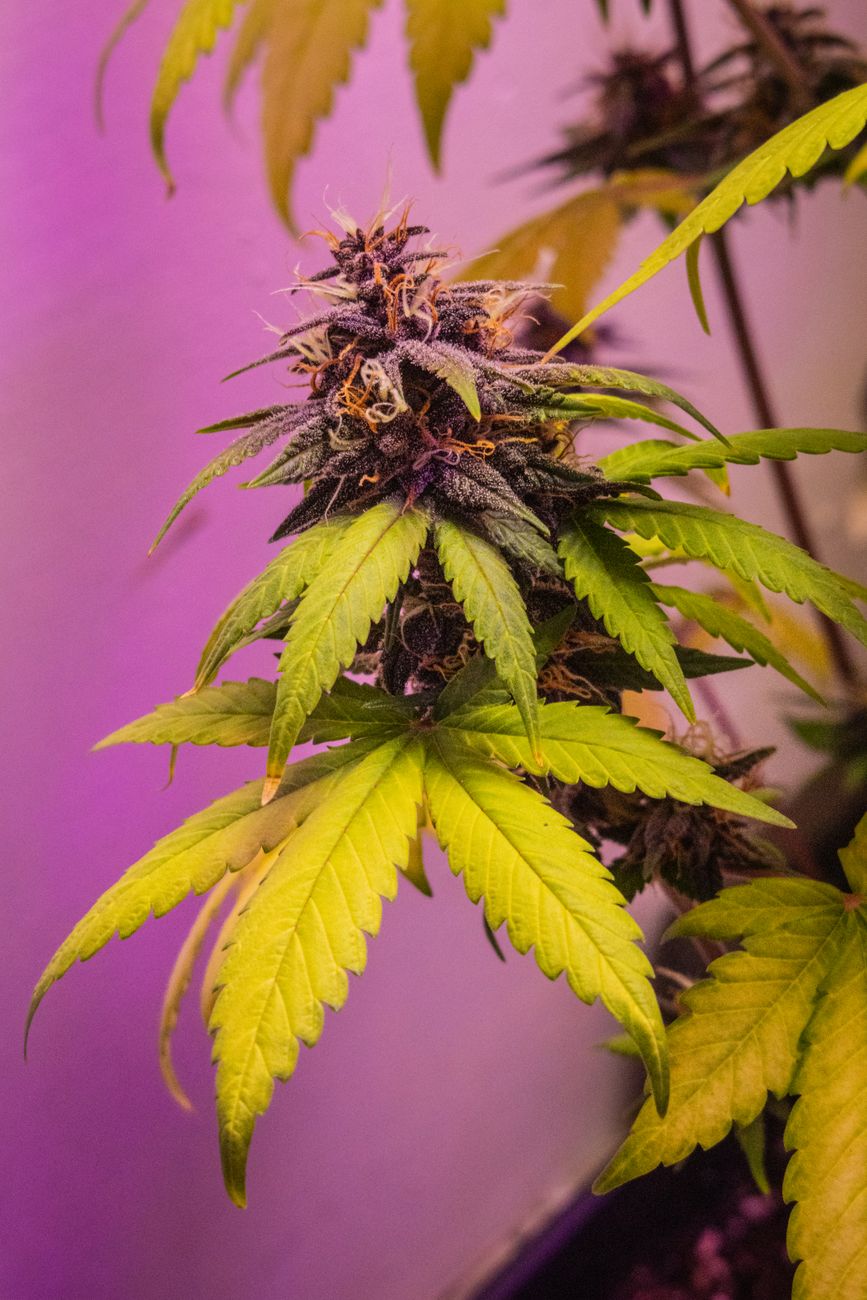
Purple cannabis colour comes from anthocyanin pigments that activate when night temperatures fall to 10-15°C for at least one to two weeks during flowering. Strains with strong anthocyanin genetics , like Purple Punch, Granddaddy Purple, and Zkittlez , express colour reliably under those conditions. Strains without the genetic foundation won't turn purple no matter how cold you run them. THC in true purple strains typically ranges from 18 to 26%, and the colour itself has no direct impact on potency , but the terpene profiles in heavy-purple genetics often skew floral and berry-forward, which shapes the experience significantly.
- ✓ Canadian growers wanting visually striking harvests
- ✓ Indoor growers able to control night temperatures
- ✓ Outdoor growers in Zones 3-6 with cool September nights
- ✓ Collectors seeking terpene-rich floral and berry profiles
- ✓ Growers comparing purple feminized vs purple autoflower options
- ✗ Growers who can't drop night temps below 18°C in flower
- ✗ Anyone expecting purple to mean higher THC automatically
- ✗ Growers in warm, humid coastal climates with no temp control
- ✗ Buyers chasing colour over cannabinoid and terpene quality
What Actually Makes Cannabis Turn Purple?
Purple colour in cannabis comes from a class of plant pigments called anthocyanins , the same compounds responsible for the colour of blueberries, red cabbage, and autumn leaves.
Anthocyanins are naturally present in varying concentrations across cannabis genetics. In strains with high anthocyanin expression, cold temperatures suppress chlorophyll production during late flower, allowing the underlying purple and blue pigments to become visible. Research published in the Frontiers in Plant Science journal documents this pigment-switching mechanism across many plant families, including cannabis.
The critical variable is temperature, not darkness duration or nutrient manipulation. Night temps of 10 to 15°C for 7 to 14 consecutive days during weeks 5 to 8 of flower consistently trigger full purple expression in genetically predisposed strains. Strains without the anthocyanin gene variants will not express purple regardless of cold treatment.
Genetics come first. A purple strain with anthocyanin genetics grown in a room that never drops below 20°C at night will stay green. A green strain grown at 10°C will also stay green. Buy for genetics, then optimize for temperature.
Best Purple Weed Strains for 2026
These are the strains with documented anthocyanin genetics that consistently produce purple expression under proper temperature conditions. Breeder documentation and aggregated grower journal reports back each entry.
| Strain | THC Range | Indoor Yield | Flower Time | Mold Resistance | Beginner Rating | Purple Intensity |
|---|---|---|---|---|---|---|
| Granddaddy Purple | 17-23% | 400-500 g/m² | 8-9 weeks | Medium | 7/10 | Very High |
| Purple Punch | 20-25% | 450-550 g/m² | 8-9 weeks | Medium | 7/10 | Very High |
| Zkittlez Auto | 18-22% | 350-450 g/m² | 70-80 days total | Medium-High | 8/10 | High |
| Purple Kush | 18-22% | 350-400 g/m² | 7-8 weeks | High | 8/10 | Very High |
| Runtz (Purple phenotype) | 23-26% | 500-600 g/m² | 9-10 weeks | Low-Medium | 5/10 | Medium-High |
For growers focused on both colour and potency, high THC seeds with documented purple genetics like Purple Punch and Runtz offer the strongest cannabinoid profiles alongside reliable colour expression.
Granddaddy Purple and Purple Kush offer the most reliable full-plant purple coverage with high beginner ratings. Purple Punch adds higher THC while keeping the colour intensity. Runtz purple phenotypes deliver maximum potency but require more grow experience to express colour consistently.
Purple Autoflower vs Feminized: Which Turns Purple More Easily?
Autoflowering purple strains have a structural advantage for Canadian growers: they finish earlier in the season, giving outdoor plants more time to hit the cool September nights that trigger anthocyanin expression naturally.
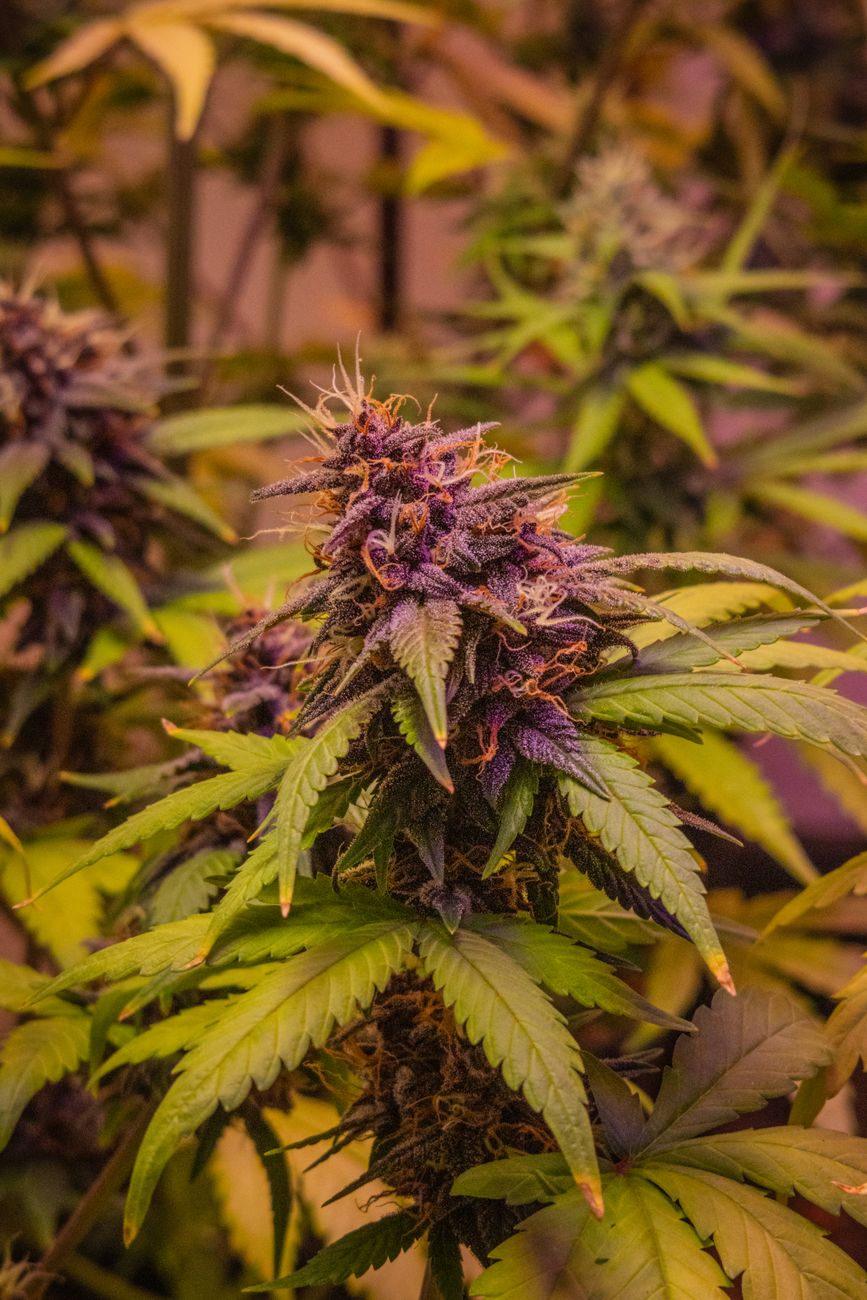
Autoflower seeds with purple genetics started in late May to early June in most Canadian zones will hit week 5 to 7 of flower in August, when outdoor nights can already drop to 12 to 16°C. That's close to ideal trigger territory without any environmental manipulation.
Feminized cannabis seeds with purple genetics offer more control over timing indoors, where you dial night temps down intentionally. Outdoors, photo-period purple strains in Zones 3 to 5 often hit peak flower in September, right when overnight lows naturally cooperate.
- Finishes 70-85 days total
- No light schedule changes needed
- Natural outdoor temp trigger in early fall
- Easier for beginners
- Slightly lower yield ceiling (300-450 g/m²)
- 8-10 weeks flower after flip
- Full control over colour timing indoors
- Higher yield ceiling (400-600 g/m²)
- Requires intentional temp drop indoors
- Outdoor express possible in Zones 3-5
For most Canadian outdoor growers, autoflower purple strains are easier , the natural fall temperature drop does the work for you. Indoor growers with climate control should consider feminized purple genetics for higher yield ceilings and full colour-trigger management.
How to Grow Purple Cannabis (Step-by-Step)
Getting full purple expression requires sequencing the right genetics with the right environment at the right time. Here's the exact process.
Step 1: Select genetics with documented anthocyanin lineage
Not all "purple" branded strains carry true anthocyanin gene variants. Stick to strains with established purple heritage: Granddaddy Purple, Purple Punch, Purple Kush, Zkittlez, and their hybrids. Check breeder documentation for confirmed purple phenotype rates before purchasing.
Step 2: Veg and early flower at standard temperatures
Run your standard environment during veg and weeks 1 to 4 of flower: 22 to 26°C day, 18 to 22°C night. EC between 1.2 and 2.0, RH at 50 to 60%. No cold treatment yet , early cold stress can stunt growth instead of triggering colour.
Step 3: Drop night temperatures in weeks 5 to 7 of flower
Beginning in week 5 of flower, drop night temps to 10 to 15°C for 7 to 14 days. This is the critical trigger window. Maintain day temps at 22 to 24°C to avoid slowing bud development. Aggregated grower reports show the most vivid purple expression develops when the day-to-night differential exceeds 10°C consistently.
Step 4: Monitor relative humidity closely during cold nights
Cold air holds less moisture, so RH typically rises during temperature drops. Keep RH below 50% during this phase , ideally 40 to 48%. This is where most growers miss the mould window. A dehumidifier running during the dark period prevents the humidity spike that cold nights cause.
Step 5: Harvest at peak trichome maturity, not colour peak
Purple colour deepens right through late flower, but trichome maturity doesn't always align with maximum colour. Check trichomes with a loupe or microscope: 70 to 80% cloudy with 10 to 20% amber is the target for most purple indica genetics. Waiting purely for colour can push into overripeness.
The most common failure is either dropping temps too early (stresses the plant before buds are developed enough) or not dropping them far enough (staying at 18°C when you need 12°C). Set a calendar reminder for week 5 of flower and commit to the temperature drop decisively.
How Canadian Climates Affect Purple Cannabis Expression
Canada's short growing season is actually an asset for purple colour , if you pick the right strains and start at the right time. Cool September and October nights in most Canadian zones naturally hit the 10 to 15°C range that triggers anthocyanins outdoors.
Per Plant Hardiness Zones of Canada data and Environment and Climate Change Canada climate normals, here's how purple expression timing works across key provinces:
Coastal BC nights rarely drop below 15°C until late September, limiting outdoor purple expression. Interior BC (Kamloops, Kelowna) sees 10 to 13°C nights from mid-August , ideal for autoflower purple genetics started in late May.
Calgary and Edmonton see nights dipping to 8 to 12°C by mid-August. Autoflower purple strains started June 1 hit late flower in August , right on cue for natural cold-trigger. Frost arrives early (Calgary average: Oct 5), so 70-80 day autos only.
Southern Ontario's first frost averages October 6 to 15 in most cities. September nights drop to 10 to 14°C regularly. Purple photoperiod strains outdoors hit their cold-trigger window naturally in early September , one of the best regions for outdoor purple.
Montréal sees first frost around October 9, but nights below 12°C arrive in late August. Autoflower purple genetics started June 1 reach flower trigger temps at an ideal window. Photoperiod purple is risky in Zone 3 without a greenhouse.
A purple strain will reliably express full colour when the night temperature is at least 10°C lower than the daytime high for 7+ consecutive nights during weeks 5-7 of flower.
Formula: Day temp (°C) minus night temp (°C) = differential. Target: 10°C or greater.
Example: An indoor tent running 24°C days needs nights at 14°C or below. An outdoor plant in Calgary hitting 22°C days with 10°C nights in August already meets the threshold , no intervention needed.
Prairie and central Canadian growers have a natural outdoor advantage for purple expression. Coastal BC and southern Ontario growers may need to supplement with light indoor cooling during the critical flower window. Check your local climate normals before deciding between auto and photoperiod purple genetics.
Common Mistakes Growers Make With Purple Strains
Looking at the questions that come up most often from growers who expected purple and got green, these failure patterns show up again and again.
Mistake 1: Buying "purple" by name without checking lineage
Many strains use "purple" in the name as marketing. Always check whether the strain actually descends from Purple Urkle, Granddaddy Purple, or other documented anthocyanin-rich genetics. Breeder documentation should mention purple phenotype rates.
Mistake 2: Dropping temps too early (weeks 1-3 of flower)
Cold stress in early flower slows bud development before sites are established. The plant prioritizes survival over pigmentation. Wait until week 5 when bud sites are fully formed. This is the single most common timing error in reported purple grow logs.
Mistake 3: Not dropping temps far enough
Dropping from 22°C to 18°C at night isn't enough. Most purple genetics need 10 to 15°C to activate significant anthocyanin expression. Indoor growers often assume "a bit cooler" will do , it won't produce the deep violet colour shown in breeder photos.
Mistake 4: Ignoring humidity spikes during cold nights
Cold temps raise relative humidity automatically. Growers running 55% RH at 24°C may hit 70%+ when temps drop to 12°C , right in the botrytis danger zone. Run a dehumidifier during the dark period throughout the cold-trigger phase.
Mistake 5: Expecting colour to equal potency
Purple buds are visually striking, but anthocyanins have no direct pharmacological effect. A 20% THC purple bud is not stronger than a 20% THC green bud purely because of colour. Potency comes from cannabinoid concentration, which is determined by genetics and growing conditions independently of colour expression.
The growers who consistently produce vivid purple harvests treat the temperature drop like a scheduled feeding: planned in advance, executed precisely, and monitored daily. Improvising the cold trigger produces spotty, inconsistent colour at best.
Purple Cannabis Myths vs Reality
Real Strain Comparison: Purple Punch vs Granddaddy Purple
Both are industry-benchmark purple strains. Here's how they actually compare on real documented metrics.
- THC: 20-25%
- CBD: under 1%
- Dominant terpenes: Limonene, Myrcene, Caryophyllene
- Flower time: 8-9 weeks
- Indoor yield: 450-550 g/m²
- Purple trigger temp: 12-15°C nights
- Tasting notes: grape candy, blueberry muffin
- Effect profile: heavy body, sedative, fast onset
- THC: 17-23%
- CBD: under 1%
- Dominant terpenes: Myrcene, Pinene, Ocimene
- Flower time: 8-9 weeks
- Indoor yield: 400-500 g/m²
- Purple trigger temp: 10-13°C nights
- Tasting notes: grape, berry, earthy pine
- Effect profile: relaxing, euphoric, cerebral warmth
Purple Punch hits harder on average THC and offers a higher yield ceiling. Granddaddy Purple has a lower temperature trigger threshold, making it somewhat more reliable for outdoor Canadian growers where nights fluctuate. Both deliver full-plant purple coverage when the temperature criterion is met.
"If the temperature trigger is consistent and the genetics are right, the difference between a vivid purple harvest and a green one is almost entirely in weeks 5 to 7 of flower. That two-week window decides everything."
The Colour Window Rule , Royal King Seeds
For Canadian growers browsing indica seeds with purple potential, both GDP and Purple Punch represent the gold standard of documented purple expression combined with strong cannabinoid profiles.
Which Purple Strain Should You Choose?
Per Canada's Cannabis Act (2018), personal cultivation is limited to 4 plants per household. Selecting high-yield purple feminized genetics maximizes return within that legal plant count. Health Canada advises all cultivation be done in accordance with provincial regulations, with the legal age being 19 in most provinces and 21 in Québec.
Ready to grow your first purple harvest?
Browse our full selection of purple indica, autoflower, and feminized cannabis seeds available across Canada.
Shop Purple Indica SeedsWhat Growers Consistently Report About Purple Strains
After reviewing patterns across public grower journals and the support questions that come in most during flowering season, a few consistent themes show up that breeder spec sheets don't always capture.
The most frequently reported surprise is how dramatic the colour shift is when the temperature trigger is met correctly. Growers who hit 10 to 12°C nights for a full two weeks consistently report that previously green plants transition to 60 to 80% purple coverage in a matter of days.
The second most common observation: purple genetics tend to produce heavier, denser calyx structures than their non-purple counterparts in the same lineage. Growers comparing GDP to OG Kush phenotypes under identical conditions note GDP's calyxes appear tighter and more resinous, though yield per plant is typically 10 to 15% lower than high-yielding non-purple sativas under the same light.
The failure pattern that recurs most often: growers in humid coastal environments who run the temperature drop without addressing RH. Cold nights in high-RH environments are a botrytis trigger, not a colour-trigger success. Humidity management during the cold phase is non-negotiable in any grow above 55% ambient RH.
Frequently Asked Questions About Purple Weed Strains
What makes cannabis strains turn purple?
Is purple weed stronger than green weed?
What temperature do I need to turn weed purple indoors?
Can I grow purple weed outdoors in Canada?
Why did my purple strain stay green?
What are the best purple autoflower strains for Canada?
Does purple weed taste different from green weed?
Can I get purple colour with nutrients or supplements?
Why didn't my purple strain match the breeder's photo?
My purple plant smells off during the cold phase , what went wrong?
How many weeks before harvest should I start the cold treatment?
Does cold treatment reduce yield in purple strains?
Should I start purple strains in June or July in Ontario?
Can I grow purple cannabis legally in Canada?
What pot size should I use for purple indica strains?
Find Your Purple Strain
From autoflowers to feminized photoperiod genetics , browse our full cannabis seed collection and filter for purple, indica, and high-THC options available to Canadian growers.
Shop All Cannabis SeedsSources
Shop Premium Cannabis Seeds
Browse our curated selection of cannabis seeds, carefully chosen for Canadian growers. Fast shipping, germination guarantee, and discreet packaging across Canada.
Explore more seed categories: