Most growers chasing purple genetics make the same mistake: they pick a photoperiod purple strain, start late, and watch October frost end their season before the colour even develops. Purple Auto solves that problem entirely. This strain finishes in 70 to 80 days from seed, ignores your light schedule, and produces the vivid anthocyanin-driven colour that purple hunters want , without the calendar risk that kills late-finishing photoperiod runs. If you're growing outdoors anywhere in Canada's Zones 3 to 6, or running an indoor tent with limited cycle time, this is the review that tells you exactly what to expect.
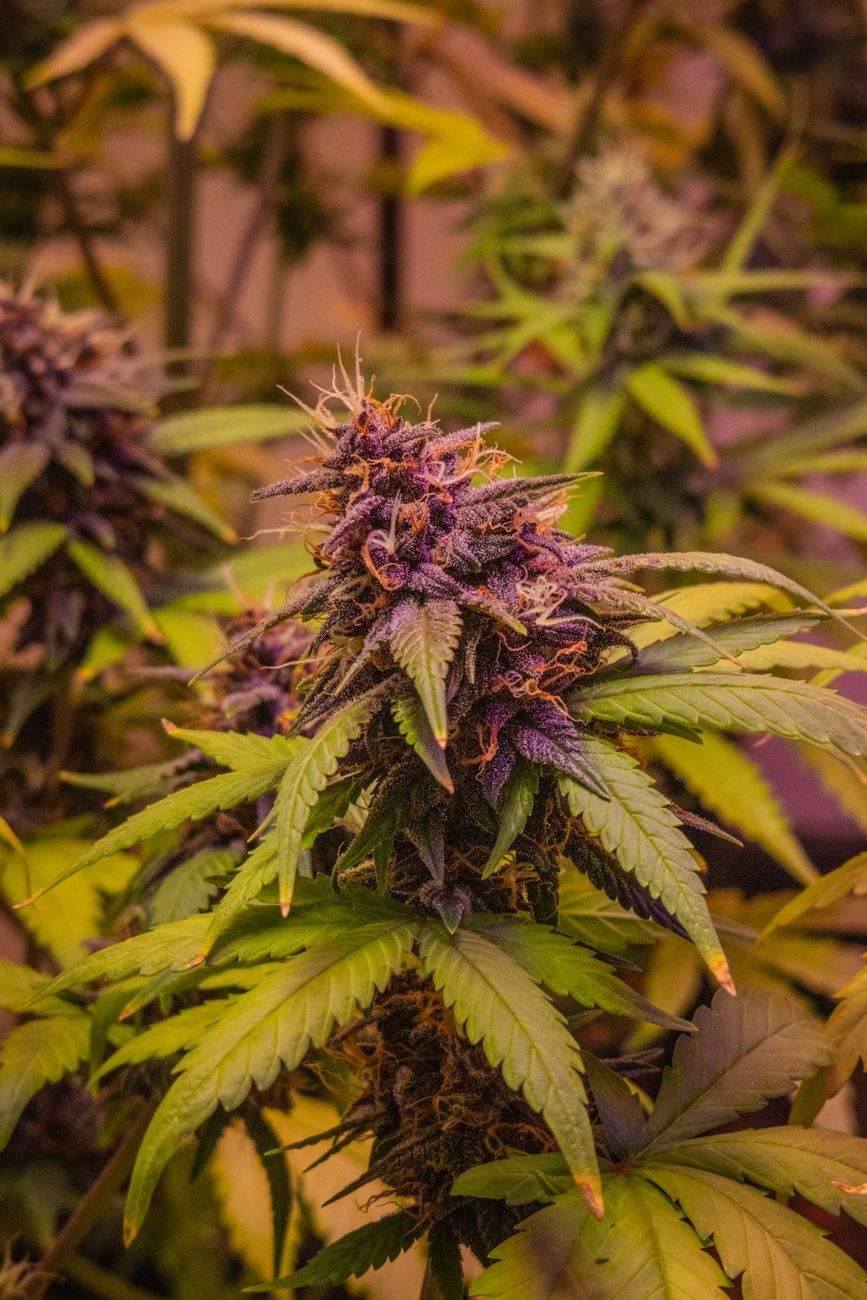
Purple Auto completes its full cycle , seed to harvest , in 70 to 80 days under an 18/6 light schedule. Breeder documentation places indoor yields between 400 and 550 g/m² using 11 to 19 L fabric pots at 600 to 800 PPFD. Outdoor plants grown in containers finish by late August to mid-September across most Canadian provinces when started in late May to early June, leaving a comfortable buffer before first frost in Zones 3 through 6.
- ✓ Canadian growers with seasons shorter than 90 days
- ✓ Indoor growers wanting multiple harvests per year
- ✓ First-time autoflower growers seeking visual appeal
- ✓ Tent growers running 18/6 or 20/4 light schedules
- ✓ Outdoor growers in Zones 3 to 6 starting in May or June
- ✗ Growers who require 25%+ THC for recreational use
- ✗ Those preferring a pure sativa experience
- ✗ Growers unwilling to manage RH below 50% in late flower
What is Purple Auto?
Purple Auto is an indica-dominant autoflowering cannabis strain selected for its combination of anthocyanin-rich purple colouration, compact plant structure, and fast seed-to-harvest cycle.
The purple pigmentation comes from anthocyanins , the same flavonoid compounds responsible for blueberry and red cabbage colour. Cooler overnight temperatures (below 15°C) during the last two weeks of flower trigger stronger purple expression. Indoors, growers can simulate this with a brief temperature drop during the dark cycle.
The autoflowering trait , inherited from Cannabis ruderalis genetics , means Purple Auto flowers based on age rather than photoperiod. Under autoflowering seeds conditions, plants begin transitioning to flower at roughly 21 to 28 days from germination regardless of how many hours of light they receive per day.
Purple Auto is one of the most visually striking fast-finishing strains available to Canadian growers. Its combination of short cycle, solid potency, and moderate yield makes it a strong choice for both first-time autoflower growers and experienced cultivators running multiple harvests per year.
What is Purple Auto's Flowering Window and Full Cycle Timeline?
Purple Auto transitions to flower at approximately 21 to 28 days after germination and completes flowering in 45 to 55 additional days, putting the total seed-to-harvest window at 70 to 80 days.
Here's how those days break down in practice:
- Germination: Days 1 to 5 (paper towel or direct soil, 22 to 25°C)
- Seedling stage: Days 5 to 14 (first true leaves, minimal water)
- Vegetative stage: Days 14 to 28 (rapid node development)
- Pre-flower / stretch: Days 28 to 35 (height increase of 30 to 50%)
- Peak flower: Days 35 to 65 (bud site stacking, trichome development)
- Final ripening: Days 65 to 80 (trichome amber, flush or feed-out)
Most first-time growers underestimate the stretch phase. Between days 28 and 35, Purple Auto can increase in height by 30 to 50% , plan your tent height accordingly. Plants typically finish between 60 and 90 cm indoors.
The 70 to 80 day window is realistic and consistent across grower-reported data. Plan for 82 to 84 days if you're a first-timer to give yourself margin on the flush and final amber check.
Indoor Yields: What Can You Realistically Expect?
Indoor yields for Purple Auto range from 400 to 550 g/m² under optimized 18/6 LED conditions at 600 to 800 PPFD. Aggregated grower journals show that 11 L fabric pots typically produce 90 to 120 g per plant, while 19 L pots push that to 140 to 170 g per plant under the same schedule.
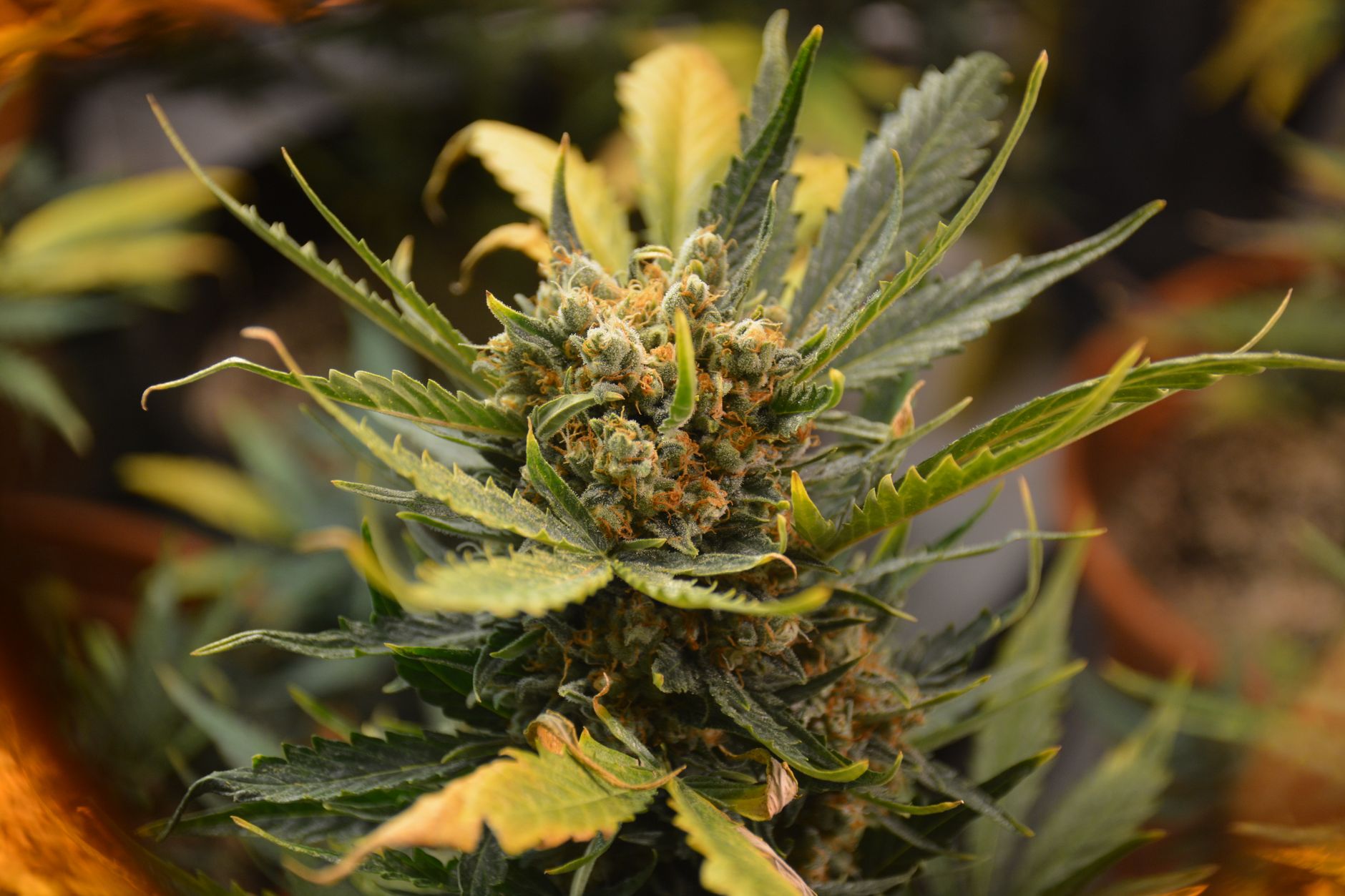
The biggest yield lever indoors is light intensity. Running below 500 PPFD consistently drops yields by 20 to 30% compared to 700 to 800 PPFD. A quality LED quantum board covering a 1.2 x 1.2 m tent at the correct hanging height (40 to 60 cm above canopy) is the single biggest return-on-investment for indoor Purple Auto production.
Optimal environmental parameters for indoor runs:
- Temperature (day/night): 22 to 26°C / 18 to 21°C
- Relative humidity (veg): 55 to 65% RH
- Relative humidity (flower): 40 to 50% RH
- CO₂: 800 to 1,200 ppm (if running sealed room)
- EC feed (peak flower): 1.4 to 1.8 mS/cm
- Light schedule: 18/6 (most common) or 20/4
Under feminized cannabis seeds conditions , meaning no males to cull , you can run 4 plants per 1.2 x 1.2 m space comfortably within the 4-plant household limit set by the Cannabis Act 2018.
Indoor growers running a 1.2 x 1.2 m tent with a proper quantum board LED at 18/6 should budget for 400 to 500 g/m² as a realistic first-run target. Dial in humidity below 50% during the final three weeks to protect dense buds from botrytis.
Outdoor Yields Across Canadian Climate Zones
Outdoor yields for Purple Auto are naturally lower than controlled indoor environments, but the time-efficiency more than compensates. Grower-reported data puts per-plant outdoor yields at 50 to 120 g per plant in containers, with larger in-ground grows sometimes reaching 150 g under ideal sun exposure.
The 70 to 80 day cycle means a June 1 start produces a harvest by mid to late August , well ahead of first frost across nearly every Canadian province. A second run started in late June or early July can still finish before September frost in Zones 4 to 6.
Key outdoor yield factors for Canadian climates:
- Full-sun positioning (6+ hours direct light per day minimum)
- 20 to 25 L containers for outdoor unrestricted root zone
- Starting indoors 10 to 14 days before outdoor transplant hardening
- Monitoring overnight temps , keep plants covered if nights drop below 10°C during flower
For Canadian outdoor growers, Purple Auto's 70 to 80 day finish is its defining advantage. Two full runs per season are achievable in Zones 5 to 7 , something no photoperiod purple strain can match.
The 14-Day Buffer Rule for Canadian Outdoor Growers
Any autoflower chosen for Canadian outdoor growing should clear its expected harvest date at least 14 days before your area's historical first frost.
Formula: Breeder days + 7 (germination variance) + 7 (weather variance) = true outdoor finish window. Compare that date against your local first frost. If the gap is 14 days or more, you're safe.
Purple Auto example: 80 days (breeder max) + 7 + 7 = 94-day planning window. Started June 1 in Ottawa, that puts harvest around September 3. Ottawa's average first frost is October 6 , giving 33 days of buffer. Well within safe range.
How to Grow Purple Auto: Step-by-Step
Step 1: Germinate in a warm, dark environment
Paper-towel germination at 22 to 25°C produces 90 to 97% success within 48 to 72 hours across grower journals and breeder documentation. Keep seeds moist but not soaking , excess water drowns the taproot before it anchors.
Step 2: Plant directly into your final container
Autoflowers dislike transplanting. Because the clock starts at germination, any transplant stress cuts into vegetative time. Plant directly into an 11 to 19 L fabric pot with a light, aerated mix (coco/perlite or peat-based with 30% perlite).
Step 3: Keep it light on water during seedling phase (Days 5 to 14)
Most growers over-water in week 2. The roots are still small , water in a ring around the seedling, not directly on the stem, and let the medium dry almost fully before watering again. Damping off is the most common early kill.
Step 4: Begin light feeding in week 3
Start nutrients at 50% of recommended dose (EC 0.8 to 1.0 mS/cm) once the third node appears. Ramp to EC 1.4 to 1.8 mS/cm by week 5. Autoflowers are sensitive to overfeeding , nutrient burn on autos is extremely difficult to reverse mid-cycle.
Step 5: Drop humidity below 50% in the final three weeks
Dense Purple Auto colas are botrytis-prone above 55% RH during late flower. Run a dehumidifier, increase airflow, and lightly defoliate the lower 30% of the canopy by week 6. Trichome check with a jeweller's loupe at week 9 to 10 , harvest when 10 to 20% of heads are amber for a balanced effect.
The single biggest mistake new growers make with Purple Auto is over-watering in weeks 1 to 2 and over-feeding in weeks 3 to 4. Restraint early equals heavier buds late. Trust the plant's pace , it will tell you when it's thirsty.
Common Mistakes Growers Make with Purple Auto
Mistake 1: Transplanting mid-cycle
Autoflowers run on a fixed internal clock. A transplant at week 2 sets the plant back 5 to 7 days of recovery , days it can't recover in a 70-80 day cycle. Start in your final pot. Every time.
Mistake 2: Running 12/12 light to "force" flower
Purple Auto flowers by age, not photoperiod. Dropping to 12/12 doesn't speed up flowering , it just cuts your daily light hours and reduces photosynthesis. Keep it at 18/6 or 20/4 all the way through.
Mistake 3: Expecting maximum purple without a temperature drop
Anthocyanin expression intensifies with cooler temperatures. Growers keeping their tent at 26°C night and day will see less purple than those allowing nights to cool to 17 to 18°C during the final two weeks. The genetics are there , but temperature activates them.
Mistake 4: Harvesting too early
Looking at public grower forum data, premature harvest is the most-cited Purple Auto disappointment. Growers see purple calyxes at day 65 and pull early. Wait for trichomes , not colour. Harvest at 10 to 20% amber trichome heads for peak potency.
Mistake 5: Starting outdoors in Canada after July 10
After July 10, light hours begin declining and overnight temps in most provinces start trending downward. A July 10 start puts harvest at late September to early October in an 80-day strain , dangerously close to first frost across Zones 3 to 5.
City-by-City Canadian Outdoor Grow Scenarios
Using Environment and Climate Change Canada climate normals and Plant Hardiness Zones of Canada data, here's how a June 1 Purple Auto start plays out across five major Canadian cities:
| City | Zone | Start Date | Est. Harvest | First Frost | Buffer | Safe? |
|---|---|---|---|---|---|---|
| Vancouver, BC | 8b | June 1 | Aug 19, Sept 3 | Nov 5 | 63+ days | ✓ Safe |
| Calgary, AB | 4a | June 1 | Aug 19, Sept 3 | Sept 21 | 18, 32 days | ✓ Safe |
| Ottawa, ON | 5b | June 1 | Aug 19, Sept 3 | Oct 6 | 33, 47 days | ✓ Safe |
| Saskatoon, SK | 3b | June 1 | Aug 19, Sept 3 | Sept 18 | 15, 30 days | ✓ Safe |
| Halifax, NS | 6a | June 1 | Aug 19, Sept 3 | Oct 18 | 45, 59 days | ✓ Safe |
Across every major Canadian city tested, a June 1 Purple Auto start clears first frost with comfortable margins. Even the most frost-prone Zone 3 city in this dataset , Saskatoon , shows a 15 to 30 day buffer with the 80-day finish scenario.
Myth vs. Reality: Purple Cannabis Genetics
| The Myth | The Reality |
|---|---|
| "Purple strains are always more potent" | Anthocyanins affect colour, not THC. Purple Auto delivers 18 to 22% THC, which is solid but not exceptional. Potency comes from genetics, not pigment. |
| "Purple colouring means it's a better smoke" | The effect profile is driven by cannabinoids and terpenes , not anthocyanins. Purple pigment has no direct pharmacological impact. |
| "You need cold temperatures to get purple" | Cold enhances expression but isn't required. Purple Auto will show some purple at standard temperatures , cool nights simply intensify the display. |
| "Autoflower purples yield less than photos" | Per cycle, yes. Per calendar year, Purple Auto typically produces two to three times the harvests of a photoperiod purple strain run under the same light. |
| "Purple equals indica, so it's always sedating" | Purple Auto is indica-dominant but the effect varies by harvest timing. Earlier harvest (mostly cloudy trichomes) = more cerebral effect. Later harvest (10 to 20% amber) = more body-focused. |
Royal King Seeds Purple Auto Risk Rating
| Risk Factor | Rating | Notes |
|---|---|---|
| Early Frost Risk (Outdoor Canada) | Very Low | June 1 start clears frost in all tested zones |
| Mould / Botrytis Risk | Medium | Dense colas need RH below 50% in late flower |
| Overfeeding Risk | Medium | Sensitive to EC above 2.0; keep peak at 1.8 |
| Stretch / Height Risk | Medium | 30 to 50% height increase during pre-flower |
| Premature Harvest Risk | High | Purple colour misleads growers into pulling early |
| Beginner Difficulty | Low | Forgiving and compact; good first autoflower |
Purple Auto vs. Photoperiod Purple Strains: Which Should You Choose?
This is the core decision most Canadian growers face. Here's a direct side-by-side:
- Cycle: 70 to 80 days from seed
- Light schedule: 18/6 (no flip needed)
- Indoor yield: 400 to 550 g/m²
- Outdoor finish: Late August to early Sept (June start)
- Runs per year: 2 to 4 (indoor) / 2 (outdoor Canada)
- THC: 18 to 22%
- Best for: Short seasons, multiple harvests, beginners
- Cycle: 14 to 18 weeks (veg + flower)
- Light schedule: 18/6 veg → 12/12 flip required
- Indoor yield: 500 to 700 g/m² (higher ceiling)
- Outdoor finish: October to November (frost risk in Canada)
- Runs per year: 1 (indoor) / 0 to 1 (outdoor Canada)
- THC: 18 to 25%+
- Best for: Max yield, experienced growers, indoor-only
"If you grow outdoors in Canada and you're choosing a purple strain, the calendar makes the decision for you. A 75-day auto harvested safely in early September beats a 120-day photo lost to October frost every single time."
For growers who want purple genetics without calendar risk, autoflower seeds in Canada are the practical choice. For experienced indoor-only growers prioritizing maximum yield per cycle, indica seeds in photoperiod form offer a higher ceiling.
Ready to run Purple Auto this season? Browse our full range of autoflowering cannabis seeds , including fast-finishing purple genetics suited to Canada's short outdoor windows.
Patterns From Aggregating Public Purple Auto Grower Reports
Looking at the questions our team fields most often during the grow season, and reviewing publicly available grower journal threads, a few consistent patterns emerge across Purple Auto runs in Canada.
The colour timing question spikes every August. Growers start messaging around week 7 asking why their plant isn't fully purple yet. The answer is consistent: purple expression peaks in the final two to three weeks of flower, often after a cooler night. Patience and a slight temperature drop are the reliable triggers.
Mould complaints cluster around week 9 to 10 in humid climates. This pattern appears most in Atlantic Canada and coastal BC grower reports , almost always tied to high overnight humidity and inadequate airflow around the canopy. The fix is consistent: defoliate the lower third by week 6 and position a fan to move air across the top of the canopy.
Yield under-reports are almost always a lighting issue indoors. Growers reporting 60 to 80 g per plant consistently show tent setups with insufficient PPFD , often 300 to 400 PPFD vs. the recommended 600 to 800. Upgrading to a proper quantum board LED is the single biggest yield lever for indoor Purple Auto runs. Check out our full germination and growing guide for environment setup basics.
Purple Auto FAQ
How long does Purple Auto take from seed to harvest?
What is the indoor yield of Purple Auto?
What is the outdoor yield of Purple Auto in Canada?
When should I start Purple Auto outdoors in Canada?
Why isn't my Purple Auto turning purple?
Can Purple Auto survive cold nights outdoors?
What light schedule is best for Purple Auto?
How many Purple Auto plants can I legally grow in Canada?
Why did my Purple Auto stall at week 6?
Should I use fabric pots for Purple Auto?
Why are my Purple Auto buds airy?
Can I grow Purple Auto in a 60 cm x 60 cm tent?
Is Purple Auto good for beginners?
What is the THC content of Purple Auto?
Can I run two Purple Auto harvests outdoors in Canada?
Purple Auto is one of the best-suited autoflower strains for Canada's short growing season. Browse our full collection of autoflowering seeds in Canada or explore our complete cannabis seed catalogue for every growth style and climate zone.
Sources
- Plant Hardiness Zones of Canada , Natural Resources Canada
- Environment and Climate Change Canada , Climate Normals
- Cannabis Act 2018 , Government of Canada
- Health Canada , Cannabis Regulation and Information
- Journal of Cannabis Research , BioMed Central
- UBC Faculty of Land and Food Systems , Crop Science Resources
Shop Premium Cannabis Seeds
Browse our curated selection of cannabis seeds, carefully chosen for Canadian growers. Fast shipping, germination guarantee, and discreet packaging across Canada.
Explore more seed categories: