The densest, heaviest-looking buds you've ever seen in a store photo might have been grown with chemicals that published research links to liver toxicity and carcinogen precursors. Most growers don't know this. They chase compact, stacked colas and assume density equals quality. It doesn't. A bud grown with synthetic plant growth regulators can look perfect and perform terribly, while carrying compounds that regulators in multiple countries have banned from food crops entirely.
The common failure here is buying or growing for appearance. Growers who understand PGRs, what they are, how they work, and what the research actually says, make decisions that protect both yield quality and end-user safety. This guide covers all of it: the chemistry, the natural alternatives, how to identify PGR-treated cannabis, and what Canadian growers need to know before any product touches their plants.
- ✓ Home growers under Canada's 4-plant Cannabis Act limit
- ✓ Growers evaluating commercial nutrients or additives
- ✓ Buyers wanting to identify PGR-treated bud before purchase
- ✓ Cultivators comparing synthetic vs. natural growth management
- ✓ Anyone growing feminized cannabis seeds and managing canopy
- ✗ Licensed commercial producers (consult a crop consultant)
- ✗ Those seeking advice on illegal chemical use
- ✗ Growers outside Canada's legal framework
Denser bud appearance from synthetic PGRs vs. naturally grown
Health Canada authorizations for synthetic PGRs on cannabis crops
Visual cues that reliably identify PGR-treated cannabis at a glance
What Are Plant Growth Regulators in Cannabis?
Plant growth regulators (PGRs) are chemical compounds, synthetic or naturally occurring, that influence how a plant grows by mimicking, blocking, or amplifying its own hormonal signals.
In cannabis cultivation, they're used primarily to compress internode spacing (shorter gaps between bud sites), suppress vertical stretch during the pre-flower transition, and in some cases accelerate root development in clones. The result is visually dense, rock-hard buds with tight structure.
The problem is that "PGR" covers a huge range of compounds with radically different safety profiles. Kelp extract and synthetic triazole fungicides are both labelled PGRs. Treating them as equivalent is one of the most common misunderstandings in the grower community.
The word "PGR" alone tells you almost nothing. The distinction that actually matters is synthetic hormone disruptors (paclobutrazol, daminozide, chlormequat) versus naturally derived growth influencers (cytokinins from kelp, triacontanol from beeswax). Always ask which category a product belongs to before using it.
How Do PGRs Affect Cannabis Plant Development?
Cannabis naturally produces gibberellins, auxins, cytokinins, and ethylene. These hormones regulate everything from root elongation to bud swelling. Synthetic PGRs typically work by blocking gibberellin biosynthesis, the hormone responsible for cell elongation and vertical stretch.
Block gibberellin, and the plant stops stretching between nodes. Internodes compress. Buds stack tightly. The plant looks almost artificially structured. This is visually appealing in photos and appears to signal high yield, but the underlying bud development is often compromised.
Terpene production relies on the same metabolic pathways disrupted by triazole-class PGRs. Aggregated grower reports and breeder documentation consistently show reduced aromatic complexity and flat flavour profiles in PGR-treated harvests compared to untreated plants from the same genetic line. The density is real. The quality often isn't.
- Gibberellin inhibition reduces stretch but also suppresses resin gland development
- Auxin disruption affects root architecture and can cause clone failures
- Cytokinin imbalances affect leaf and bud site differentiation timing
- Ethylene interference delays or distorts natural ripening cues
If a grower's primary goal is photogenic density for sale or display, PGRs achieve that goal. If the goal is terpene-rich, high-potency harvests from quality genetics, PGRs work against that objective. Starting with well-bred seeds, like high-THC feminized seeds, already managed for structure, removes most reasons to use synthetic PGRs at all.
Synthetic PGRs: The Compounds Behind the Concerns
Three synthetic PGRs appear most often in cannabis cultivation discussions: paclobutrazol, daminozide (Alar), and chlormequat chloride.
Paclobutrazol is a triazole fungicide and plant growth retardant. According to peer-reviewed toxicology studies indexed on PubMed, paclobutrazol inhibits cytochrome P450 enzyme activity in humans, which the liver uses for detoxification. Residues are also persistent in soil, detectable for multiple grow cycles after a single application.
Daminozide was withdrawn from food crops in the United States in 1989 after the EPA classified it as a probable human carcinogen. Its breakdown product, UDMH (1,1-dimethylhydrazine), is the compound of concern. It remains technically available as a horticultural product but is not approved for cannabis in Canada.
Chlormequat chloride has recently attracted attention after residues were detected in oat-based products in North America by the Environmental Working Group (2024). Its use on cannabis is not authorized by Health Canada.
| Compound | Primary Use | Key Research Concern | Health Canada Status |
|---|---|---|---|
| Paclobutrazol | Stretch suppression | Liver enzyme inhibition, soil persistence | Not authorized on cannabis |
| Daminozide | Bud compaction | UDMH carcinogen precursor | Not authorized on cannabis |
| Chlormequat chloride | Internode compression | Reproductive toxicity data under review | Not authorized on cannabis |
None of these three compounds have a place in a legal Canadian home grow. The legal exposure alone is a reason to avoid them, entirely separate from the health concerns documented in the research.
Natural PGR Alternatives: What's in Organic Nutrients?
Not all PGRs carry the same risk. Several naturally derived compounds influence plant growth without the toxicity profile of synthetic triazoles.
Cytokinins from kelp extract (primarily zeatin and kinetin) stimulate lateral bud development and support root mass without blocking gibberellin synthesis. Kelp-based additives are standard in organic cannabis cultivation and widely available in Canada. They can meaningfully improve internode management when combined with low-stress training.
Triacontanol, derived from beeswax and plant cuticles, is a fatty alcohol that studies in the Frontiers in Plant Science journal link to increased photosynthesis efficiency and improved root development without hormonal pathway interference.
- Kelp extract (cytokinins): lateral branching, root support, no gibberellin disruption
- Triacontanol: photosynthesis boost, stronger root mass
- Humic and fulvic acids: nutrient uptake amplifiers, not technically PGRs but often grouped with them
- Aloe vera powder: contains naturally occurring auxin-like compounds, widely used for cloning
For autoflower seeds, which already have compressed timelines of 70-85 days, kelp-based cytokinins in weeks 2-4 can support lateral branching without stressing the plant's fixed clock the way synthetic growth retardants can.
Natural PGR alternatives achieve meaningful growth management without documented health risk. For any grower using feminized cannabis seeds and running a controlled indoor environment, kelp extract combined with low-stress training (LST) replaces most of what synthetic PGRs are asked to do.
How to Identify PGR Cannabis
PGR-treated bud has a distinctive appearance and smell that experienced growers recognize quickly. These signs aren't definitive proof but are reliable enough to act as red flags.
- ☐ Rock-hard density: PGR buds resist compression in a way that natural, well-grown buds don't. They feel almost woody.
- ☐ Sparse or brown pistils: Pistils often look stunted, brown, and sparse rather than white/orange and abundant.
- ☐ Low trichome coverage: Visually dull surface with few or no visible resin glands under a loupe or phone camera.
- ☐ Muted smell: Little to no terpene aroma when the bud is broken apart. Smells chemical, hay-like, or simply flat.
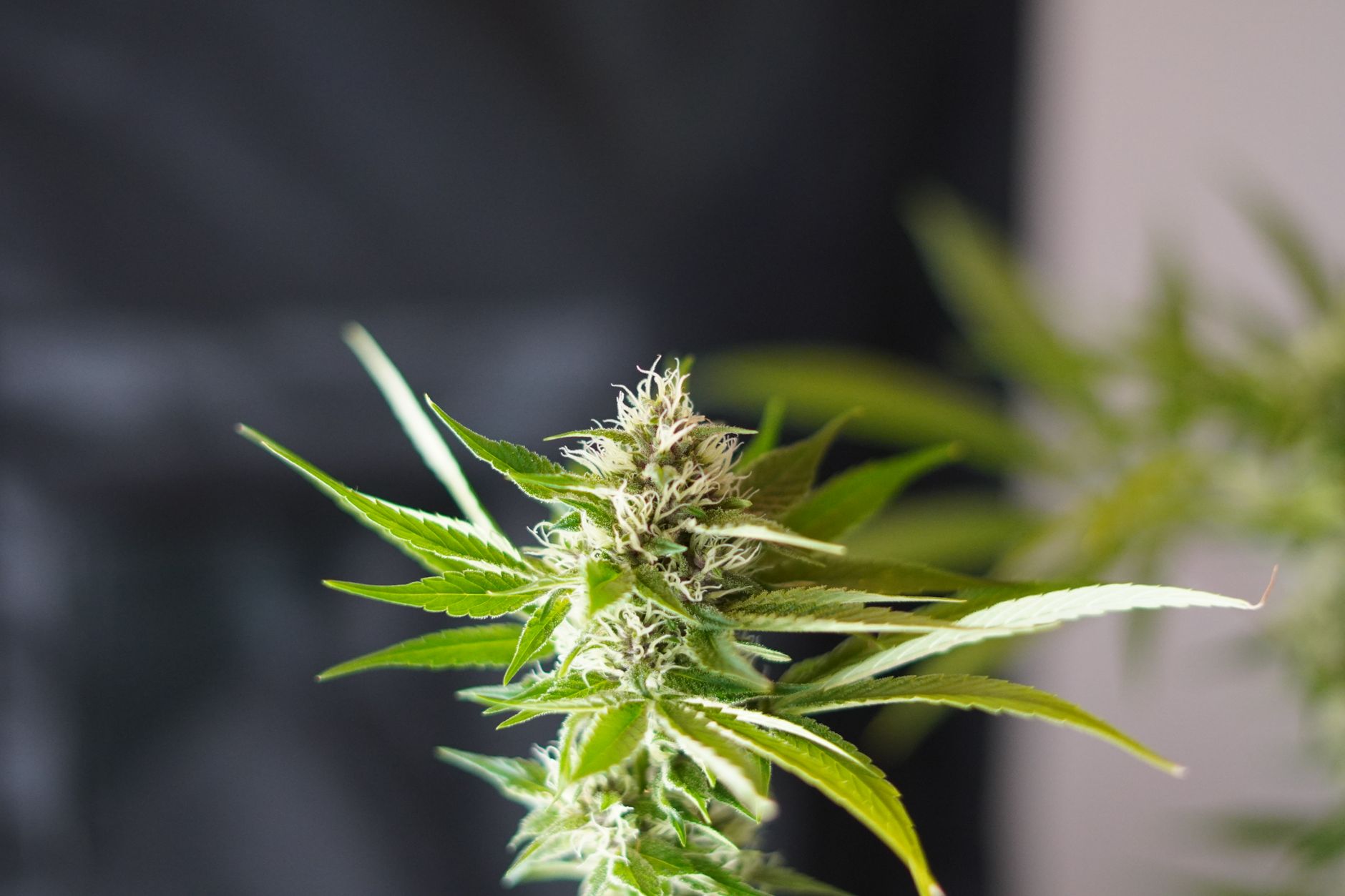
- ☐ Unnaturally round shape: Buds that look almost spherical with hyper-compressed calyxes and very short internode expression.
The muted smell test is the single most reliable indicator for most growers. Terpene profiles are significantly suppressed in PGR-treated cannabis, because the same metabolic pathway that produces stretch is involved in terpene synthesis. If a dense bud has almost no scent, that's the clearest signal.
No visual check replaces a lab COA (Certificate of Analysis) with a pesticide panel. Steep Hill and SC Labs both offer pesticide residue screening that directly detects paclobutrazol. If you're evaluating bulk cannabis for any commercial purpose, a pesticide panel is the only conclusive test.
PGR vs. No-PGR Cannabis: A Side-by-Side Comparison
The difference between PGR-treated and naturally grown cannabis from the same genetic base is more dramatic than most growers expect.
| Factor | PGR-Treated Plant | Naturally Grown (Same Genetics) |
|---|---|---|
| Bud density | Extremely compact, rock-hard | Firm but with natural give |
| Trichome coverage | Sparse, dull surface | Heavy, visible resin glands |
| Terpene profile | Flat, muted, chemical notes | Full, strain-characteristic aroma |
| Estimated THC expression | Often lower despite density (resin inhibition) | Reaches genetic potential |
| Pesticide residue risk | High (if synthetic PGRs used) | None (clean grow) |
| Burn quality | Harsh, dark ash, chemical taste | Clean white ash, smooth burn |
| Duration of effect | Often shorter, less complex | Full entourage effect profile |
Looking at the questions our support team fields most often, one pattern shows up consistently: growers who switch from PGR-treated supply to naturally grown cannabis from quality indica seeds or sativa seeds report that the experience is noticeably fuller, even at lower visual density.
What Canadian Home Growers Should Know
Under the Cannabis Act (2018), Canadians 19 and older (18 in Alberta, 21 in Quebec) may cultivate up to 4 cannabis plants per household for personal use. The Act does not specify which nutrients or additives are permissible, but Health Canada's broader pesticide framework under the Pest Control Products Act applies.
Paclobutrazol and daminozide are not registered for use on cannabis in Canada. Using them on a personal grow doesn't create an obvious enforcement pathway for individual home growers, but it does create a health risk, because you're the one consuming the product.
The practical takeaway for home growers is straightforward: the entire reason to manage canopy and structure (compact growth, even light penetration, manageable height) can be achieved through training techniques and well-chosen genetics. Autoflowering cannabis seeds naturally stay compact (most stay under 100 cm) without any growth retardants. Many feminized seeds from proven breeders are selected for manageable internode spacing as part of their genetic profile.
Canadian home growers operating within the 4-plant Cannabis Act limit have every tool they need to manage plant structure without synthetic PGRs: low-stress training, topping, screen of green (SCROG), and genetics selected for compact growth. Synthetic PGRs add risk with no upside for personal-use cultivation.
Common Mistakes Growers Make With PGRs
Mistake 1: Evaluating Cannabis Quality by Density Alone
Density is a PGR artifact, not a quality signal. Growers who consistently buy or select the heaviest, most compact-looking buds are often selecting for PGR use, not potency. The correct quality signals are trichome coverage, terpene aroma, and a clean burn.
Mistake 2: Using Unlabelled "Bloom Boosters" From Grey-Market Sources
Several nutrient products sold through unverified online channels contain paclobutrazol without disclosing it. Aggregated grower reports and community lab tests have flagged products with names suggesting natural formulation that contained synthetic triazoles. Only use nutrients from brands that publish full ingredient disclosure.
Mistake 3: Not Running a Pre-Harvest Flush After Accidental PGR Exposure
If a PGR product was used early in veg and only identified later, a 14-day plain-water flush before harvest is the minimum recommended protocol to reduce residue concentrations. This doesn't fully eliminate paclobutrazol (it's highly stable), but it reduces water-soluble residue meaningfully.
Mistake 4: Avoiding All PGR-Labelled Products Including Natural Ones
Some growers overcorrect and refuse all products categorized as PGRs, including kelp extract and aloe vera. This is counterproductive. The category is wide. Natural cytokinins from kelp have a fundamentally different safety profile from synthetic triazoles, and they're a legitimate tool in any organic grow.
Mistake 5: Applying Synthetic PGRs to Autoflowers
Autoflowers run on a fixed internal clock. Applying gibberellin inhibitors to an autoflower creates a specific failure mode: the plant doesn't grow tall enough to develop efficient bud sites, but it still switches to flower on schedule, leaving an under-developed canopy locked into a shortened finish window. Widely reported grower journals describe this as one of the most common causes of unexpectedly low yields from otherwise quality autoflower genetics.
The Simple Rule Most Growers Miss
If any synthetic PGR product was applied during a grow, the minimum pre-harvest protocol is a 14-day plain-water flush before cutting.
Formula: Last nutrient application + 14 days plain water = earliest acceptable harvest window after PGR use.
Example: Final paclobutrazol application on day 42 of flower. Harvest target is day 63. 63 minus 42 = 21 days flush, which clears the 14-day minimum with a 7-day margin. If the application was day 55 of a 63-day flowering strain, the grower faces a shortfall and should extend the grow window, not harvest early.
This rule exists because paclobutrazol is highly stable and doesn't break down quickly in plant tissue. The 14 days is not a guarantee of clean product , it's the minimum protocol that meaningfully moves the needle on water-soluble residue reduction.
Frequently Asked Questions: Plant Growth Regulators in Cannabis
What are PGRs in weed?
Are PGRs in cannabis dangerous?
How do I know if my weed has PGRs?
Can PGR weed make you sick?
Are natural PGRs safe for cannabis?
Why did my autoflower yield very little even though buds looked dense?
What do PGRs do to terpenes in cannabis?
Is paclobutrazol legal in Canada?
Can I flush PGRs out of cannabis before harvest?
What strains don't need PGRs to stay compact?
Should I buy cannabis nutrients that claim to "boost bud density"?
The simplest way to avoid PGR concerns is to start with genetics that don't require them. Our full collection includes compact autoflowers, well-structured feminized strains, and indica-dominant varieties bred for manageable growth without chemical shortcuts.
Shop All Cannabis Seeds in CanadaSources
Shop Premium Cannabis Seeds
Browse our curated selection of cannabis seeds, carefully chosen for Canadian growers. Fast shipping, germination guarantee, and discreet packaging across Canada.
Explore more seed categories: