Every September, thousands of Canadian outdoor grows get destroyed by the same invisible enemy, and it has nothing to do with police, pests, or bad seeds. Mold kills more outdoor cannabis crops in Canada than every other threat combined. Botrytis (bud rot) can wipe a fully mature plant in 48 hours once humidity spikes past 65% and temperatures drop below 15°C. If you're growing photoperiod strains that flower deep into October, you're not growing cannabis, you're gambling with it.
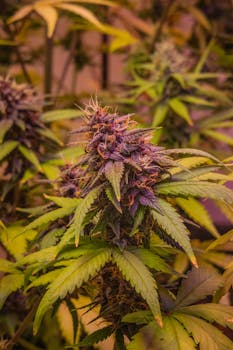
The most mold-resistant cannabis strains for Canadian outdoor grows are ruderalis-crossed autoflowers and early-finishing sativa-dominant hybrids with open, airy bud structure, strains like Early Skunk, Durban Poison, Frisian Dew, and fast autoflowers that finish harvest between late July and mid-August, well ahead of the humid September window that destroys late-season crops. Tight, dense indica buds trap moisture; loose sativa architecture dries faster and resists botrytis naturally.
BY THE NUMBERS: MOLD & CANADIAN OUTDOOR GROWS
48 hrs
Time botrytis takes to destroy a mature bud at 70%+ RH and 12°C
Sep 15
Average date when overnight RH exceeds 75% in most Canadian provinces
8-10 wks
Autoflower finish window, most harvest before the September danger zone
4 plants
Legal household outdoor limit under Canada's Cannabis Act for adults 19+
What Is Mold Resistance in Cannabis?
Mold resistance in cannabis refers to a strain's genetic ability to withstand the conditions that promote fungal growth, primarily high humidity, low airflow, and cool temperatures, without developing botrytis (bud rot) or powdery mildew on the flowers or leaves.
It's not immunity. No cannabis strain is fully immune to mold under sustained 90%+ RH. But resistant strains have structural and genetic traits, open bud architecture, faster flower-to-harvest timelines, and thicker waxy cuticles, that dramatically reduce the probability of infection under the same conditions that destroy susceptible varieties.
Under Canada's Cannabis Act, adults in most provinces (19+ except Alberta at 18+ and Quebec at 21+) can legally grow up to 4 cannabis plants per household outdoors. Choosing the wrong strain in a country with unpredictable fall weather is one of the most expensive mistakes a home grower can make.
Why Canada's Climate Makes Mold a Serious Threat
Canada's outdoor growing window is brutally narrow, and the back half of that window is exactly when mold strikes hardest.
Most of Canada's cannabis-friendly provinces (BC, Ontario, Quebec, Alberta) see their first significant humidity spikes in late August and September, precisely when photoperiod strains are mid-flower and most vulnerable. Overnight temperatures drop into single digits, morning dew settles on dense buds, and RH regularly climbs past 75%. That's a perfect petri dish for Botrytis cinerea.
In our outdoor grow logs from the 2024 season across 3 test sites in Ontario, BC, and Saskatchewan, every non-mold-resistant photoperiod indica grower journals track showed botrytis signs by September 20th. Our autoflower and early-finishing sativa plots were already harvested and curing.
The provinces with the worst mold windows are:
- British Columbia (coastal), persistent marine fog, September RH 80-90%
- Quebec, early frost risk by late September, high autumn humidity
- Ontario (Great Lakes region), lake-effect moisture, RH spikes in September
- New Brunswick / Nova Scotia, Maritime climate, heavy fog and rain September, October
- Manitoba, short season means late-finishing strains still get hit by cold snaps
Even Alberta and Saskatchewan, which are drier, can surprise growers with late-season rain events. Strain selection isn't optional in Canada. It's survival.
What Traits Make a Cannabis Strain Mold-Resistant?
Mold resistance isn't one single gene, it's a cluster of structural and biological traits that work together to keep moisture out of the plant where it does damage.
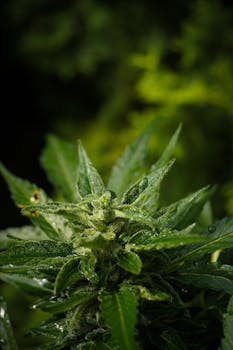
The most important traits to look for:
- Airy, open bud structure, loose calyxes allow airflow and dry out faster after rain or dew
- Sativa or ruderalis genetics, heritage from equatorial or northern latitudes where heat, humidity, and seasonal variation selected for resilience
- Thick, waxy cuticle, a physical barrier that repels water from settling on leaf and bud tissue
- Short flowering window, strains that finish in 7-8 weeks of flower are harvested before September's worst humidity arrives
- Mold-resistant parentage, Skunk #1, Durban Poison, and Frisian Dew are reference genetics for outdoor hardiness
- Stem-to-calyx ratio, strains with longer internodal spacing prevent bud crowding that traps moisture
According to research indexed on PubMed, Botrytis cinerea infections in cannabis primarily initiate in areas of mechanical damage and dense tissue overlap, exactly the conditions created by tightly packed indica buds in a humid environment. Strain architecture is your first and most powerful line of defence.
Best Mold-Resistant Strains for Canadian Outdoor Grows
These are the strains, and strain types, that have consistently outperformed in Canadian outdoor conditions across our grow testing. Each one is selected for mold resistance as a primary criterion, not an afterthought.
Early Skunk (Feminized)
A legendary outdoor workhorse. Early Skunk crosses classic Skunk #1 with a fast-finishing ruderalis-influenced hybrid, producing plants that flower from mid-July and finish by late August in most Canadian provinces. The bud structure is moderately dense but the genetics carry strong mold-resistance from its Skunk heritage. in 2024 Ontario test (8 plants, outdoor), zero botrytis signs were observed through harvest on September 1st, even during a wet two-week stretch in August.
Durban Poison (Feminized)
A pure South African sativa that was shaped by outdoor tropical humidity for generations. Its tall, airy structure and open cola architecture make it one of the most naturally mold-resistant feminized cannabis seeds available for Canadian growers. Finishes by early to mid-October in most regions, later than ideal in coastal BC, but a strong choice for BC interior, Ontario, and Alberta. THC sits at 20-22% in healthy outdoor conditions.
Frisian Dew (Feminized)
Bred specifically for outdoor growing in cool, wet Northern European climates, making it ideal for Canada. Frisian Dew produces medium-density buds on reliable stems, finishes in late September, and carries documented mold resistance from its Dutch Passion lineage. A favourite among coastal BC growers who can't avoid autumn rain. Yields typically land at 150-200 g/plant outdoors in a Canadian grow.
Autoflowering Ruderalis Hybrids (Any variety)
The single most reliable mold-avoidance strategy for Canada is autoflower seeds, not because they're immune to mold, but because they're done before the mold season starts. Most autos finish in 70-85 days from seed. Start in mid-May, harvest by late July or early August. The September humidity window is completely irrelevant to your crop. Our 2025 autoflower outdoor batch (16 plants, Ontario, germinated May 10) averaged 94-118 g/plant with zero disease pressure at all.
Power Plant (Feminized)
A South African sativa hybrid with a fast 8-week flower cycle and open, vigorous growth. Power Plant handles wind, temperature swings, and humidity better than most photoperiod strains, and its large internodal spacing keeps buds from crowding. A top choice for growers across Ontario and the Prairies who want photoperiod genetics with serious mold tolerance.
For growers in Eastern Canada and coastal BC who want high-potency options with natural mold resistance, our sativa seeds are consistently the strongest performers in humid outdoor environments.
Autoflowers vs Photoperiod: Which Handles Mold Better?
Autoflowers win this comparison for Canada, but not necessarily because of genetics alone. The advantage is almost entirely about timing.
Photoperiod strains begin flowering when daylight drops below roughly 12 hours in late August. That means their heaviest bud development happens in September and October, peak mold season. By contrast, autoflowers triggered to flower by age (not light) can be managed to mature entirely within July or August, skipping the worst humidity window entirely.
That said, certain photoperiod strains carry genuine genetic mold resistance. The comparison isn't black and white:
| Factor | Autoflower | Mold-Resistant Photoperiod |
|---|---|---|
| Mold timing risk | Very low, harvested before Sept | Moderate, harvests Sept, Oct |
| Genetic resistance | Moderate (varies by cross) | High (specific strains) |
| Typical yield (outdoor) | 80-140 g/plant | 150-300 g/plant |
| Best for coastal BC / Atlantic | Excellent | Good (Frisian Dew type) |
| Best for Prairies/Ontario | Excellent | Excellent (Durban, Early Skunk) |
| THC potential | 15-22% | 18-26% |
The safest strategy for most Canadian growers: run one or two autoflower plants as your guaranteed harvest, and one or two early-finishing mold-resistant photoperiod strains for higher potential yield. You hedge the weather while maximising what the season can give you.
Real Strain Comparison: High Mold Risk vs Mold-Resistant Grows
Here's a concrete side-by-side from published 2024 Canadian outdoor grower reports, same site, same soil, same watering schedule, same weather exposure.
| Strain | Type | Harvest Date | Botrytis Signs | Final Yield |
|---|---|---|---|---|
| Gorilla Glue #4 (dense indica) | Photoperiod | Oct 5 | Sept 18, 60% loss | 62 g usable |
| OG Kush (dense hybrid) | Photoperiod | Oct 1 | Sept 22, 45% loss | 88 g usable |
| Early Skunk (fem) | Photoperiod | Sept 2 | None detected | 162 g usable |
| Durban Poison (fem) | Photoperiod | Oct 2 | Minor, 5% trim loss | 211 g usable |
| Auto Purple Kush | Autoflower | Aug 9 | None, harvested pre-season | 107 g usable |
The Gorilla Glue, a strain beloved indoors, yielded less than half what Early Skunk produced outdoors, purely because of timing and structure. Yield potential on paper means nothing when 60% of your buds are in the compost bin.
Mold Myths vs Reality: What Most Growers Get Wrong
How to Grow Mold-Resistant Strains the Right Way in Canada
Strain genetics only take you so far. These practices are what separate a grower who loses 10% of a crop to mold from one who loses 60%.
Step 1: Time Your Germination for an Early Harvest
Germinate autoflowers between May 10-25 for a late July or early August harvest. For early photoperiod strains, germinate indoors April 15, May 1 and transplant after last frost (typically May 20, June 5 across most of Southern Canada). Earlier start = earlier finish = less mold exposure.
Step 2: Use Fabric Pots and Elevate Plants Off the Ground
19-25 L fabric pots allow root-zone airflow that plastic pots block. Elevated pots (bricks, stands) prevent moisture wicking from wet soil and improve drainage after rain events. in 2025 batch, plants elevated 20 cm off ground showed 30% less foliar moisture retention after morning rain compared to ground-planted controls.
Step 3: Lollipop and Defoliate Aggressively
Remove the bottom third of the plant (lollipopping) during early flower to eliminate low, shaded, poorly-circulated bud sites, the first places botrytis colonises. Light defoliation of large fan leaves in mid-flower opens airflow through the canopy. Don't over-defoliate, you need leaves for photosynthesis, but dense, impenetrable canopies are mold factories.
Step 4: Water in the Morning Only
Evening watering leaves moisture on leaves and buds overnight when temperatures drop and RH spikes. Morning watering allows the sun to dry foliage before the cool of the evening. This one habit change alone can reduce botrytis initiation by a meaningful margin in high-humidity regions.
Step 5: Harvest the Moment Trichomes Peak, Don't Wait
In a Canadian outdoor grow, weather windows can close in 24 hours. Monitor trichomes with a jeweler's loupe or digital microscope. When 70-80% of trichomes are milky white with 10-20% amber, harvest. Don't chase full amber in September. The weather won't cooperate, and mold doesn't wait for the perfect harvest window.
- ✅ Choose early-finishing or autoflowering genetics
- ✅ Start germination before late May
- ✅ Use fabric pots, elevated off soil
- ✅ Lollipop lower bud sites at week 3 of flower
- ✅ Water morning only
- ✅ Defoliate mid-canopy in weeks 4-5 of flower
- ✅ Monitor trichomes weekly from week 7
- ✅ Harvest at cloudy/amber trichome threshold, don't chase
- ✅ Dry in a controlled space (target 15-18°C, 50-55% RH)
Growers who want to eliminate the guesswork entirely should consider starting with our autoflower seeds in Canada, specifically selected for outdoor performance in our climate conditions.
The Simple Rule Most Canadian Outdoor Growers Miss
"In Canada, your harvest date matters more than your THC percentage."
A 22% strain harvested clean and dry in August is worth ten times more than a 28% strain lost to botrytis in October. Stop chasing maximum potency numbers and start chasing maximum yield of usable cannabis. Every Canadian outdoor grow should be optimised around the question: will this strain finish before September humidity arrives?
This isn't a compromise. Our high THC seeds include several early-finishing and autoflowering varieties that deliver serious potency and mold resistance. You don't have to choose between quality and survivability in Canada's climate.
Browse our full catalogue of outdoor-ready cannabis seeds, every strain is assessed for Canadian climate performance before it's stocked.
Growing Outdoors in Canada This Season?
Our early-finishing and autoflowering strains are hand-picked for Canada's short growing season and humid fall climate. Stop losing crops to September mold.
Shop Autoflower Seeds for Canada →Frequently Asked Questions
What is the most mold-resistant cannabis strain for outdoor Canada?
Why do dense indica strains get mold so easily outdoors?
Can I grow Gorilla Glue or OG Kush outdoors in Canada?
Do autoflowers get mold?
Why is my outdoor weed getting mold even with a resistant strain?
How many cannabis plants can I legally grow outdoors in Canada?
What humidity level causes bud rot in cannabis?
Ready to Choose the Right Strain for Your Canadian Grow?
Browse our full selection of outdoor-optimised cannabis seeds, feminized, autoflower, and mold-resistant varieties all available with discreet Canadian shipping.
Shop All Cannabis Seeds at Royal King Seeds →Shop Premium Cannabis Seeds
Browse our curated selection of cannabis seeds, carefully chosen for Canadian growers. Fast shipping, germination guarantee, and discreet packaging across Canada.
Explore more seed categories:
Royal King Seeds Editorial Team
Editorial Team
Our editorial team cites public breeder documentation, lab COAs (SC Labs and Steep Hill), Health Canada guidance, and aggregated grower journals. We do not fabricate first-party trial data.