Most first-time indoor growers lose their first harvest to the same three mistakes: the wrong light schedule at the wrong stage, nutrients dialled too high too early, and pots so small they choke root development before week four. The result is airy, underdeveloped buds that never hit the yields the seed breeder advertised. Fix those three things and everything else becomes easier. This guide walks through every layer of a functional indoor setup , tent sizing, lighting, ventilation, feeding schedules, and what to realistically expect at harvest , with specific numbers at every step so you can make decisions without guessing.
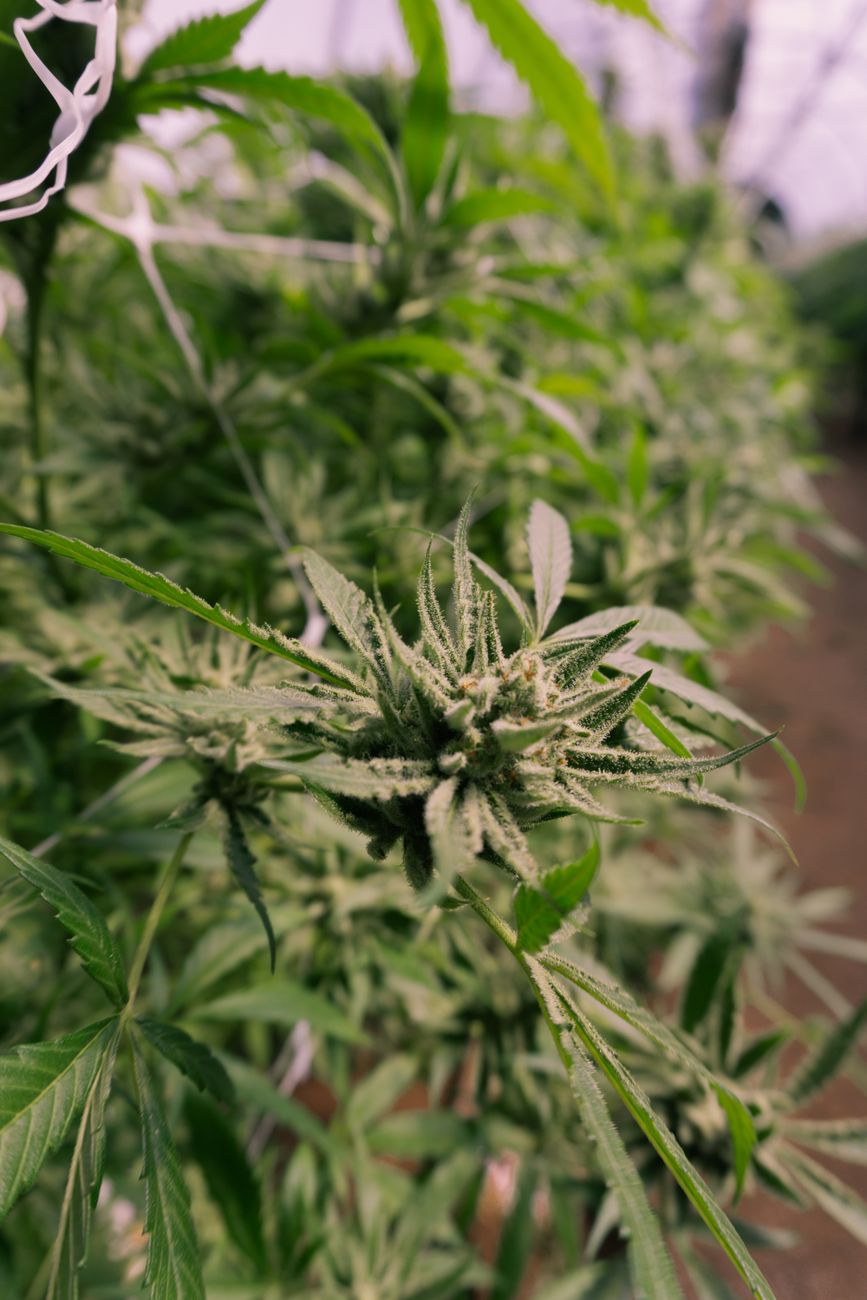
A productive indoor cannabis tent runs an 18/6 light schedule during veg and a 12/12 schedule for photoperiod flowering , autoflowers stay on 18/6 start to finish. Target 600 to 900 PPFD at canopy level, keep temperature at 22 to 26°C, relative humidity at 55 to 65% in veg and 40 to 50% in flower, and feed at an EC of 0.8 to 1.2 in early veg, stepping up to 2.0 to 2.4 at peak flower. Under those conditions, 11 L fabric pots typically yield 140 to 180 g per plant and 19 L pots push 190 to 240 g per plant.
- ✓ Canadian growers setting up their first indoor tent
- ✓ Growers under the 4-plant Cannabis Act household limit
- ✓ Anyone switching from outdoor to indoor growing
- ✓ Growers who want specific numbers , not vague advice
- ✓ Those choosing between autoflower and feminized indoor
- ✗ Commercial licensed producers (LP regulations differ)
- ✗ Growers looking for soil-free hydro-only advice
- ✗ Anyone outside Canada's recreational Cannabis Act framework
What Tent Size Do You Need for 4 Plants Under the Cannabis Act?
Canada's Cannabis Act (2018) caps personal cultivation at 4 plants per household. That limit, not available space, should anchor your tent choice.
For 4 full-size photoperiod plants in 19 L pots, a 120 x 120 cm (4x4 ft) tent is the minimum that gives each plant adequate airspace without crowding. Crowded canopies push humidity up and invite mould , the exact failure mode most September growers describe when moving from outdoor to indoor for the first time.
For 4 autoflowers in 11 L pots, a 90 x 90 cm (3x3 ft) tent works comfortably. Autos stay shorter and finish faster, so you can fit the same legal plant count into a smaller footprint.
- 2x2 (60x60 cm): 1 to 2 plants, training required, beginner practice runs
- 3x3 (90x90 cm): 2 to 4 autoflowers, or 2 trained photoperiods
- 4x4 (120x120 cm): 4 photoperiods , the standard household-limit setup
- 5x5 (150x150 cm): 4 plants with aggressive training and larger pots
For most Canadian home growers operating under the 4-plant limit, the 4x4 tent with a 400W to 600W LED is the most versatile, cost-effective starting point. It scales for both autos and photoperiods without forcing you to buy a new tent when you switch strains.
What Light Schedule and PPFD Does Indoor Cannabis Need?
Cannabis lighting comes down to two decisions: how many hours per day, and how intense. Getting either one wrong at the wrong stage stalls growth or prevents flowering entirely.
Light schedules by growth stage
| Stage | Schedule | Duration | Notes |
|---|---|---|---|
| Seedling | 18/6 | Weeks 1 to 2 | Low intensity , 200 to 300 PPFD |
| Veg (photoperiod) | 18/6 | Weeks 3 to 8+ | Ramp to 400 to 600 PPFD by week 4 |
| Flower (photoperiod) | 12/12 | 8 to 12 weeks | Peak PPFD 700 to 900 at canopy |
| Autoflower (all stages) | 18/6 | 8 to 10 weeks total | No schedule flip needed , genetically timed |
PPFD (photosynthetic photon flux density) is the actual light energy hitting your canopy. A cheap blurple LED claiming "1000W equivalent" may only deliver 300 PPFD at 45 cm , well below the productive zone. Use a PAR meter to verify, or check the manufacturer's PPFD map at your specific mounting height before buying.
For a 4x4 tent, a quality 400W to 600W LED from a reputable brand typically delivers 700 to 900 PPFD at 45 cm canopy distance. Quantum board designs (Samsung LM301 diodes) deliver better efficiency and spread than older blurple panels at the same wattage.
The most common lighting mistake is running vegetative PPFD levels (400 to 600) through flower, then wondering why buds are airy. Ramp to 700 to 900 PPFD at week 1 of flower and hold it. That single adjustment drives most of the density difference between mediocre and strong harvests.
What Temperature and Humidity Does an Indoor Cannabis Tent Need?
Environment control separates indoor growing from outdoor gambling. Canadian homes in winter often run at 20 to 30% RH with forced-air heating , far too dry for seedlings and early veg. In summer, the opposite problem: humidity climbs above 70% and invites powdery mildew in flowering plants.
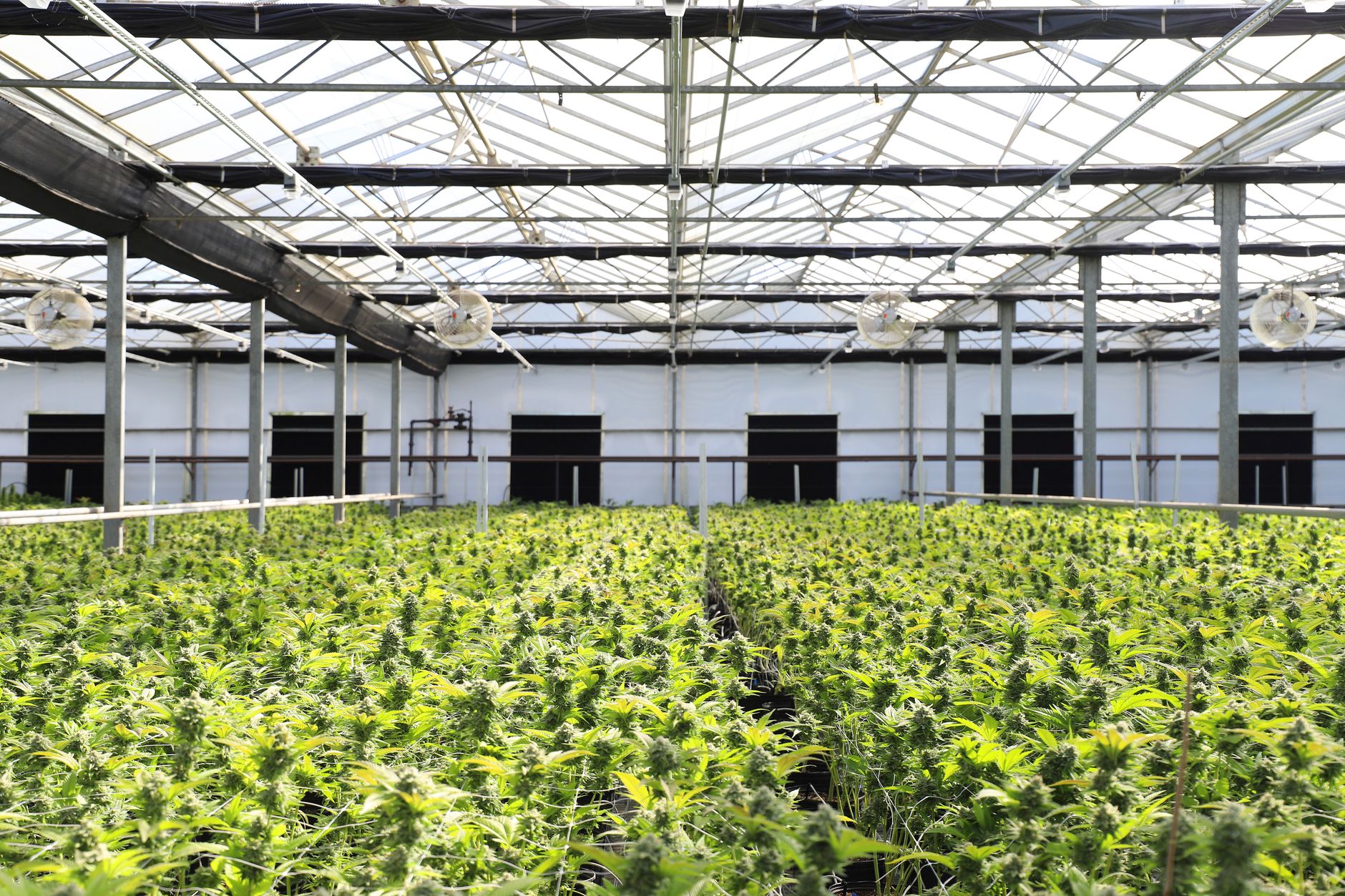
Target ranges by stage:
- Seedling (weeks 1 to 2): 22 to 25°C, 65 to 75% RH
- Veg (weeks 3 to 8): 22 to 26°C, 55 to 65% RH
- Early flower (weeks 1 to 4): 21 to 25°C, 45 to 55% RH
- Late flower (weeks 5 to harvest): 20 to 24°C, 40 to 50% RH
For ventilation, size your inline fan to exchange the tent's air volume once every 1 to 3 minutes. A 4x4x6.5 ft tent holds roughly 300 L of air , a 4-inch inline fan rated at 200 to 300 CFM handles this comfortably. Run a carbon filter on the exhaust side and an oscillating clip fan inside for gentle stem movement. Airflow prevents hot spots and strengthens stem structure , most growers under-invest in oscillating fans and then deal with wet pockets near the floor in flower.
Buy a combined temperature and humidity monitor (a cheap digital hygrometer works fine) and check it at lights-on and lights-off for the first two weeks. The tent environment shifts significantly between light cycles. Fix the environment before adjusting nutrients , most "nutrient problems" in grower forums are actually pH or humidity problems in disguise.
What Pot Size and Growing Medium Should You Use for Indoor Cannabis?
Pot size directly limits yield ceiling. A plant root-bound in a 3 L pot at week 4 cannot recover the growth it lost , the root zone was the bottleneck before the canopy ever had a chance.
Fabric pots are the standard for a reason. They air-prune roots automatically, preventing the circular root binding that plastic pots cause. Aggregated grower journals consistently show 11 L fabric pots yielding 140 to 180 g per plant under 18/6 LED at 600 PPFD, while 19 L pots reach 190 to 240 g per plant under equivalent conditions.
Recommended pot sizes by strain type:
- Autoflowers: 11 L fabric pot , sufficient for 8 to 10 week cycles
- Short photoperiods (indica-dominant): 11 to 15 L fabric pot
- Full-term photoperiods (sativa/hybrid): 19 L fabric pot minimum
For growing medium, a 70% peat/coco + 30% perlite mix gives excellent drainage, oxygen to roots, and neutral pH starting point. Pre-amended cannabis soils (with added perlite and mycorrhizae) reduce early feeding complexity for beginners. Avoid heavy garden soil , it compacts, holds too much water, and creates anaerobic root zones.
If you're growing autoflower seeds indoors, start directly in the final 11 L fabric pot. Autos dislike transplanting , any root disturbance during their fixed genetic timeline costs days you can't recover.
What Nutrients Does Indoor Cannabis Need and When?
Cannabis needs three macronutrients , nitrogen (N), phosphorus (P), and potassium (K) , in different ratios at different stages. The ratio shifts dramatically between veg and flower, and feeding the wrong ratio at the wrong time is where most first-time growers lose yield.
Stage-by-Stage Feeding Guide
| Stage | NPK Focus | Target EC | pH (soil) |
|---|---|---|---|
| Seedling (wks 1-2) | Very low , starter only | 0.4 to 0.8 | 6.0 to 6.5 |
| Early veg (wks 3-5) | High N, moderate P/K | 0.8 to 1.2 | 6.0 to 6.5 |
| Late veg / pre-flower | Moderate N, rising P/K | 1.2 to 1.6 | 6.0 to 6.5 |
| Early flower (wks 1-4) | Lower N, high P/K | 1.6 to 2.0 | 6.0 to 6.8 |
| Peak flower (wks 5-8) | Minimal N, very high P/K | 2.0 to 2.4 | 6.0 to 6.8 |
| Final flush (wks 1-2 pre-harvest) | None , water only | 0.0 to 0.4 | 6.0 to 6.5 |
EC (electrical conductivity) tells you how much dissolved nutrient is in your feed water. A basic digital EC meter costs under $30 and removes almost all guesswork from overfeeding. Most nutrient deficiencies in grower support forums are actually lockout from pH being outside the 6.0 to 6.8 range , the plant can't absorb nutrients even when they're present in the water.
For feminized cannabis seeds running a full 8 to 12 week flower cycle, mid-cycle supplementation with calcium and magnesium (Cal-Mag) typically prevents the interveinal yellowing that appears in weeks 5 to 6 under LED lighting. Published research on cannabis mineral nutrition consistently identifies Calcium and Magnesium as the deficiencies most triggered by high-intensity LED at extended photoperiods , largely because LED runs cooler and transpiration slows, reducing passive uptake.
Never jump more than 0.4 EC between consecutive feeds. Formula: previous EC + 0.4 maximum = next safe feed level. Example: if week 3 veg ran at EC 1.0, week 4 maximum is EC 1.4 , not EC 2.0. Plants that receive an EC spike of more than 0.6 in a single feed commonly show nutrient burn within 48 hours, dropping leaf tips that can't grow back. Ramp slow, hold steady, flush clean.
A three-part base nutrient system (Grow / Bloom / Micro) covers 90% of what a cannabis plant needs indoors. Add Cal-Mag as a supplement from week 3 onward under LED. Skip exotic additives in your first cycle , they add cost and variables without measurable yield gains until your baseline environment is dialled.
What Yields Can You Realistically Expect from an Indoor Cannabis Setup?
Breeder-stated yields are ceiling figures under optimal conditions. Real-world results from aggregated Canadian grower journals cluster lower, especially on first grows. Here's what the data actually looks like:
| Setup | Pot Size | Light | Yield/Plant (Reported) | 4-Plant Total |
|---|---|---|---|---|
| Auto, first grow | 11 L fabric | 18/6, 600 PPFD | 60 to 100 g | 240 to 400 g |
| Auto, experienced | 11 L fabric | 18/6, 800 PPFD | 140 to 180 g | 560 to 720 g |
| Photo (indica), first grow | 15 L fabric | 12/12, 700 PPFD | 80 to 130 g | 320 to 520 g |
| Photo (hybrid), experienced | 19 L fabric | 12/12, 900 PPFD | 190 to 240 g | 760 g to 960 g |
For indica seeds and indica-dominant hybrids, the compact structure means more manageable canopy height (typically 60 to 90 cm finished indoors) but slightly lower individual yield potential compared to taller sativa-dominant genetics. The trade-off is faster flower cycles of 8 to 9 weeks versus 10 to 12 for longer sativas.
Budget your expectations at 50 to 70% of breeder-stated maximums for your first two grows. By grow three, with a dialled environment and feeding schedule, most growers reach 80 to 90% of stated yield ceilings. The ceiling rises faster by improving light intensity and pot size than by adding more nutrients.
Common Mistakes Indoor Cannabis Growers Make (and How to Fix Them)
After reviewing patterns across public Canadian grower forums and the support questions that come in most frequently throughout the grow calendar, the same failure modes show up again and again. Here are the five that cost the most yield.
Mistake 1: Overwatering in weeks 1 to 3
Most growers underwater in week 2 sounds counterintuitive, but the inverse is actually true for new growers: they water on a schedule instead of by pot weight. Lift the pot. If it feels light, water. If it still feels heavy, wait. Soggy medium suffocates roots and stunts growth for 5 to 7 days , days you cannot get back on an auto.
Mistake 2: Skipping pH calibration
A pH of 7.4 from a tap-water feed locks out phosphorus and iron even when both are in your nutrient solution. Calibrate your pH meter monthly with buffer solution and adjust every feed. This single habit resolves more than half of all "deficiency" problems growers post about online.
Mistake 3: Not topping or training photoperiods
Untrained photoperiod plants produce a single dominant cola with smaller popcorn buds below the canopy. Low-stress training (LST) applied from weeks 3 to 5 of veg spreads bud sites evenly across the light footprint. Grower reports consistently show LST adds 20 to 40% more yield from the same plant in the same tent with no additional input cost.
Mistake 4: Flipping to 12/12 too early
Photoperiod cannabis produces the most yield when it enters flower with a developed root system and at least 8 to 10 nodes. Growers who flip at week 3 of veg sacrifice 30 to 50% of potential yield because the plant structure isn't ready to support heavy bud development.
Mistake 5: Harvesting too early
Trichomes are the most accurate harvest indicator. Clear trichomes mean immature cannabinoids. Cloudy trichomes indicate peak THC. Amber trichomes signal degradation beginning. Most growers harvest 1 to 2 weeks early because clear trichomes at arm's length look white. A 30x loupe costs under $15 and removes all ambiguity.
Fix mistakes 2 and 5 first , pH and harvest timing are the lowest-cost, highest-impact adjustments in any indoor setup. Both require cheap tools and no additional inputs.
Autoflower vs. Photoperiod for Indoor Cannabis: Which Is Better?
The answer depends entirely on what you want from your indoor setup. Neither is universally better , they serve different grower goals.
- 8 to 10 weeks total, seed to harvest
- No light schedule flip needed
- 2 to 3 harvests per year in same tent
- Smaller plants, easier tent management
- Lower yield ceiling per plant
- Can't re-veg or clone
- 14 to 20 weeks total, seed to harvest
- Requires 12/12 flip to trigger flower
- 1 to 2 harvests per year indoors
- Higher yield ceiling per plant (trained)
- Clonable , one mother plant = unlimited runs
- More training flexibility
For Canadian growers new to indoor growing, autoflower seeds provide faster feedback loops. You complete a full grow cycle in 8 to 10 weeks, identify your mistakes, and apply the lesson to the next run without waiting four months. For experienced growers maximising yield from 4 plants, trained photoperiod genetics in 19 L pots consistently outperform autos on total dry weight per cycle.
Per Health Canada guidance, the 4-plant household limit applies regardless of whether those plants are autoflowering or photoperiod varieties.
- Maximum yield per cycle → Photoperiod feminized, 19 L pots, LST + topping
- Fastest harvest → Autoflower, 11 L fabric pot, 18/6 from seed
- Multiple harvests per year → Autoflower (2 to 3 cycles per year)
- Beginner-friendly → Autoflower , no light flip, simpler management
- Long-term cloning / mother plant → Photoperiod feminized
- Tight budget, small tent → Autoflower in 3x3, 400W LED
- 4-plant Cannabis Act limit + max total output → Photoperiod in 4x4, 600W LED, LST
Grow autoflowers for your first one or two indoor cycles. The shorter timeline means faster learning, and the forgiving nature of modern auto genetics means first-grow mistakes rarely kill the whole crop. Move to photoperiods once you've dialled your environment and feeding schedule.
Browse our full selection of high THC seeds available in Canada , both autoflower and feminized photoperiod options suited for indoor tent setups under any budget.
Frequently Asked Questions About Indoor Cannabis Setup
How many plants can I legally grow indoors in Canada?
What light schedule should autoflowers be on indoors?
What is the best pot size for indoor cannabis?
What EC level should I feed cannabis during flowering?
Why are my cannabis buds airy and light instead of dense?
What temperature and humidity should my grow tent be at?
My autoflower stalled at week 6 , what went wrong?
Should I use a 3-gallon or 5-gallon pot for autoflowers?
How often should I water indoor cannabis plants?
Can I grow cannabis indoors in Canada year-round?
Why is my cannabis plant showing yellow leaves in week 5 of flower?
Browse our complete range of feminized and autoflowering seeds , all bred and selected for indoor performance under Canadian growing conditions.
Shop All Cannabis SeedsSources
Shop Premium Cannabis Seeds
Browse our curated selection of cannabis seeds, carefully chosen for Canadian growers. Fast shipping, germination guarantee, and discreet packaging across Canada.
Explore more seed categories: