Most growers chasing a resin-heavy indica overlook one critical thing: crystal production is genetics first, environment second. Pick the wrong strain and no amount of low-stress training or terpene boosters will save you. ICE , short for Indica Crystal Extreme , is named specifically because it produces a near-ridiculous frost coating under basic conditions. It finishes in 8 to 9 weeks, tolerates beginner mistakes, and regularly posts 450 to 550 g/m² indoors from a feminized seed with virtually zero male-plant risk. This guide breaks down everything: lineage, effects, phenotype behaviour, and a week-by-week grow roadmap for Canadian cultivators working under the Cannabis Act's 4-plant household limit.
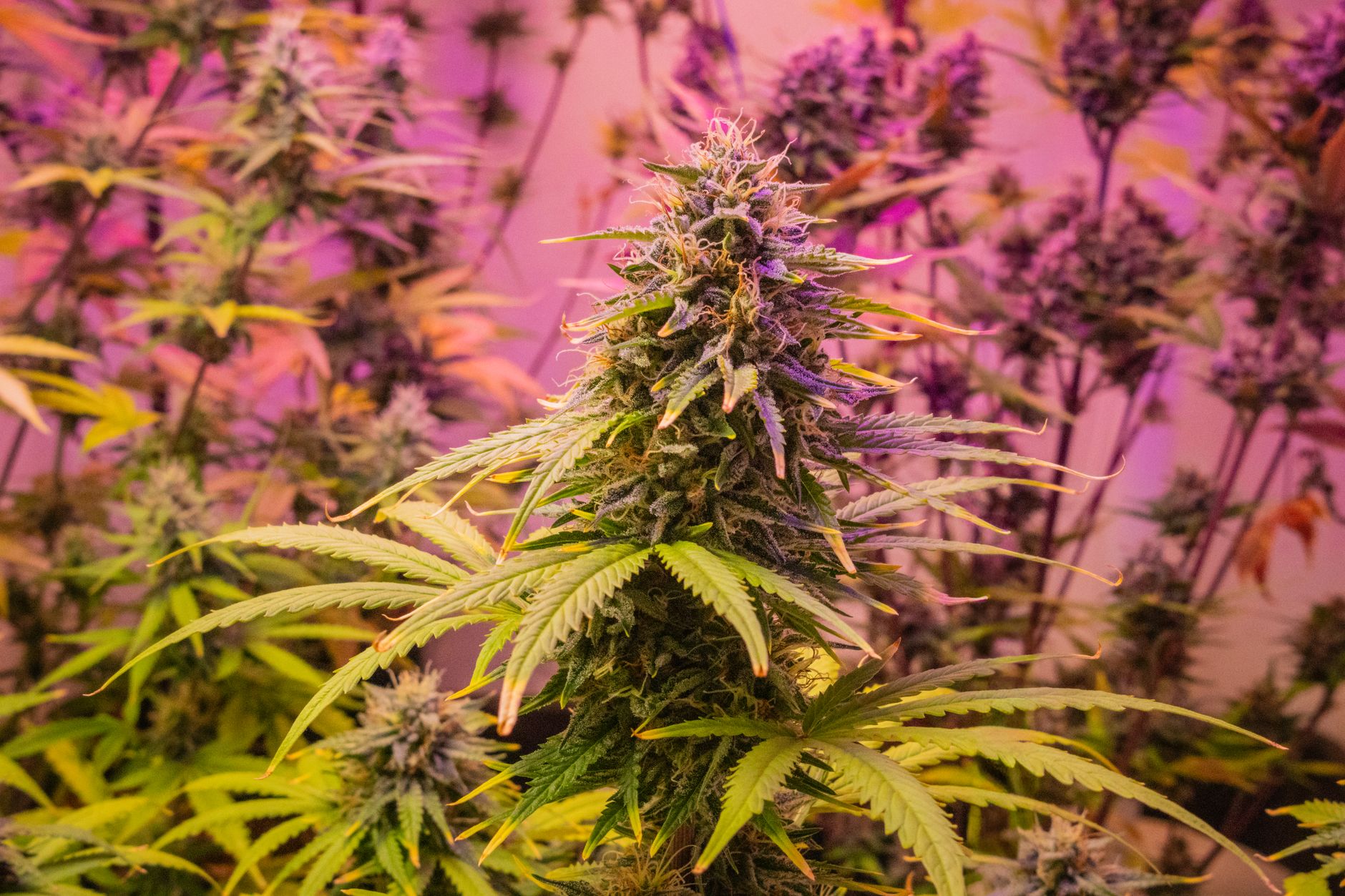
ICE (Indica Crystal Extreme) is an indica-dominant hybrid bred from Northern Lights, Skunk #1, Afghani, and Shiva genetics. It produces 18 to 23% THC with a moderate CBD ceiling near 1%, finishes flowering in 8 to 9 weeks, and yields 450 to 550 g/m² under 18/6 LED at 600-800 PPFD indoors. Outdoors across Canadian Hardiness Zones 5 to 7, harvest typically lands in late September to early October , comfortably inside most southern provinces' frost-free window.
- ✓ Canadians growing up to 4 plants at home under the Cannabis Act
- ✓ Growers wanting maximum resin and trichome coverage
- ✓ Indica-preferring cultivators in Zones 5-7
- ✓ Beginners comfortable with an 8-9 week flower window
- ✓ Experienced growers building a solventless extract run
- ✗ Growers needing a sub-70-day autoflower cycle
- ✗ Those seeking a dominant sativa head-high
- ✗ Northern cultivators in Zone 3 or colder growing outdoors
- ✗ High-CBD medical targets above 5%
Indica-dominant (70% indica / 30% sativa) | Lineage: Northern Lights × Skunk #1 × Afghani × Shiva
What is the ICE strain?
ICE stands for Indica Crystal Extreme. It is an indica-dominant photoperiod hybrid developed by Nirvana Seeds, selected specifically for above-average trichome production across the entire plant surface , not just on the colas.
The trichome density on ICE is its defining trait. Even fan leaves develop a visible frost under decent light intensity and proper nutrition. This makes it a favourite among hash makers and growers producing solventless concentrate, where raw trichome volume translates directly into finished extract weight.
Under Canada's Cannabis Act (2018), adults may grow up to 4 plants per household. ICE's compact indica structure makes it especially efficient within that 4-plant ceiling , each plant fills its canopy footprint cleanly without the aggressive vertical stretch associated with sativa-leaning genetics.
What are ICE's genetics and lineage?
ICE's parentage combines four foundational indica genetics: Northern Lights, Skunk #1, Afghani, and Shiva. Each parent contributes a specific trait the breeders were targeting.
- Northern Lights , compact node spacing, resin production, fast maturation
- Skunk #1 , yield potential, flavour complexity, vigour
- Afghani , broad indica structure, dense bud formation, hash-plant traits
- Shiva , additional THC ceiling lift, earthy aromatic profile
The result is a 70% indica / 30% sativa genetic split. The sativa fraction is enough to prevent the extreme couch-lock of a pure Afghani line, while keeping flowering time short and bud structure tight. Indica seeds in Canada rarely stack this many crystal-producing ancestors in a single cross, which is why ICE still benchmarks well against newer releases.
Breeder documentation places THC potential between 18 and 23%, with CBD typically below 1%. Published cannabinoid research on Skunk and Northern Lights lineages , catalogued via PubMed , supports the high trichome-density trait as a heritable characteristic tied to these ancestral lines.
What effects does the ICE strain produce?
ICE produces a heavy, full-body effect with a calming cerebral onset typical of high-THC indica-leaning hybrids at 18 to 23% potency. The 30% sativa fraction lifts the initial experience enough to feel euphoric before the indica depth takes over.
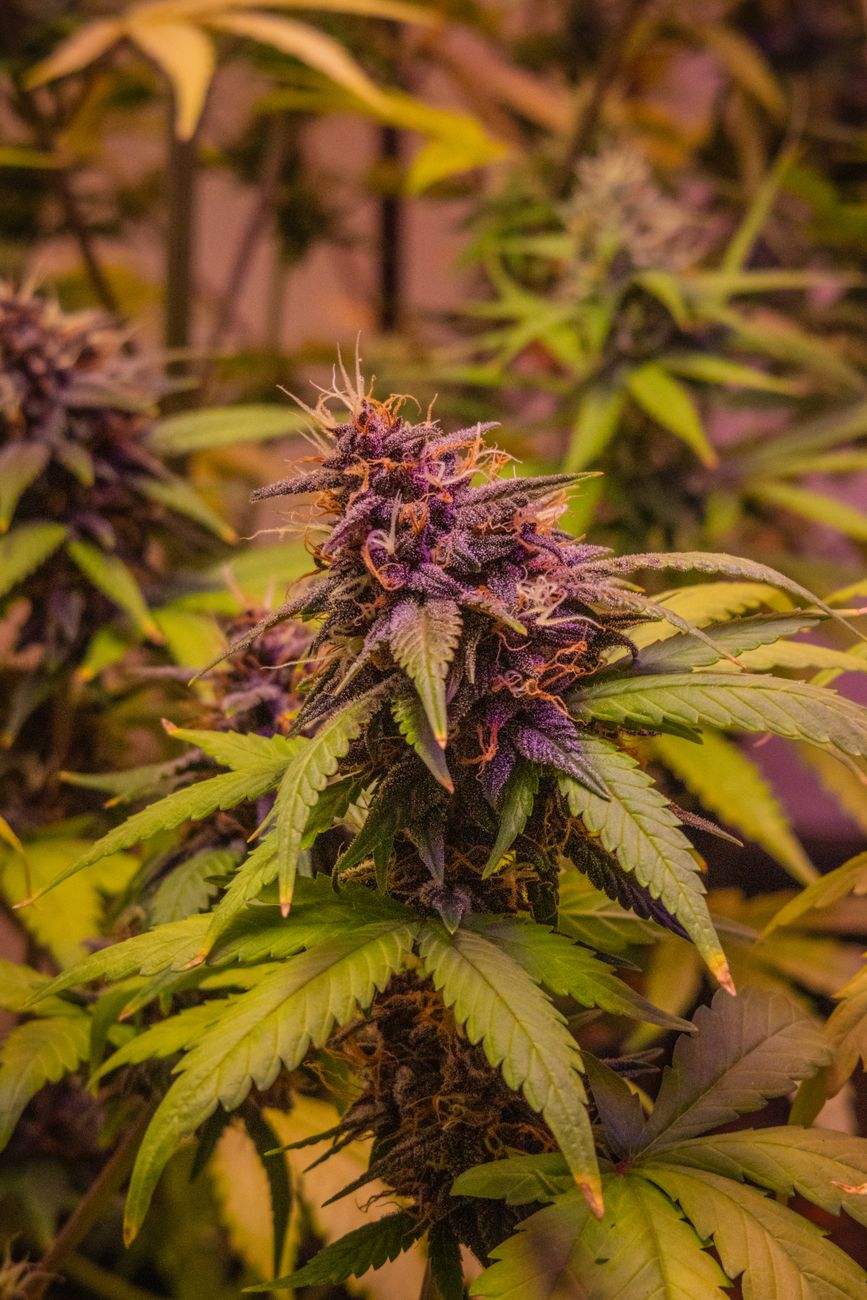
Most users report the onset arriving within 5 to 10 minutes of inhalation, with the physical relaxation peaking around 30 to 45 minutes in. Duration typically runs 2 to 2.5 hours at moderate doses. At higher doses, the sedative character intensifies and evening or nighttime use becomes the practical window for most consumers.
The terpene profile , dominated by myrcene, caryophyllene, and limonene in most phenotypes , contributes to the earthy, slightly sweet aroma and may reinforce the relaxation response. According to research published in the Journal of Cannabis Research, myrcene-dominant profiles are consistently associated with sedative and muscle-relaxant reports in consumer studies.
"Euphoric lift for 20-30 minutes, then full-body relaxation that builds steadily. Best described as indica-with-awareness at moderate doses, and deeply sedative at higher ones. Not a daytime strain for most users."
Aggregated from public grower journals and consumer forums across Canadian cannabis communities.
What is ICE's flowering time and expected yield?
ICE flowers in 8 to 9 weeks from the flip to 12/12 photoperiod. This is on the faster end of indica-dominant photoperiod genetics, which typically range from 8 to 11 weeks depending on lineage.
Indoor yields under 18/6 LED at 600 to 800 PPFD range from 450 to 550 g/m², consistent with breeder documentation for this genetic line. At 11 L fabric pots, most growers land in the lower half of that range. Stepping up to 19 L pots under the same light typically pushes yield toward the upper third , aggregated grower journals report the difference averaging 40 to 60 g per plant.
Outdoors in Canadian Hardiness Zones 5 to 7, ICE planted after last frost (mid-May in Ontario, late May in Québec) reaches harvest in late September. That gives a comfortable buffer before the average first frost across those provinces.
| Metric | Indoor | Outdoor (Zones 5-7) |
|---|---|---|
| Flowering time | 8-9 weeks (12/12) | Late Sept , early Oct harvest |
| Yield | 450-550 g/m² | 400-600 g per plant |
| Plant height | 80-120 cm | 100-150 cm |
| Pot size (optimal) | 11-19 L fabric | 20-25 L or in-ground |
| THC range | 18-23% | 18-22% (sun-grown) |
How to grow the ICE strain step by step
Step 1: Germinate your ICE seeds
Paper-towel germination at 22 to 25°C produces 90 to 97% success rates within 48 to 72 hours, consistent with widely reported grower journals for indica feminized seeds. Keep the towel moist but not waterlogged , excess moisture at this stage is the most common germination failure mode. Once the taproot hits 1 to 2 cm, transfer to your grow medium.
Step 2: Seedling stage (weeks 1-2)
ICE seedlings prefer 200 to 300 PPFD at this stage. Most growers under-water in week 2 , the seedling looks dry because the canopy is small, but the root zone needs gentle, consistent moisture. Keep RH at 60 to 70%, temperature at 22 to 25°C, and avoid heavy nutrients until the third set of true leaves appears.
Step 3: Vegetative stage (weeks 3-6)
ICE responds well to topping or LST (low-stress training) during veg. Top once at node 4 or 5 to encourage lateral branching and a more even canopy. Under 18/6 with 400 to 600 PPFD, ICE builds its node structure quickly. EC in coco or hydro should run 1.2 to 1.6 mS/cm during peak veg growth.
Step 4: Flip to 12/12 and early flower (weeks 7-10)
ICE stretches 40 to 60% in the first 2 to 3 weeks after the flip. This is where most stretch happens, so account for headroom before you flip. Raise PPFD to 700 to 900, EC to 1.6 to 2.0 mS/cm. Trichome development begins visibly around week 3 of flower , this is earlier than most comparable strains, which is the ICE signature.
Step 5: Late flower and ripening (weeks 11-13)
Drop EC to 0.8 to 1.0 in the final 10 to 14 days and flush with plain pH-adjusted water. Trichomes shift from clear to milky to amber over the last 2 weeks , target 10 to 20% amber for peak indica effect. At this point ICE's crystal coat is unmistakable: the entire bud surface looks frosted under a loupe.
Step 6: Harvest, dry, and cure
Harvest when trichomes hit your target amber ratio. Dry at 15 to 18°C with 50 to 55% RH for 10 to 14 days , slower drying preserves terpene retention and smoothness. Cure in sealed glass jars at 58 to 62% RH (Boveda 62 packs are widely used among Canadian growers) for a minimum 3 weeks before consuming, ideally 6 to 8 weeks for peak flavour expression. See our full germination and early grow guide for supplementary seedling tips.
Common mistakes growers make with ICE strain
Looking at public grower forum data and the support questions our team fields most often, five failure patterns come up repeatedly with ICE specifically.
Harvesting too early
ICE's trichome coat is impressive by week 6 of flower , many first-timers mistake "looking frosty" for "ready to harvest." A large percentage of trichomes will still be clear or fully milky at that point. Check under a jeweller's loupe every 3 days from week 7. Clear = immature. Milky = peak THC. Amber = THC degrading to CBN. Harvest at peak milky for the strongest effect, or wait for 15% amber for deeper sedation.
Neglecting defoliation in flower
ICE is a dense plant. Without light defoliation at weeks 3 and 5 of flower, lower bud sites stay shaded and produce popcorn. A single targeted defoliation session removing the largest fan leaves blocking bud sites makes a measurable difference in canopy-level yield.
Over-watering during stretch
The stretch phase (weeks 1 to 3 of flower) coincides with rapid node development. Most growers keep watering on the same veg schedule, saturating the medium before roots can process it. Let coco or soil dry to 50 to 60% dry-back before each water-in cycle at this stage. Root zone oxygen is more important than moisture here.
Under-estimated height at flip
A 40 cm ICE plant at flip will finish at 55 to 65 cm minimum, possibly taller. In a standard 1.2 m tent with lights taking 30 cm of headroom, this leaves about 50 cm of working space. If you top twice and train horizontally, this is fine. If you flip a tall, untopped plant, you'll have light-burn problems by week 4.
Skipping the cure
ICE's terpene profile genuinely benefits from a longer cure. Growers who smoke dry, freshly harvested buds consistently report a harsher, less complex smoke than the same batch cured 6 weeks later. The myrcene-heavy profile needs time to settle. Patience here is not optional.
Growing ICE outdoors in Canada: zone-by-zone guide
Per Plant Hardiness Zones of Canada and Environment and Climate Change Canada climate normals, ICE is viable outdoors in Zones 5 to 7 with correct start timing.
Plant out
Veg / LST
Pre-flower
Flower starts
Late flower
Harvest (Z5-6)
Frost risk Z5
Frost risk Z6-7
British Columbia (Zone 6-8, Lower Mainland and Southern Interior)
BC's mildest outdoor conditions in Canada suit ICE perfectly. Plant out after May 15, harvest late September. Mould vigilance is the main risk in the wet coastal microclimate during week 5 to 8 of flower , ensure airflow and consider a basic greenhouse frame to manage overnight humidity.
Alberta (Zone 3-5, Central)
Calgary averages first frost around September 22. ICE started in early May indoors and transplanted out after last frost (typically May 20 to June 1 in Zone 4) finishes by late September with a narrow but workable buffer. Zone 3 outdoor growers in Alberta should seriously consider autoflower seeds in Canada as the safer alternative , ICE's photoperiod genetics leave little room for error that far north.
Ontario (Zone 5-6, Southern)
Toronto's first frost averages October 18. ICE planted out in mid-May harvests in the last week of September to early October , a solid 2 to 3 week buffer. Ottawa's first frost averages October 6, which is tighter. Ottawa-area growers should start ICE no later than May 10 to ensure harvest by late September.
Québec (Zone 4-5, Southern)
Montréal's average first frost is October 7. ICE is viable here with a mid-May start. Note that Québec's legal cannabis consumption age is 21, unlike 19 in most other provinces, per Health Canada guidance on provincial cannabis regulations. Northern Québec (Zone 3-4) is too risky for ICE outdoors.
Every photoperiod indica grown outdoors in Canada should clear harvest at least 14 days before your region's historical first frost date.
Formula: Transplant date + veg weeks (typically 10-12 weeks outdoors) + 8 weeks flower + 14-day buffer = required frost-free season.
Example: ICE transplanted May 20 in Toronto (last frost ~Apr 27, first frost ~Oct 18). Veg runs to mid-July, 8 weeks flower finishes Sept 8, leaving 40 days buffer before Oct 18 first frost. SAFE.
ICE vs comparable indica strains: how does it stack up?
| Strain | THC | Yield (indoor) | Flower time | Mould resistance | Beginner rating | Resin score |
|---|---|---|---|---|---|---|
| ICE | 18-23% | 450-550 g/m² | 8-9 weeks | Medium | 8/10 | Very High |
| Northern Lights | 16-21% | 400-500 g/m² | 8-9 weeks | High | 9/10 | High |
| Afghani | 17-20% | 400-500 g/m² | 7-8 weeks | High | 7/10 | High |
| White Widow | 20-25% | 500-600 g/m² | 8-9 weeks | Medium | 7/10 | Very High |
| Blueberry | 17-20% | 350-450 g/m² | 8-10 weeks | Low-Medium | 6/10 | Medium |
ICE's competitive edge over Northern Lights is the trichome density. Northern Lights edges ahead on mould resistance and beginner simplicity. Against White Widow, ICE trades a small yield ceiling and THC peak for a more compact structure that fits low-headroom tents better.
For growers building toward hash or rosin production, ICE's resin-per-gram-of-plant-matter ratio is its clearest advantage in this comparison group. For growers chasing top-shelf flower and maximum THC ceiling, high THC seeds in the White Widow family may edge ahead.
Ready to run ICE? Browse our full selection of indica seeds in Canada including feminized and autoflowering formats , all available to Canadian adults 19+ (21+ QC) under the Cannabis Act.
Shop Feminized Indica SeedsICE Strain: Frequently Asked Questions
What does ICE stand for in cannabis?
How long does ICE take to flower?
What is the THC percentage of ICE strain?
Is ICE a good strain for beginners to grow?
Can I grow ICE outdoors in Canada?
How many ICE plants can I legally grow in Canada?
What yield can I expect from ICE indoors?
Why are my ICE buds airy or light?
Why didn't my ICE finish in 8 weeks like the breeder said?
Can I start ICE in July in Zone 5 and still harvest before frost?
What pot size is best for ICE indoors?
Is ICE strain good for making hash or rosin?
What is the best light schedule for growing ICE indoors?
My ICE seedlings aren't rooting properly , what went wrong?
Does ICE handle cold nights outdoors?
From ICE feminized to autoflowering indica options , all genetics available to Canadian adults under the Cannabis Act.
Browse All SeedsSources
- Plant Hardiness Zones of Canada , Natural Resources Canada
- Environment and Climate Change Canada , Climate Normals
- Cannabis Act (S.C. 2018, c. 16) , Government of Canada
- Health Canada , Cannabis Regulation
- Journal of Cannabis Research , BioMed Central
- PubMed , Cannabis Cannabinoid and Trichome Research
Shop Premium Cannabis Seeds
Browse our curated selection of cannabis seeds, carefully chosen for Canadian growers. Fast shipping, germination guarantee, and discreet packaging across Canada.
Explore more seed categories: