Most buyers get shortchanged not because someone's cheating them, but because they never actually learned the math. An eighth sounds like a simple measurement. It isn't always used that way at the counter. If you don't know exactly what you should be holding in your hand, you can't verify you received it. That's the problem this guide fixes in the next five minutes.
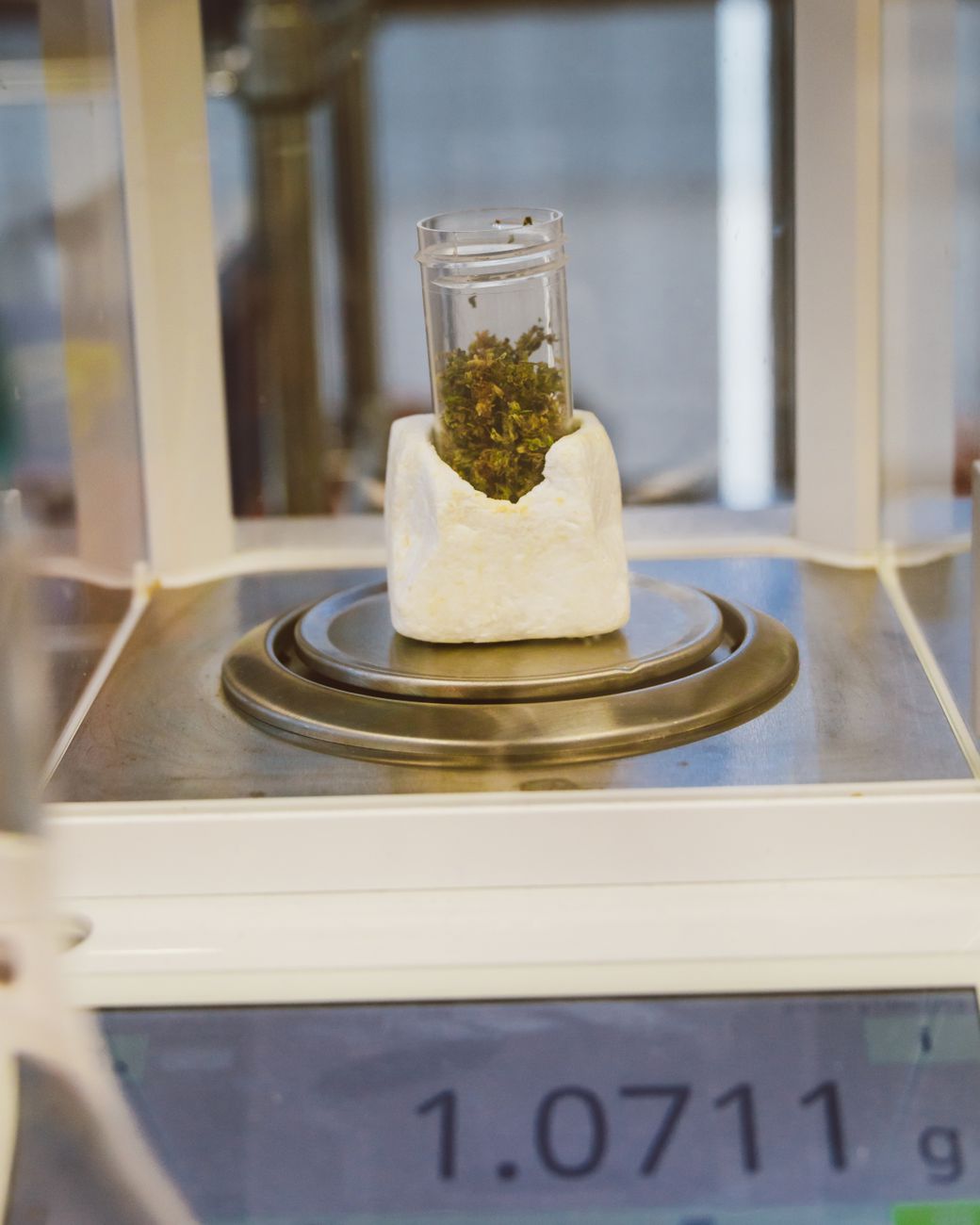
An eighth of cannabis is exactly 3.5 grams , one-eighth of a standard 28-gram ounce. At average consumption, 3.5 grams rolls roughly 3 to 7 joints or fills 5 to 10 small bowl packs. It's the most common retail unit sold in Canadian licensed cannabis stores and online retailers under the Cannabis Act (2018).
- ✓ New cannabis buyers learning retail sizing
- ✓ Home growers curious about harvest weights
- ✓ Anyone who wants to verify they received the right amount
- ✓ Growers comparing seed yields against retail units
- ✓ Canadians buying from licensed retailers or growing at home
- ✗ Commercial producers or licensed processors
- ✗ Anyone looking to exceed the 4-plant household limit under the Cannabis Act
- ✗ Readers outside Canada (laws and sizing conventions differ)
What Exactly Is an Eighth of Cannabis?
An eighth is one-eighth of an imperial ounce, and one ounce equals 28.3495 grams. Divide that by eight and you get exactly 3.543 grams. The industry convention rounds this to 3.5 grams, which is the standard you'll see on every licensed retailer label in Canada.
The term comes from the old imperial weight system still used in cannabis retail despite Canada's otherwise metric standard. It stuck because it's a practical size: large enough to last a moderate consumer several days, small enough to stay affordable as a single purchase.
Under the Cannabis Act (2018), Canadian adults (19+ in most provinces, 18 in Alberta, 21 in Québec) may possess up to 30 grams of dried cannabis in public. A single eighth at 3.5 grams sits well within that limit, as does any combination of sizes below the 30-gram threshold.
The eighth is the de facto standard unit for cannabis retail worldwide precisely because it balances cost, freshness, and usability. For first-time buyers and experienced consumers alike, understanding the underlying math protects you at the point of sale.
The Full Cannabis Weight Chart
Every common cannabis purchase size is a fraction or multiple of one ounce. The chart below gives you the complete picture so no unit ever catches you off guard.
| Retail Name | Fraction of Oz | Exact Grams | Industry Standard | Approx. Joints | Common Use Case |
|---|---|---|---|---|---|
| Gram | 1/28 | 1.0 g | 1.0 g | 1, 2 | Sampling a new strain |
| Eighth | 1/8 | 3.543 g | 3.5 g | 3, 7 | Most popular retail size |
| Quarter | 1/4 | 7.087 g | 7.0 g | 7, 14 | Regular consumers, 1, 2 weeks |
| Half Ounce | 1/2 | 14.175 g | 14.0 g | 14, 28 | Heavy consumers, bulk savings |
| Ounce | 1 | 28.350 g | 28.0 g | 28, 56 | Maximum single public possession limit |
Notice that the industry rounds every unit down slightly: 3.543 g becomes 3.5 g, 7.087 g becomes 7.0 g, and so on. This rounding is universal among licensed Canadian retailers and breeder documentation. The difference is minor (less than 0.1 g per unit), but knowing it exists means you won't be confused when your scale reads 3.48 g on a "full eighth."
The ounce is the invisible base unit behind every retail size. Memorize that 1 oz = 28 g and every other measurement becomes simple arithmetic. An eighth is half of a quarter, a quarter is half of a half, and so on.
What Does 3.5 Grams Look Like in Real Life?
This is where buyers get confused most often. Visual size varies dramatically by strain density, cure quality, and whether buds are broken down or whole.
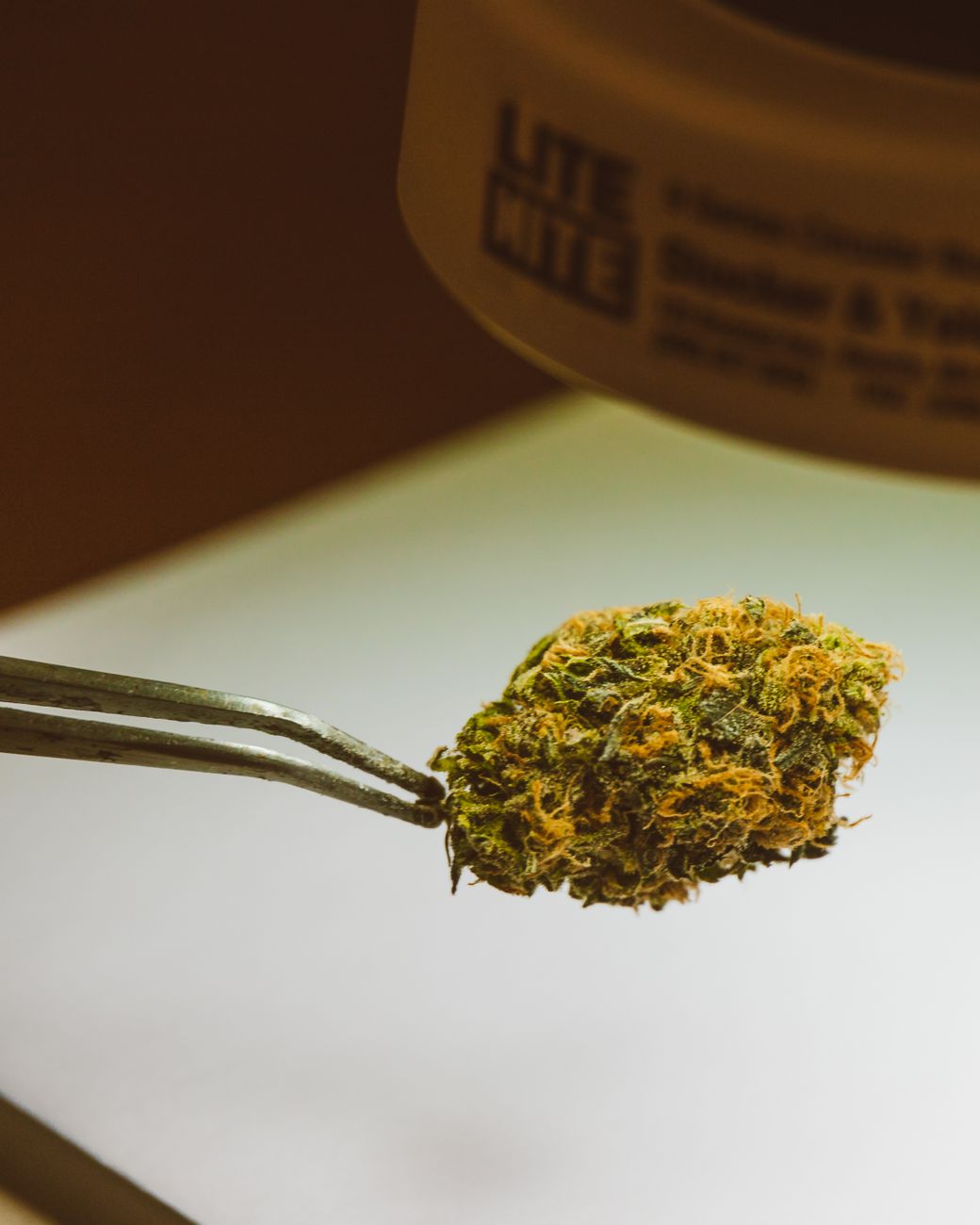
A dense indica or indica-dominant hybrid at 3.5 grams can look surprisingly small , sometimes fitting in the palm of one hand as two or three compact buds. A fluffy sativa or autoflower at the same 3.5 grams can look nearly twice the volume. Both weigh identically. Volume is not weight.
Common real-world reference points for 3.5 grams:
- Roughly 2 to 4 average-sized whole buds from a dense indica strain
- 4 to 6 smaller, fluffier buds from a sativa-leaning or autoflower strain
- Approximately the same volume as a large grape (dense nugs) to a golf ball (loose, airy buds)
- Visually equivalent to about three to four standard paperclips by mass (a paperclip is roughly 1 gram)
The practical lesson: never judge an eighth by eye. A scale is the only reliable verification tool. Most licensed retailers weigh product digitally before sealing, and the weight is printed on the label, but any discrepancy worth catching requires your own 0.01 g precision scale at home.
If you grow your own using feminized cannabis seeds or autoflower seeds, you'll quickly develop an eye for bud density by strain. Until then, weigh everything. Visual estimation leads to consistent under- or over-estimation across different genetics.
How Many Joints or Bowls Does an Eighth Fill?
The honest answer depends on how you consume, but aggregated grower community data and widely reported consumer journals give useful ranges.
- Joints (0.5 g each): approximately 7 joints per eighth
- Joints (0.75 g each, standard roll): approximately 4 to 5 joints per eighth
- Joints (1.0 g each, large): approximately 3 to 4 joints per eighth
- Small bowl packs (0.3, 0.4 g): approximately 8 to 11 packs per eighth
- Standard bowl packs (0.5 g): approximately 6 to 7 packs per eighth
For a moderate consumer using roughly 0.5 grams per session, a 3.5-gram eighth typically lasts 6 to 7 sessions. At daily use that's roughly one week. At three times per week, closer to two weeks.
A quick personal budgeting formula: divide your eighth weight (3.5 g) by your average session consumption (in grams). That gives you your exact session count. Formula: 3.5 ÷ session size (g) = number of sessions. Example: 3.5 ÷ 0.5 g per session = 7 sessions. If you consume 0.7 g per session: 3.5 ÷ 0.7 = 5 sessions. Use this every time you buy a new size to estimate how long it'll last before you run out.
The per-session math matters more than the per-joint math. Once you know your average session consumption, you can precisely predict how long any size will last and shop accordingly instead of guessing.
Eighth vs Quarter vs Half Ounce: Which Should You Buy?
The right size depends on three factors: how frequently you consume, how well you know the strain, and how quickly you'll use it before freshness degrades.
Best for: trying a new strain, occasional consumers (1 to 3x per week), or when buying from a retailer you haven't verified before. Freshness is rarely an issue if you use it within 3 to 6 months properly stored.
Best for: regular consumers who already know they like the strain. Cost per gram typically drops 5 to 15% versus buying two eighths separately. Ideal if you consume 0.5 to 1.0 g daily.
Best for: heavy daily consumers or those growing their own and harvesting in bulk. Proper airtight storage (mason jar, 62% RH Boveda packs, dark cool environment) essential to preserve cannabinoids and terpenes past 90 days.
A key freshness note: cannabis degradation rates are well-documented in cannabis research. Published studies on cannabinoid stability show THC oxidizes to CBN at a measurable rate in improperly stored flower, with significant potency loss possible within 6 months at room temperature without vacuum sealing. Buying more than you'll consume in 90 days without proper storage defeats the cost savings.
For most consumers, the eighth is the smart default for new strains and the quarter is the smart bulk buy once you've confirmed quality. Jumping straight to a half ounce of an untested strain is the most common and most expensive mistake new buyers make.
How Home Growing Compares to Buying by the Eighth
Under the Cannabis Act (2018), Canadian adults may cultivate up to 4 cannabis plants per household for personal use. Understanding retail weights puts home growing economics into sharp perspective.
Breeder documentation and aggregated grower journals show indoor autoflower yields commonly ranging from 40 to 120 grams per plant under 18/6 LED at 400 to 600 PPFD in 11-litre fabric pots. At the lower end, a single plant yields roughly 11 eighths. At the upper end, closer to 34 eighths from one plant.
Four plants at a conservative 60 grams each produces 240 grams total. At a retail price of $10 to $15 per gram in Canada, that represents $2,400 to $3,600 worth of flower from a single grow cycle. The startup cost for a basic indoor setup runs $300 to $600 for equipment plus the cost of quality seeds.
- Autoflower seeds in Canada finish in 70 to 85 days total from germination, no light schedule change required
- Feminized cannabis seeds eliminate male plants entirely, maximizing yield per plant
- Indica seeds typically produce denser, heavier buds per square foot than sativa genetics
- High THC seeds often match or exceed dispensary top-shelf potency when grown correctly
Growing your own doesn't replace buying by the eighth overnight, but the math makes clear why more Canadian consumers are combining both: retail for immediate needs, home grows for consistent long-term supply. For growing guidance, see our cannabis germination guide for the steps to get started.
If you're buying more than two eighths per month, the numbers strongly favour exploring home cultivation under Canada's 4-plant household limit. The upfront investment typically recoups within a single harvest cycle for average consumers.
Browse our full range at shop all cannabis seeds to find genetics suited to your setup, climate, and experience level.
How to Verify You Got the Right Amount
Step 1: Check the retail label
All licensed cannabis retailers in Canada are required by Health Canada regulations to display net weight on product packaging. The label is your first verification. If it says 3.5 g, that's what you should have before any moisture loss post-purchase.
Step 2: Use a precision scale at home
A digital pocket scale accurate to 0.01 grams costs $15 to $30 at most kitchen or hobby retailers. Tare (zero) the scale with your container, then weigh the product. Expect readings between 3.40 and 3.55 grams for a properly packaged eighth, accounting for minor moisture variation since packaging.
Step 3: Account for post-packaging moisture loss
Dried cannabis continues to lose moisture after it's sealed. A reading of 3.35 to 3.45 g several weeks post-purchase is normal and does not indicate a short weight at point of sale. Readings below 3.3 g may warrant a closer look at the original purchase date and storage conditions.
Step 4: Compare against known reference weights
A Canadian nickel coin weighs exactly 3.95 grams. A Canadian dime weighs exactly 1.75 grams. You can use these as quick calibration checks for your scale before weighing cannabis. If your scale reads 3.95 g on a nickel, it's correctly calibrated.
A precision scale is the single most practical tool any cannabis buyer can own. At $20, it pays for itself the first time it catches a meaningful discrepancy or saves you from questioning a legitimate purchase.
Common Mistakes Buyers Make with Cannabis Weights
Mistake 1: Judging weight by visual volume
Dense indica buds can look dramatically smaller than fluffy sativa buds of identical weight. Volume is a strain characteristic, not a weight indicator. Never assume a smaller-looking bag is short , weigh it.
Mistake 2: Confusing an eighth with a quarter
The terms "eighth" and "quarter" are sometimes used loosely in casual conversation. An eighth is 3.5 g. A quarter is 7.0 g , double the eighth. If you ordered an eighth and received 7 grams, that's a quarter. If you ordered a quarter and received 3.5 g, you were shorted. Confirm the size name and the gram equivalent before every purchase.
Mistake 3: Buying in bulk without proper storage
Purchasing a half ounce to save money, then storing it loosely in a zip bag at room temperature, accelerates cannabinoid degradation. Airtight glass jars with a 62% relative humidity pack are the standard storage method recommended across breeder and dispensary documentation alike.
Mistake 4: Not accounting for stems and seeds
Retail licensed cannabis sold in Canada should contain no seeds and negligible stems. If your weighed eighth contains a heavy, woody stem, the actual usable flower may weigh significantly less. This is less common with licensed retailers than with unregulated sources, but still worth noting.
Mistake 5: Skipping the scale because you trust the label
Labels are usually accurate at licensed retailers , but scales get miscalibrated, packaging error happens, and moisture content at time of sale affects the weight you receive weeks later. Verifying once builds the habit that protects you consistently over time.
Every mistake above comes down to the same root cause: buying cannabis on assumption rather than verification. Two tools fix all of them: a calibrated scale and a clear understanding of the weight chart.
Cannabis Weight Myths vs Reality
- A bigger bag means more weight
- A denser nug is always higher quality
- You can estimate grams accurately by eye
- An ounce is exactly 28.35 grams at every retailer
- A gram is too small to matter
- Bag size varies by packaging; only weight is reliable
- Density is a strain trait, not a quality indicator alone
- Even experienced buyers are off by 0.5 to 1.5 g without a scale
- Most retailers round to 28 g; true ounce is 28.35 g
- Across a year, gram discrepancies compound into ounces of lost value
Frequently Asked Questions
How many grams is an eighth of weed?
How many grams is a quarter ounce of cannabis?
How many joints can I roll from an eighth?
How many grams is a full ounce of weed?
Why does my eighth look smaller than last time?
Can I legally possess an eighth of cannabis in Canada?
How long does an eighth of weed last?
Is an eighth of weed worth growing at home instead of buying?
Why did my eighth weigh less than 3.5 grams on my scale?
What's the difference between an eighth and a dime bag?
How do I store an eighth of weed to keep it fresh?
How much does an eighth of cannabis cost in Canada?
How many grams is a half ounce?
What does 1 gram of weed look like?
Can I use autoflower seeds to grow an eighth at home?
"The single best way to stop overpaying at retail is to understand exactly what you're buying , and the single best way to stop buying altogether is to grow it yourself."
Shop All Cannabis Seeds at Royal King SeedsSources
Shop Premium Cannabis Seeds
Browse our curated selection of cannabis seeds, carefully chosen for Canadian growers. Fast shipping, germination guarantee, and discreet packaging across Canada.
Explore more seed categories: