Your calendar is the most expensive variable in your grow room. Most failed or disappointing harvests in Canada don't come from bad genetics or wrong nutrients , they come from growers who underestimated total time, rushed a stage, or picked a strain that simply didn't fit their window. The difference between a mediocre harvest and a heavy, resinous one often comes down to understanding exactly how long each stage takes and where you have actual room to speed things up. This guide gives you real week-by-week timelines, a named framework to plan your season, and specific tips to cut weeks without cutting corners.
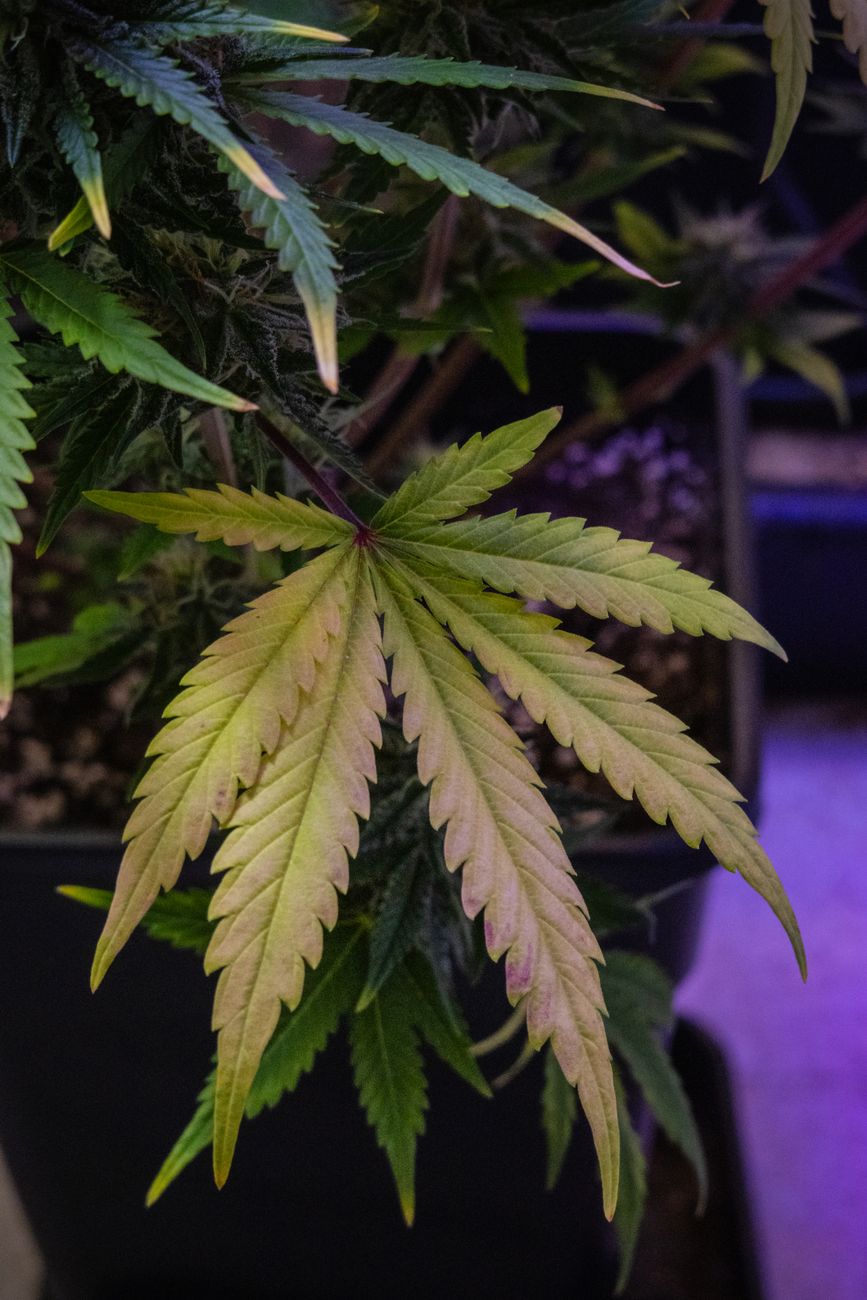
Autoflower cannabis seeds finish seed-to-harvest in 8, 10 weeks. Photoperiod strains run 14, 22 weeks from seed (or 10, 16 weeks from a rooted clone). Add a 2, 4 week cure after harvest for full potency and flavour development. The single biggest time variable is vegetative length , you control that directly with photoperiod strains, while autoflowers set their own schedule regardless of light cycle.
- ✓ First-time Canadian growers planning their season
- ✓ Indoor growers deciding between autos and photoperiods
- ✓ Outdoor growers working within a short frost-free window
- ✓ Anyone who's harvested too early or too late before
- ✓ Growers who want to run multiple harvests per year
- ✗ Growers outside Canada (some timing advice is region-specific)
- ✗ Commercial producers with regulated facility timelines
- ✗ Anyone under the legal age (19+ in most provinces; 18 in AB; 21 in QC)
How Long Does Cannabis Germination Take?
Germination runs 24 to 120 hours (1, 5 days) under ideal conditions. Most seeds crack and show a white taproot within 48 to 72 hours using the paper-towel method at 22, 25°C.
Aggregated grower journals and breeder documentation consistently report 90 to 97% success rates when temperature stays between 22 and 25°C, humidity sits at 70, 90%, and seeds are kept in darkness. Dropping below 20°C slows the process dramatically , sometimes to 5+ days.
The paper-towel method (seeds between two damp paper towels inside a sealed bag or plate) is the most reported approach. Direct-to-medium is equally valid if your medium stays moist and warm. Either way, once the taproot hits 1, 2 cm, transfer to your growing medium without delay , a dried taproot stalls the whole grow by days.
Plan for 3 days of germination in your timeline, with 5 days as your buffer. Any seed still closed after 7 days in warm, moist conditions is unlikely to be viable. Don't waste another week nursing it , move on.
How Long Is the Cannabis Seedling Stage?
The seedling stage lasts 1 to 3 weeks, measured from the moment cotyledons (the first round leaves) appear above soil to the point where the plant shows its third node and the serrated fan leaves look characteristically cannabis-like.
During this window, root development is the priority , not top growth. Seedlings are fragile. The most common mistake growers make here is overwatering. The medium should feel barely damp, not wet. Roots need oxygen gaps in the medium to grow downward.
Ideal seedling environment: 20, 25°C, 65, 70% RH, 400, 600 PPFD (a soft, close LED or T5 fluorescent). Blasting 1,000+ PPFD at a seedling causes light stress that slows the whole veg stage by 5, 7 days.
Budget 2 weeks for the seedling stage. Autoflowers hit vegetative mode without a light-cycle trigger, so don't try to extend seedling time , they'll transition on their own around day 14, 21 regardless.
How Long Does the Vegetative Stage Last?
Vegetative stage length is where growers have the most control. Photoperiod strains veg for as long as you keep them on 18+ hours of light , typically 4 to 8 weeks indoors. Autoflowers veg for a fixed 3 to 5 weeks regardless of light schedule.
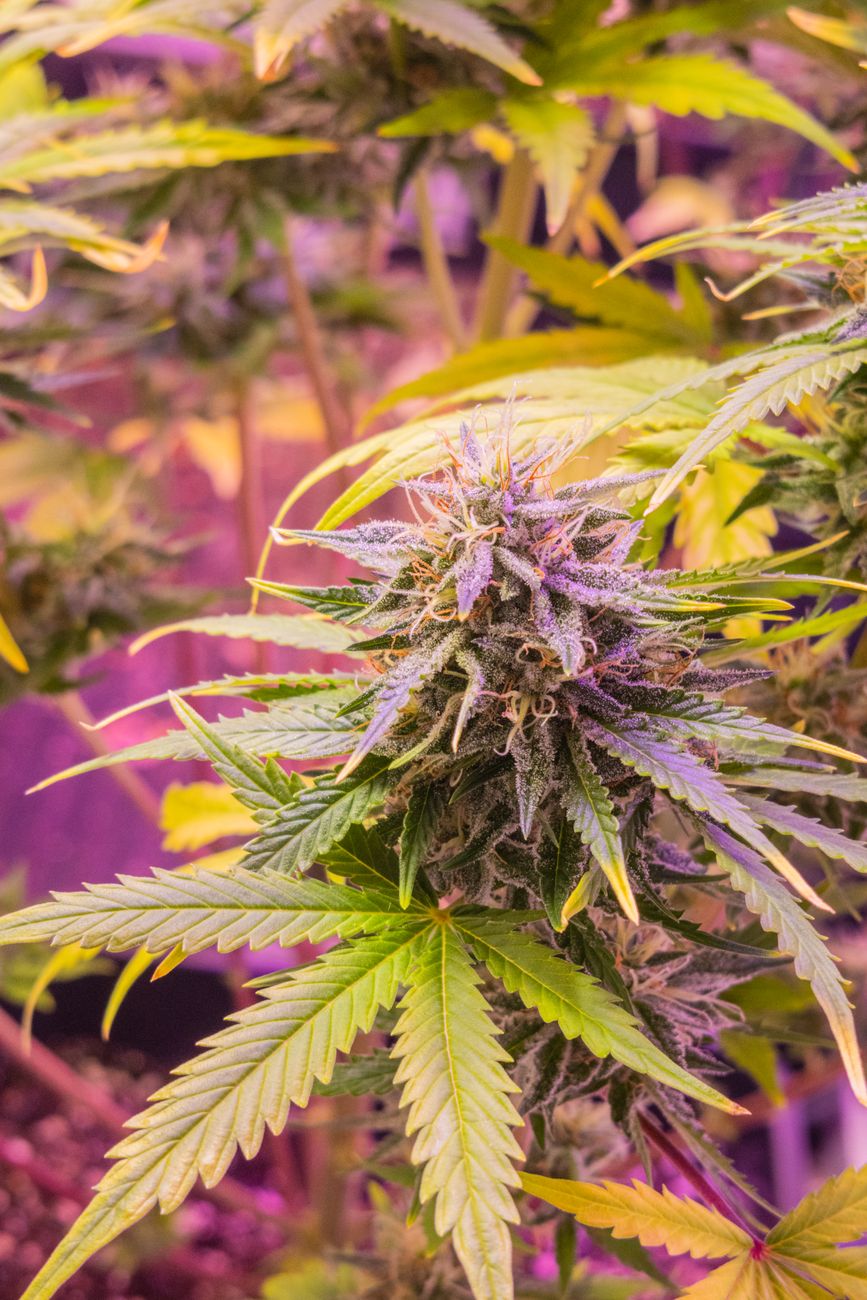
During veg, the plant builds its structural frame , the branches and nodes that will hold bud sites. A bigger, bushier plant in veg equals more sites in flower. Optimal veg conditions: 20, 28°C, 50, 70% RH, 600, 900 PPFD, 18/6 light schedule. EC (electrical conductivity) for nutrient solution should run 1.2, 1.8 mS/cm during mid-veg.
For feminized cannabis seeds, 4, 6 weeks of veg typically produces a plant ready to fill a standard grow tent. Vegging for 8+ weeks is for experienced growers building a Screen of Green (ScrOG) canopy or large outdoor specimens.
For most Canadian indoor growers, 4 to 6 weeks of veg hits the best balance of yield and total cycle time. Going shorter cuts yield significantly; going longer adds marginal returns unless you're running a trained canopy.
How Long Does the Flowering Stage Take?
The flowering stage runs 7 to 12 weeks depending on genetics. Indica-dominant strains typically finish in 7, 9 weeks of flower; sativa-dominant strains can run 10, 14 weeks.
Photoperiod strains enter flower when light drops to 12 hours. Autoflowers flip automatically around week 3, 5 from seed. The first 2 weeks of flower ("pre-flower" or stretch) see the plant growing rapidly , sometimes doubling in height. This is where most growers underestimate their ceiling clearance.
Key flowering environment targets: 18, 26°C, 40, 50% RH (lower RH reduces mold risk significantly in dense colas), 800, 1,000 PPFD for mid-flower. CO2 supplementation at 1,200, 1,500 ppm can boost yields but only pays off if you're already running good light intensity.
- Weeks 1, 2: Pre-flower stretch, pistils appear
- Weeks 3, 4: Bud sites stack, resin glands form
- Weeks 5, 7: Bulk and density increase rapidly
- Weeks 7, 9: Trichomes develop, terpene production peaks
- Weeks 9, 12: Finishing window (strain-dependent), watch trichomes closely
Harvest timing within the flowering window matters more than most growers realise. A jeweller's loupe or digital microscope is essential , clear trichomes mean THC is still building; cloudy trichomes signal peak THC; amber trichomes signal THC is degrading to CBN. Most growers target 10, 20% amber for a balanced effect.
Never harvest by the calendar alone. Breeder-stated flower times are averages , your specific environment can shift finish by 5, 10 days in either direction. Always confirm with trichome inspection in the final 2 weeks.
How Long Does Drying and Curing Take After Harvest?
Drying takes 7, 14 days in a dark room at 15, 21°C with 45, 55% RH. Slow drying at lower temperatures preserves terpenes significantly better than fast drying in a warm room.
After drying, curing in sealed glass jars for 2, 4 weeks is standard practice. Curing completes chlorophyll breakdown, smooths smoke, and allows residual moisture to distribute evenly through the bud. Published research in cannabis cultivation literature consistently documents that 2+ weeks of jar curing improves both flavour complexity and perceived potency versus uncured material.
Budget realistically: from harvest day to a fully cured, smokeable product, add 3, 6 weeks. Growers who skip the cure often report harsh, grassy-tasting results from the same genetics that produces excellent cured output.
The cure is not optional if you want the best from your genetics. A 4-week cure on a well-grown plant consistently outperforms a 1-week-old sample of the same harvest in taste tests reported across grower communities. Factor it into your total timeline from day one.
Autoflower vs Photoperiod: Full Timeline Comparison
Choosing the right type of seed is the single fastest lever you have on total grow time. Here's how the two paths compare from seed to cured product:
| Stage | Autoflower | Photoperiod (Feminized) |
|---|---|---|
| Germination | 2, 5 days | 2, 5 days |
| Seedling | 1, 2 weeks | 1, 3 weeks |
| Vegetative | 3, 5 weeks (auto-triggered) | 4, 8 weeks (grower-controlled) |
| Flowering | 5, 8 weeks | 7, 12 weeks |
| Dry + Cure | 3, 6 weeks | 3, 6 weeks |
| Total (seed to cured) | 12, 16 weeks | 18, 30 weeks |
For Canadian outdoor growers with a frost-free window of 100, 150 days, autoflower seeds are frequently the only realistic option in Zones 3, 5. Photoperiod strains in those zones need supplemental lighting or greenhouse protection to hit harvest before October frost arrives.
For indoor growers prioritising yield per cycle, photoperiod indica seeds with 7, 8 week flower times offer more grams per watt than most autos in the same space, per widely reported grower benchmarks.
If your priority is speed or you're growing outdoors in a short Canadian season, autoflowers win every time. If you're indoors with no harvest deadline and want maximum yield potential, a well-vegged photoperiod feminized strain is the better long game.
The Total Time Formula
Every cannabis grow follows the same stack: Germination + Seedling + Veg + Flower + Dry/Cure = Total calendar commitment. The formula:
Total weeks = Germ (0.5) + Seedling (2) + Veg (your target) + Flower (breeder weeks) + Cure (3)
Example A , Autoflower: 0.5 + 2 + 4 (auto veg) + 7 (flower) + 3 (cure) = 16.5 weeks total from seed to cured jar.
Example B , Photoperiod feminized, 6-week veg: 0.5 + 2 + 6 + 9 (flower) + 3 (cure) = 20.5 weeks total. Know this number before you plant , not after you run out of room in your season.
How To Speed Up Cannabis Growth Without Sacrificing Quality
There are real ways to cut weeks from your timeline and real ways to wreck a harvest trying to rush it. These are the approaches that actually work:
1. Start with fast-finishing genetics
Genetics set your floor. A sativa-dominant photoperiod strain won't finish in 7 weeks no matter what you do. Selecting autoflower or fast-version photoperiod strains designed for 7, 8 week flower is the single most effective timeline lever. Look for breeder-documented finish times under 75 days for outdoor autos.
2. Optimise light intensity in veg
Running 700, 900 PPFD during veg (versus a common 400, 500 for beginners) accelerates node development meaningfully. Aggregated grower data consistently shows earlier branch development and faster canopy closure at higher veg PPFD, cutting 5, 7 days off the effective veg period.
3. Use fabric pots for faster root development
Fabric pots air-prune roots, producing a denser root ball faster than plastic containers. Widely reported grower journals show 11 L fabric pots typically produce 140, 180 g per plant indoor under 18/6 LED at 600 PPFD , a benchmark hard to hit in plastic pots of the same size.
4. Keep temperature in the growth-optimised range
Cannabis grows fastest at 24, 28°C during the light period. Dropping below 20°C slows metabolic processes across all stages. Canadian growers dealing with cold basements or garages often lose 7, 14 days of effective growth time per cycle without realising the temperature is the culprit.
5. Don't skip the cure , speed it up instead
You can't meaningfully rush drying without sacrificing terpenes, but you can burp jars frequently (2, 3 times daily for the first week) to accelerate moisture equalisation and reduce the cure from 4 weeks to a functional 2 weeks for most harvests.
Choosing fast genetics and dialling your environment saves more time than any nutrient product or "bloom booster" on the market. Fix your environment first, your genetics second, your technique third.
Common Mistakes That Add Weeks to Your Grow
Looking at questions our support team fields most often, the same timeline-killers appear repeatedly across Canadian growers at every experience level:
Mistake 1: Harvesting by the calendar, not by trichomes
Breeder-stated finish times are averages built from many phenos across different environments. Harvesting 2 weeks early because "the breeder said 8 weeks" results in underdeveloped cannabinoids and a weak final product. Always confirm with trichome colour , this is non-negotiable.
Mistake 2: Overwatering seedlings
This is the most common seedling-stage error by far. Saturated medium blocks oxygen to roots. Root development slows, the seedling sits still for days, and growers misread it as "slow genetics." Lift the pot , if it feels heavy, don't water. Wait until it's noticeably lighter.
Mistake 3: Triggering flower too early on photoperiods
Flipping to 12/12 after only 2 weeks of veg produces tiny plants with tiny yields. Even with a tight timeline, 4 weeks of veg is the practical minimum for indoor photoperiod grows. Less than that and the flower-stage yield rarely justifies the electricity and nutrient cost.
Mistake 4: Rushing the dry
Putting buds in a paper bag, drying with a dehumidifier on high, or drying in a room above 24°C all destroy terpenes. The result is a harsh, flat-smelling product from genetics that deserved better. Slow drying at 15, 20°C with good air circulation is worth the extra 4, 5 days.
Mistake 5: Ignoring light schedule consistency
Irregular light schedules stress photoperiod plants, sometimes causing re-vegetation, hermaphroditism, or a delayed flower transition. Even a few accidental light leaks during the dark period can push finish time out by a week or more. Use a reliable mechanical timer and tape any light leaks in your tent.
What Happens If You Pick the Wrong Timeline for Your Season?
- Strain: 75-day autoflower
- Start date: June 1 (indoor), moved outdoor July 1
- Harvest: Mid-August
- First frost: Oct 6 (Ottawa)
- Buffer: 50+ days
- Risk: Very Low
- Outcome: Full trichome development, successful cure, peak-quality harvest
- Strain: 14-week photoperiod sativa
- Start date: June 15 (direct outdoor)
- Expected harvest: Late October
- First frost: Oct 6 (Ottawa)
- Buffer: Negative 14 days
- Risk: Very High
- Outcome: Frost damage before harvest, mold on unfinished buds, lost season
Bottom line: One strain selection decision determined the entire season outcome. The genetics, the nutrients, the training , all secondary to whether your strain's timeline fits your window. Per Plant Hardiness Zones of Canada data and Environment and Climate Change Canada climate normals, most populated Canadian zones see first frost between late September and mid-October.
For Canadian outdoor growers, our autoflower seed collection offers the widest range of sub-80-day options with documented cold tolerance for prairie and eastern-province climates.
Which Grow Type Fits Your Timeline? A Decision Guide
Per Canada's Cannabis Act (2018), adults 19+ (18 in Alberta, 21 in Quebec) may grow up to 4 cannabis plants per household for personal use. That limit makes per-plant maximisation more important than cycle speed for many home growers. Review Health Canada's cannabis growing guidelines for full compliance requirements.
"Plan backwards from your deadline, not forwards from today. Know your first-frost date or harvest target, subtract the Stage-Stack Formula total, and that's your last possible start date , not your ideal start date."
Ready to pick genetics that actually fit your timeline? Browse our full cannabis seed collection with cycle times listed per strain, or filter by autoflowering seeds to find sub-80-day options matched to your Canadian growing zone.
Frequently Asked Questions
How long does it take to grow cannabis from seed to harvest?
How long does cannabis take to flower?
Can you speed up cannabis growth legally?
How long does the vegetative stage last?
How long does cannabis take to germinate?
Why did my autoflower take longer than the breeder stated?
How long should you cure cannabis?
Can I grow cannabis outdoors in Canada with a short season?
How many harvests can I get per year indoors?
Does a longer veg mean more yield?
Why won't my seedlings grow fast?
What month should I start cannabis seeds outdoors in Canada?
My plant has been flowering for 10 weeks and trichomes are still clear , what's wrong?
Sources
Shop Premium Cannabis Seeds
Browse our curated selection of cannabis seeds, carefully chosen for Canadian growers. Fast shipping, germination guarantee, and discreet packaging across Canada.
Explore more seed categories: