The single most expensive mistake in a cannabis grow isn't the wrong strain or the wrong light , it's miscounting flowering day 1. Get it wrong by even a week and you harvest early, miss peak trichome maturity, and throw away weeks of electricity, nutrients, and patience. Most growers are counting from the wrong starting point entirely.
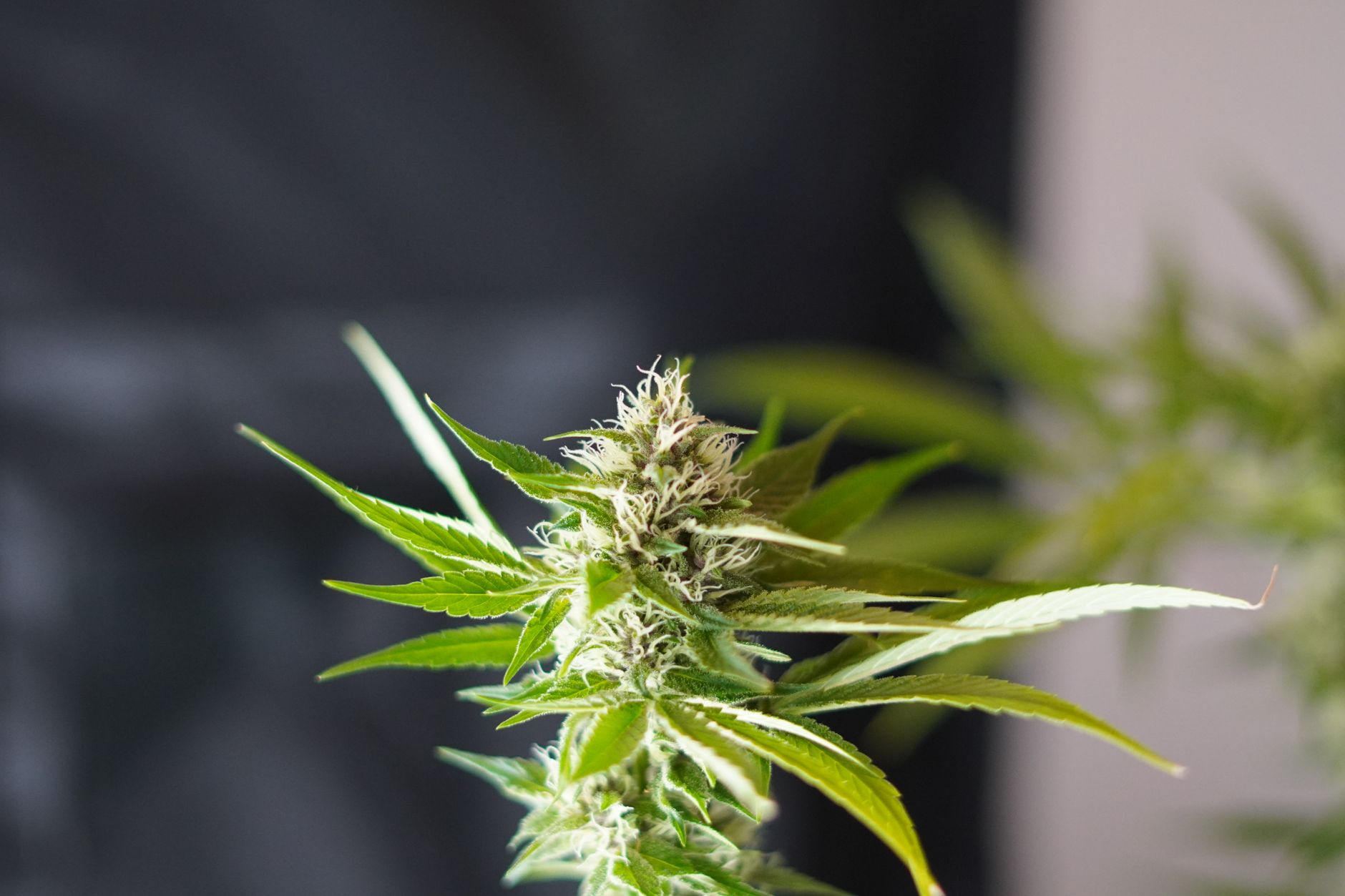
Breeder timelines list "8 weeks of flower" and growers assume that clock starts the moment they flip to 12/12. It doesn't. The real flowering day 1 is the day your plant shows its first white pistils , and those can appear 7 to 14 days after the flip. That gap is where most harvests go wrong.
This guide covers exactly how to count flowering days, what's happening in your plant each week, and how to time harvest to the day , for both photoperiod and autoflower genetics. Numbers are specific, sourced from breeder documentation and aggregated grower journals, and directly applicable to Canadian conditions under the Cannabis Act.
- ✓ First-time growers confused by breeder timelines
- ✓ Growers who have harvested early and wondered why potency was low
- ✓ Canadian outdoor growers racing the frost calendar
- ✓ Indoor growers running both photos and autos
- ✓ Anyone who wants to read trichomes, not just count days
- ✗ Growers looking for a single "right answer" for every strain
- ✗ Commercial licence holders (this is the personal 4-plant household context)
- ✗ Those already growing professionally with lab support
Flowering day 1 is marked by the first visible white pistils at bud sites , not by a light-schedule flip. Photoperiod strains spend 56 to 77 days in true flower, depending on genetics. Autoflowers transition automatically at 21 to 28 days from germination and typically finish their entire life cycle in 63 to 84 days total. Counting from the wrong starting point is the leading cause of early harvesting and under-developed buds.
By the Numbers , Cannabis Flowering
What Is Flowering Day 1 , and Why Does It Matter?
Flowering day 1 is the first day you observe white, hair-like pistils emerging from bud sites at the nodes. It is not the day you switch lights to 12/12 and it is not the first day you see pre-flowers in late veg.
After a 12/12 flip, photoperiod plants spend 7 to 14 days in a "transition" or "stretch" phase , they're reading the light signal, finishing vegetative growth, and preparing hormone shifts. True flower development starts when the first pistils break. That is day 1.
Why it matters: breeder-stated flower times (e.g. "63 days of flower") start from pistil emergence. If you count from your flip date, you'll think the plant is done a full week to two weeks before it actually is. You'll harvest before trichomes are fully developed, and you'll see lower THC, lower terp load, and airy buds that could have been dense.
Mark your calendar on the day you see the first white pistils at multiple bud sites. That date is day 1. Everything before that , flip date, pre-flowers , is pre-flower setup. Don't let pre-flower excitement cost you two weeks of bud development.
How Does Photoperiod Flowering Differ from Autoflower Flowering?
Photoperiod strains require a drop to 12 hours of uninterrupted darkness to trigger flowering. Autoflowers don't , they flower based on age, typically transitioning at 21 to 28 days from germination regardless of light schedule.
For photoperiod strains, total time from seed to harvest is roughly 16 to 24 weeks: 4 to 8 weeks of veg, 2 weeks of transition, plus 8 to 11 weeks of true flower. For autoflower seeds, breeders document 63 to 84 days seed-to-harvest, with flowering occupying approximately 35 to 49 of those days.
In a Canadian outdoor context, photoperiod plants start flowering naturally as days shorten in late July to early August. Autoflowers started in late May or early June can finish by mid-August , well ahead of the frost window that hits most provinces by late September.
| Factor | Photoperiod | Autoflower |
|---|---|---|
| Flower trigger | 12/12 light schedule | Age (21-28 days) |
| Days to first pistil (flower day 1) | 7-14 days post-flip | 21-28 days from seed |
| True flower duration | 56-77 days | 35-49 days |
| Seed-to-harvest total | 112-168 days | 63-84 days |
| Outdoor harvest window (Canada) | Late Sept , mid-Oct | Mid-Aug , late Sept |
| Indoor light schedule during flower | 12/12 mandatory | 18/6 or 20/4 (higher yield) |
| Re-vegging possible? | Yes | No |
| Beginner-friendliness | Moderate | High |
For Canadian growers with a short frost-free window, autoflower seeds are the lower-risk option , they finish 4 to 8 weeks earlier than most photoperiod genetics. If you want larger plants, higher yields, and control over vegetative size, feminized photoperiod seeds are the stronger long-term investment for indoor grows.
What Happens Each Week of Cannabis Flowering?
Each week of flowering has a distinct biological agenda. Understanding what's normal , and what's a warning sign , keeps you from intervening at the wrong moment.
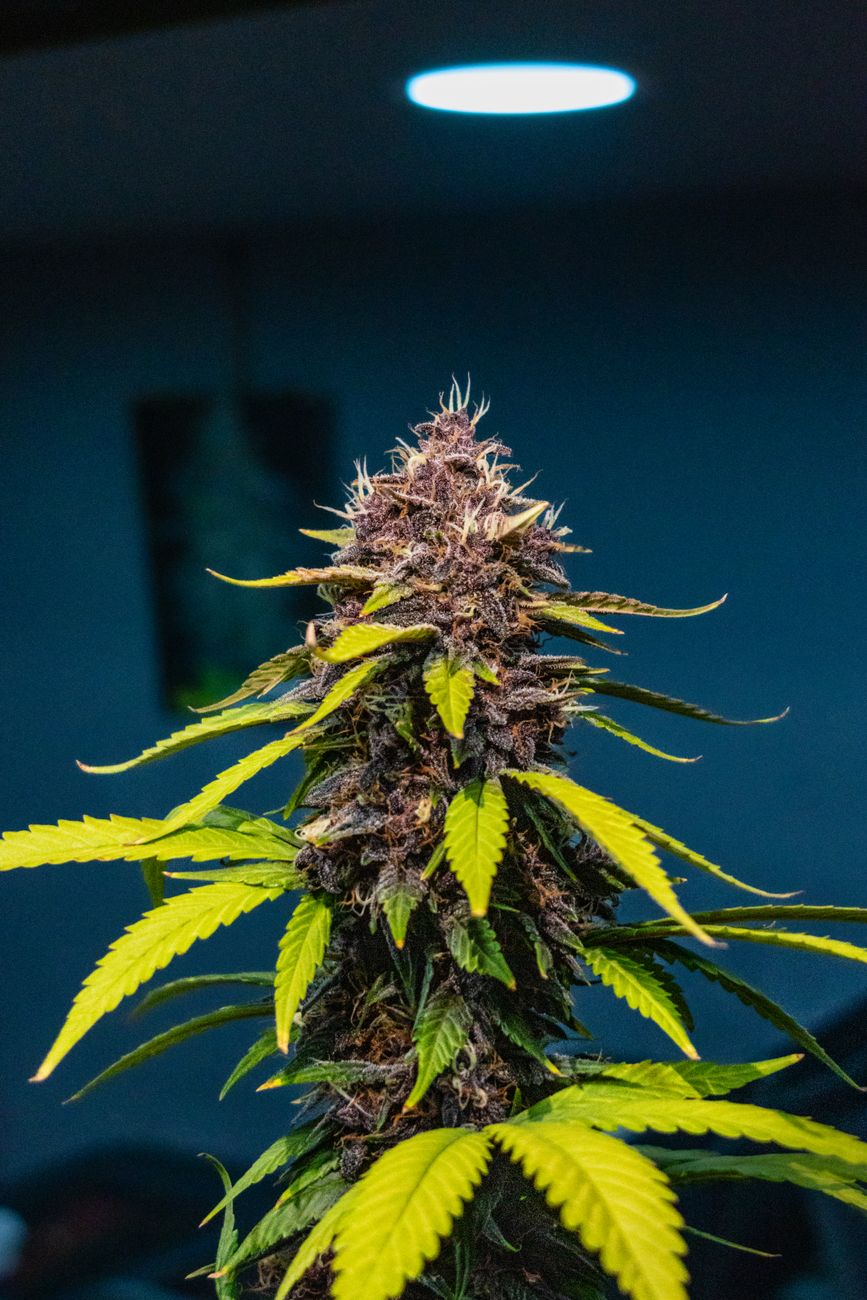
Weeks 1-2: Stretch and First Pistils
Most photoperiod plants stretch 50 to 100% of their pre-flip height during this phase. Internode spacing elongates rapidly. White pistils emerge at all bud sites. This is where most growers panic about height , don't. The stretch is normal and peaks around day 10 to 14 of true flower.
Weeks 3-4: Bud Formation and Calyx Stacking
Calyxes swell and stack on each other. Buds look rough and uneven , this is also normal. Trichome production ramps up. Resin glands appear as a faint dusting under direct light. Maintain 600 to 900 PPFD for LED grows during this phase; dropping light intensity now directly reduces bud density.
Weeks 5-6: Rapid Fattening and Peak Terpene Production
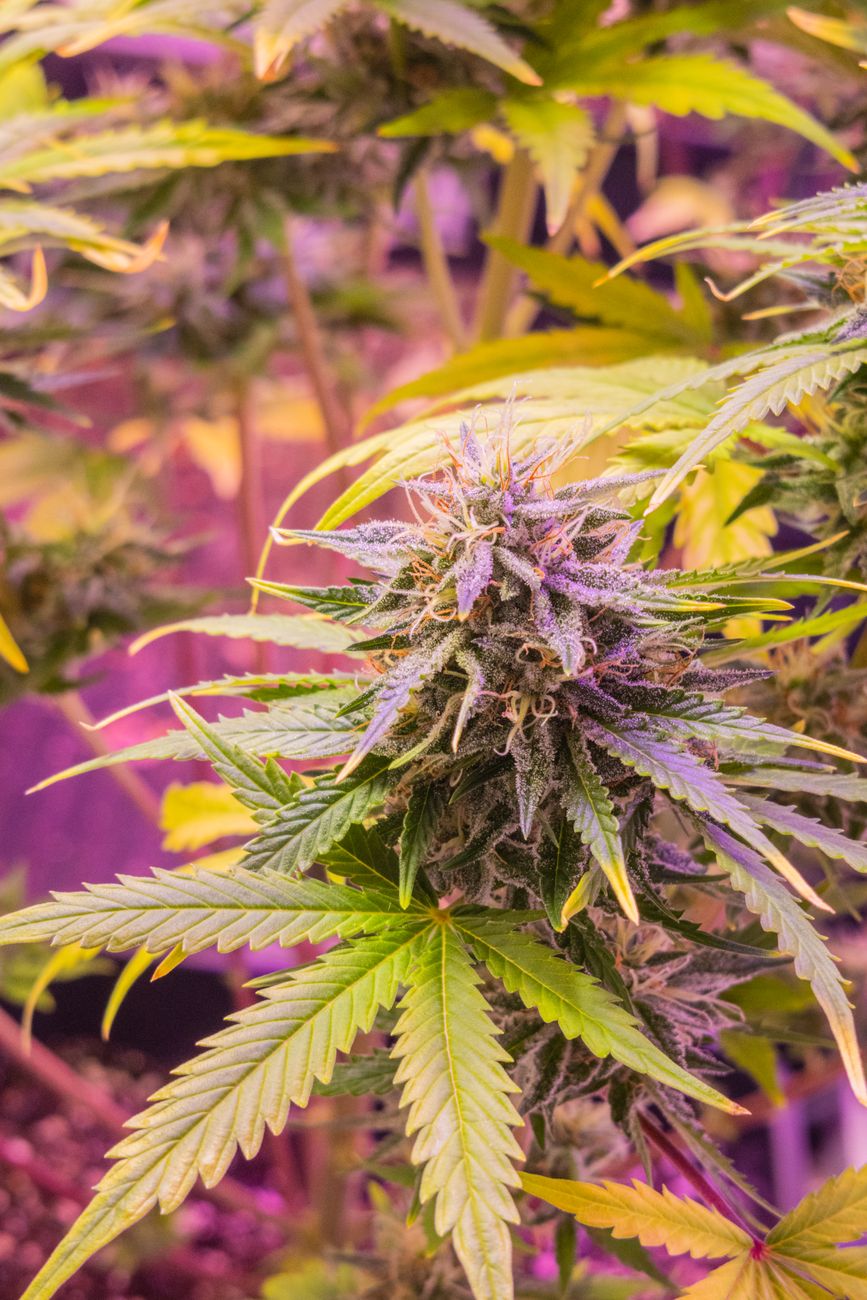
This is where most of the bud weight accumulates. Terpene output is at its highest. Keep relative humidity at 45 to 50% , this is the window most Canadian indoor growers see mold start if airflow is inadequate. Aggregated grower journals report that high-humidity rooms (above 55% RH) during weeks 5 to 6 are the leading cause of bud rot in October outdoor crops and dense indoor tents.
Weeks 7-8: Trichome Ripening and Pistil Colour Change
Pistils begin shifting from white to amber. Most indica-dominant strains approach harvest readiness here. Trichomes transition from clear to cloudy , this is the moment that matters most for harvest timing. Stop high-nitrogen feeding by week 7; green, leafy late-flower plants are over-fertilized and will taste harsh.
Weeks 9-11: Late Flower and Final Ripening
Sativa-dominant and longer-flowering strains continue building resin through week 10 or 11. Calyx-to-leaf ratio increases as fan leaves yellow and die , this is the plant pulling nutrients back, not a deficiency. Flush 7 to 14 days before targeted harvest if you're using synthetic nutrients.
Weeks 5 through 7 are where harvests are won or lost. This is when bud density, potency, and terpene profile are set. Maintain PPFD, airflow, and humidity discipline during this window above all else.
How Do You Time Harvest Precisely?
Counting days is the starting point. Reading trichomes with a 60x to 100x jeweller's loupe or digital microscope is the finishing point. Days tell you when to start looking; trichomes tell you when to actually cut.
Step 1: Mark Flowering Day 1 on the Calendar
The moment you see white pistils at multiple nodes, note the date. Add the breeder's stated flower time. That gives you a target harvest window, not a hard date.
Step 2: Monitor Pistil Colour (70-80% Rule)
When 70 to 80% of pistils have changed from white to amber or orange, you're entering the harvest window. This typically coincides with the last 7 to 10 days of the breeder's stated flower time.
Step 3: Read Trichome Colour Under Magnification
Clear trichomes mean the plant is not ready. Milky or cloudy trichomes indicate peak THC. Amber trichomes indicate THC is degrading to CBN, which produces a more sedative effect. Most growers targeting potency harvest at 10 to 20% amber trichomes mixed with predominantly cloudy heads.
Step 4: Flush, Then a 24-48 Hour Dark Period
Run plain water or a flushing agent 7 to 14 days before harvest if using synthetic nutrients. Many growers report improved taste with a final 24 to 48 hours of total darkness immediately before cutting , trichomes shift resin to the exterior of the bud during this period.
The Simple Rule Most Growers Ignore
"Days tell you when to look. Trichomes tell you when to cut. Never harvest by the calendar alone , but never ignore the calendar either. The window is always shorter than you think."
Common Flowering Mistakes , and How to Fix Them
Looking at the questions our support team fields most often throughout the season, certain flowering mistakes appear again and again. These aren't rare edge cases , they're what most new growers run into on their first or second crop.
Mistake 1: Counting from the Flip Date, Not Pistil Day 1
How to spot it: You think you're at day 56 of flower, but your trichomes are still mostly clear. Fix: Restart your count from the day pistils first appeared. Add that 7 to 14 day gap back in.
Mistake 2: Feeding High Nitrogen Through Late Flower
How to spot it: Dark green leaves deep into flower, harsh-tasting final product. Fix: Transition to a low-nitrogen, phosphorus-heavy flower formula by week 3 of true flower. Drop nitrogen almost entirely by week 6.
Mistake 3: Light Leaks During 12/12
How to spot it: Photoperiod plants hermaphrodite (produce pollen sacs) mid-flower despite no stress. Fix: Light-proof your grow space before flipping , even a brief 5-minute light leak during the dark period can re-trigger vegetative signals.
Mistake 4: Letting RH Creep Above 50% in Late Flower
How to spot it: Grey or brown rot appearing inside dense colas, first noticed as one cola dying while others look fine. Fix: Target 40 to 45% RH from week 5 onward. Add a dehumidifier if you're in a humid region like coastal BC or Atlantic Canada.
Mistake 5: Harvesting the Whole Plant at Once
How to spot it: Lower buds are underdeveloped and airy compared to top colas. Fix: Stage harvest , cut top colas first, leave lower sites on the plant for 5 to 10 additional days. Aggregated grower data shows lower bud density improves 15 to 25% with staged harvesting versus whole-plant cuts.
Of all the mistakes above, the most costly is miscounting day 1. Fix that first. Everything else is refinement on top of a solid foundation.
Growing indoors under a 12/12 schedule?
Browse strains with documented 8-week flower times , built for Canadian growers who want predictable harvests.
Shop Feminized Cannabis SeedsThe Canadian Outdoor Flowering Calendar
Outdoor photoperiod plants in Canada begin flowering naturally as daylength drops below 14 hours , typically late July in most provinces. The problem: many strains require 9 to 11 weeks of flower, which means they're still finishing in October when early frosts arrive across Zone 3 and 4 regions.
Plant Hardiness Zone data from Natural Resources Canada and frost-date normals from Environment and Climate Change Canada are the only reliable tools for planning outdoor timing. Guessing based on a breeder's European or US-based timelines leads to frost-caught crops.
Outdoor Photoperiod Flowering Timeline , Central Canada (Zone 4-5)
Veg only
Veg peak
Pre-flower
True flower begins
Late flower / risk rising
Frost risk , harvest window
For outdoor growers in Zone 3 to 4 (Manitoba, Saskatchewan, northern Ontario, Quebec Laurentians), strains with flower times exceeding 8 weeks are high-risk. Indica-dominant genetics or fast-finishing indica seeds with documented 49 to 56 day flower times are the most dependable outdoor choice for those zones.
Build your outdoor flower timeline backwards from your region's first frost date, not forwards from your start date. If the math doesn't work for photoperiods, switch to autoflowers , they're not a compromise in Canada, they're the smart play.
The 14-Day Buffer Rule
The 14-Day Buffer Rule
Every strain you grow outdoors in Canada should complete its full flower cycle at least 14 days before your region's historical first frost date.
Formula: Outdoor start date + veg days + 14 (flip-to-pistil transition) + breeder flower days + 7 (weather variance buffer) = projected harvest date. That date must fall at least 14 days before historical first frost.
Worked example: A 63-day flower photoperiod started outdoors June 1 in Ottawa begins flowering around July 28 (58 days of natural veg). Add 63 days of flower = harvest around September 29. Ottawa's mean first frost is October 6 , that's only 7 days buffer. Under the 14-day rule, this crop is marginal. Switching to an indica strain with a 49-day flower time moves harvest to September 15, giving a 21-day buffer. Safe.
According to research indexed on PubMed, late-stage cold exposure (below 10°C) during active flowering accelerates trichome development but can also cause premature senescence in thin-leafed sativa phenotypes. A 14-day buffer builds in time for a natural late cold snap without destroying the crop.
What Happens If You Choose the Wrong Flower-Time Strain?
- Strain: Indica-dominant, 49-day flower
- Location: Saskatoon (Zone 3b)
- Started outdoors: June 1
- Flower begins: ~July 20
- Projected harvest: Sept 7
- First frost Saskatoon: Sept 22
- Buffer: 15 days
- Outcome: Full harvest with time to dry before frost. Buds fully ripe, dense, high resin.
- Strain: Sativa-dominant, 77-day flower
- Location: Saskatoon (Zone 3b)
- Started outdoors: June 1
- Flower begins: ~July 20
- Projected harvest: Oct 5
- First frost Saskatoon: Sept 22
- Buffer: -13 days (over by 13 days)
- Outcome: Frost hits during week 9 of flower. Buds exposed to freezing temps, bud rot spreads fast, grower forced to harvest 2 weeks early , clear trichomes, low potency, airy structure.
Bottom line: One strain selection decision, made in May, determines whether September delivers a trophy harvest or a trash bin full of frost-damaged bud. The math takes 5 minutes. Do it before you germinate.
Flowering Myths vs Reality
"Flush for 2 weeks during flower to improve taste."
A 7-day flush is typically sufficient for synthetic nutrients. Two-week flushes during active flower cause deficiencies and reduce bud development in the final weeks when resin is still building.
"Autoflowers don't need as much light during flower."
Autoflowers flower best under 18 to 20 hours of light per day at 600 to 900 PPFD. Less light means less photosynthesis during the most energy-demanding phase of the plant's life. Breeder documentation consistently shows 18/6 outperforms 12/12 for autoflower yields.
"Yellowing leaves in late flower means something is wrong."
Fan leaf yellowing from week 7 onward is the plant's natural senescence process , it's pulling stored nutrients back from leaves into the flower. It's a sign of maturity, not stress. Panicking and adding nitrogen at this stage produces harsh-tasting final product.
Frequently Asked Questions , Cannabis Flowering
When exactly is flowering day 1 in cannabis?
How long does cannabis take to flower?
Can I harvest based on days alone without checking trichomes?
Why are my buds airy and underdeveloped at harvest?
Should I use 12/12 or 18/6 for autoflowers during flower?
What happens if frost hits during cannabis flowering?
Why did my plant take longer to flower than the breeder stated?
Can I grow autoflowers outdoors in Canada?
What light schedule should I use for photoperiod plants to flower?
How do I know when to start flushing before harvest?
Why did my autoflower stall at week 6 of flower?
Do I need to change nutrients when cannabis starts flowering?
What is the best pot size for cannabis flowering indoors?
Ready to Start Your Next Flower Cycle?
Browse our full collection of feminized and autoflower seeds with documented flower times , bred and selected for Canadian growers working within the 4-plant household limit.
Shop All Cannabis SeedsSources
Shop Premium Cannabis Seeds
Browse our curated selection of cannabis seeds, carefully chosen for Canadian growers. Fast shipping, germination guarantee, and discreet packaging across Canada.
Explore more seed categories: