Most Canadian growers pick their seed type based on what a friend recommended or what was on sale. That's a mistake that quietly costs months of grow time and dozens of grams per harvest. Feminized and autoflower seeds are built differently at the genetic level, and choosing the wrong one for your setup isn't just inconvenient , it can halve your yield before you plant a single seed.
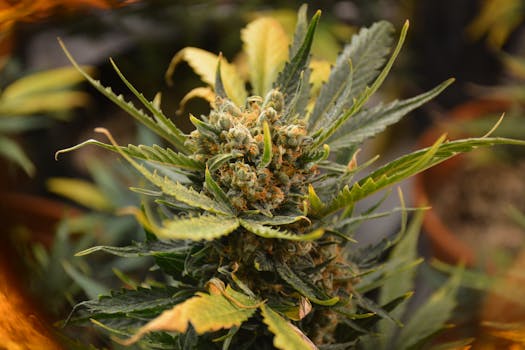
The 2026 seed market has narrowed the gap between these two categories in some ways, and widened it in others. THC ceilings are higher than ever in both types. Autoflower genetics have finally crossed the 25% THC threshold consistently. Feminized photoperiods are hitting 500 g per plant indoors in the right hands. But they still serve completely different growers.
Here's the data-backed breakdown so you can stop guessing and start growing the right way.
What Are Feminized Seeds?
Feminized seeds are cannabis seeds bred to produce only female plants , the ones that grow the cannabinoid-rich flowers growers are after.
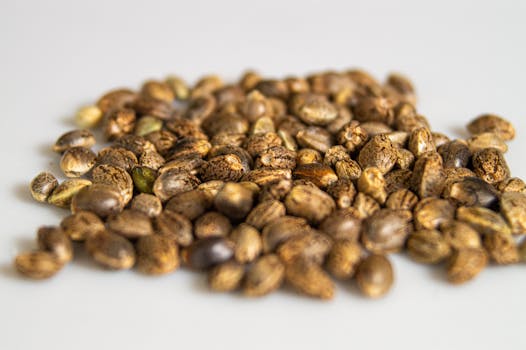
Standard (regular) seeds produce roughly 50% male plants, which don't produce usable buds and can pollinate females, tanking an entire crop. Feminized seeds eliminate that risk. Breeders create them by inducing a female plant to produce pollen through colloidal silver or rodelization techniques, then crossing it with another female. The result is seed stock that's 99%+ female under normal growing conditions.
These are photoperiod plants. They stay in vegetative growth as long as they receive more than 13 hours of light per day, then switch to flower when light drops to 12 hours. Indoors, you control this entirely. Outdoors in Canada, the natural light cycle triggers flowering in late July to early August depending on your latitude. Feminized cannabis seeds give growers the longest window to build large, high-yielding plants before the flowering clock starts.
What Are Autoflower Seeds?
Autoflower seeds contain Cannabis ruderalis genetics crossed into high-THC or high-CBD photoperiod strains. Ruderalis plants evolved in the short-summer regions of Central Asia and Russia, where waiting for a light change to flower wasn't an option.
The result is a plant that flowers based on age, not light. Typically 2 to 4 weeks after germination, an autoflower begins flowering regardless of your light schedule. You can run 18/6 or even 20/4 from seed to harvest and the plant does its job on its own internal timer.
Early autoflower genetics had a reputation for weak potency and small yields. That reputation is outdated. Modern autoflower seeds in Canada now regularly document 20 to 27% THC and 60 to 120 g per plant indoors, with top-performing phenotypes pushing beyond that. Breeder documentation on second- and third-generation autoflower crosses shows a significant leap in both potency and structure compared to the original ruderalis hybrids from even five years ago.
Feminized vs Autoflower Seeds: What Actually Separates Them?
The differences go deeper than grow time. Here's a direct comparison across every variable that matters to a Canadian home grower:
| Variable | Feminized (Photoperiod) | Autoflower |
|---|---|---|
| Total grow time | 14, 20 weeks | 8, 10 weeks |
| Flowering trigger | 12/12 light schedule (or autumn light outdoors) | Age (automatic at 2, 4 weeks) |
| Indoor yield range | 180, 500 g/plant | 60, 150 g/plant |
| Recommended pot size | 19, 30 L fabric pot | 11, 15 L fabric pot |
| Light schedule flexibility | Must flip to 12/12 to flower indoors | 18/6 or 20/4 from seed to harvest |
| Training compatibility | HST and LST both work well | LST only (no time to recover from HST) |
| Cloning | Yes , clones retain mother's genetics | Technically possible, not practical |
| Max THC (documented) | 28, 33% in high-THC phenotypes | 22, 27% in top modern hybrids |
| Best for | Experienced growers, maximizing yield | Beginners, stealth grows, multiple harvests/year |
Yield Comparison: How Much Can You Actually Grow?
Yield is where the gap between these two seed types is most visible , and most misunderstood.
Aggregated grower journals and breeder documentation show that feminized photoperiod plants in 19 L fabric pots under 18/6 LED at 600 to 800 PPFD during veg, then flipped to 12/12 at 900 to 1000 PPFD in flower, typically yield 180 to 280 g per plant. Push the pot to 30 L, extend veg to 8 weeks, and experienced growers routinely report 350 to 500 g per plant indoors.
Autoflowers in 11 L pots under 18/6 LED at 600 PPFD typically land in the 60 to 100 g range. Move to a 15 L pot and push PPFD to 800 to 900 during flower, and documented grower reports put yields at 100 to 150 g per plant. Some phenotypes push higher , but this is the reliable band.
Here's the thing growers miss: with autoflowers, you can run 4 full harvests per year indoors. A feminized plant on a 16-week cycle gets you roughly 3. If each autoflower plant yields 120 g and you grow 4 plants per legal limit, that's up to 480 g per harvest cycle, potentially 1,920 g per year. A feminized setup with the same 4-plant limit producing 300 g per plant gives you 1,200 g across 3 runs. The math isn't always in feminized seeds' favour once you account for cycle frequency.
Which Is Easier to Grow for Beginners?
Autoflowers win on simplicity. There's no light schedule change to manage, no risk of accidentally triggering early flower, and the short cycle means mistakes don't compound over 5 months of growing.
The most common beginner error with autoflowers is over-watering in weeks 1 and 2. Because autoflowers move fast, waterlogged roots in the seedling stage can stall growth during the only vegetative window the plant has. Breeder guidance consistently recommends watering only when the top 2 to 3 cm of growing medium is dry, and starting with smaller water volumes , around 250 to 300 ml per watering , until the plant establishes roots.
Feminized photoperiod plants give you more room to correct mistakes. You control the flip to flower, so if a plant looks stressed or under-developed, you simply keep it in veg longer. That extra time is forgiving. Most beginner issues , pH fluctuations, minor nutrient deficiencies, overtraining , can be resolved before the plant ever enters flower.
- First grow ever? Start with autoflower seeds.
- Have 1, 2 grows under your belt and want bigger yield? Move to feminized seeds.
- Growing outdoors in a short Canadian season? Autoflowers almost always win.
- Have a dedicated indoor tent and patience? Feminized photoperiods reward the investment.
- Want to clone your best plants? Feminized only , autoflower clones aren't practical.
Which Performs Better Outdoors in Canada?
Canada's growing season is one of the shortest in any cannabis-legal country. Most provinces have reliable frost-free windows of only 90 to 130 days, which is a serious constraint for photoperiod genetics.
Feminized photoperiod plants started outdoors in late May in Ontario or BC won't begin flowering until late July or early August as the natural daylight hours shorten. That gives them a roughly 6 to 8 week flower window before first frost risk in September and October. In warmer parts of BC or southern Ontario, this is workable. In Alberta, Saskatchewan, or Quebec, it's a race against the calendar that many strains lose.
Autoflowers are the clear outdoor winner for most Canadian provinces. A seed started indoors in late April, hardened off, and transplanted outdoors in mid-May can finish by early July. That opens the door to a second outdoor run starting in mid-July that finishes in September, well ahead of frost. Two full outdoor harvests per season is achievable in much of Canada with autoflowers. That's essentially impossible with photoperiod genetics.
Per Health Canada's guidance on home cultivation, the 4-plant limit applies per household regardless of whether plants are grown indoors or outdoors, and plants must not be visible from a public place. Autoflowers' compact stature , typically 60 to 100 cm , also makes discretion easier in a backyard setting.
Does Seed Type Affect THC and Potency?
This is the most common misconception in the seeds market. The short answer: seed type doesn't inherently limit potency. The specific strain and phenotype does.
Early autoflowers were genuinely lower in THC. The original ruderalis genetics dragged potency down, and breeders hadn't yet refined the hybrids enough to overcome it. That era is over. Published research on cannabis cannabinoid expression and modern breeder COA documentation now shows autoflower phenotypes routinely reaching 22 to 27% THC. A few documented outliers have cleared 28%.
Feminized photoperiod strains still hold the upper ceiling. Our high THC seeds in feminized form document 28 to 33% THC in top phenotype selections, with terpene profiles that add complexity to the overall effect profile. But for most growers, the difference between a 24% autoflower and a 27% feminized strain is not going to be perceptible in practice.
What does affect the final potency in your grow more than seed type: harvest timing (trichome maturity at 70 to 90% amber for peak THC), dry and cure duration (a minimum 14-day dry at 60% RH and 18°C followed by 30-day cure), and light intensity during the final 2 weeks of flower. These variables are grower-controlled and matter more than the autoflower vs feminized distinction once you're past entry-level genetics.
Myths vs Reality: What the Seed Market Gets Wrong
| The Myth | The Reality |
|---|---|
| "Autoflowers are always low potency." | Modern autoflower hybrids now document 22, 27% THC. The weak-autoflower era ended around 2020. |
| "Feminized seeds are harder to grow." | Feminized plants are more forgiving because the veg period is grower-controlled. Beginners can extend veg to fix problems. |
| "Autoflowers can't be trained." | Low-stress training (LST) works well on autoflowers and can improve canopy exposure. High-stress techniques (topping, fimming) generally hurt yield due to recovery time. |
| "Feminized seeds always out-yield autoflowers per grow." | Per plant, yes. But per calendar year with multiple runs, autoflowers can match or exceed annual totals at the 4-plant legal limit. |
| "You need separate lights for autoflowers and photoperiods." | You can run autoflowers under the same 18/6 schedule used for veg. They don't need a separate space or timer change. Photoperiods do need a 12/12 flip to flower indoors. |
Side-by-Side Grow Example: Same Setup, Different Seed Types
To make this concrete, here's how two realistic grows play out in a 1.2 x 1.2 m indoor tent using a quality 600W LED, with 4 plants (the legal maximum per Canadian household):
- Strain: modern autoflower hybrid (24% THC documented)
- Pot size: 11 L fabric pots
- Light: 18/6 from seed to harvest
- Total time: 9 weeks
- Yield per plant: 90, 120 g
- Total harvest: 360, 480 g
- Annual runs possible: 4, 5
- Annual total: up to ~1,920 g
- Strain: feminized indica-dominant (28% THC documented)
- Pot size: 19 L fabric pots
- Light: 18/6 veg (6 weeks) → 12/12 flower (8, 10 weeks)
- Total time: 14, 16 weeks
- Yield per plant: 220, 320 g
- Total harvest: 880, 1,280 g
- Annual runs possible: 3
- Annual total: up to ~3,840 g
The feminized photoperiod setup wins on per-harvest volume and maximum annual total when the veg period is pushed and the grow is dialled in. But the autoflower setup is more resilient, cheaper to run (smaller pots, same light schedule throughout), and produces usable harvests every 9 weeks. For most Canadian home growers, the autoflower path has fewer failure points.
"If your biggest constraint is time, choose autoflowers. If your biggest constraint is space, choose feminized seeds. If your biggest constraint is experience, also choose autoflowers , and then upgrade."
The rule most first-time growers wish they'd heard before buying seeds.
How to Choose the Right Seed Type for Your Setup
Step 1: Assess your timeline honestly
If you're growing outdoors in a short-season province like Alberta or Manitoba, autoflowers are almost always the right call. Feminized photoperiod plants outdoors in these regions are a gamble against frost. Indoors, if you have 4 or more months of patience and want to maximize each harvest, feminized seeds pay off.
Step 2: Check your available space and pot size
Autoflowers stay compact , 60 to 100 cm typically. Feminized photoperiod plants under adequate light and in large pots can reach 150 to 200 cm indoors. Low-ceiling tents (under 150 cm) are a poor fit for feminized strains unless you're doing aggressive LST or SCROG.
Step 3: Evaluate your grow experience level
First grow or second grow: start with autoflowers. The speed means you learn faster. Three grows in with a decent understanding of watering, pH, and feeding: graduate to feminized seeds. The extra complexity is manageable and the yield reward is real.
Step 4: Decide whether cloning matters to you
If you find a phenotype you love and want to preserve it indefinitely, feminized seeds are the only practical path. Autoflower clones don't reset the age clock , a clone taken from a 3-week-old autoflower is already 3 weeks old and will flower almost immediately, producing a tiny, low-yielding plant. Feminized cannabis seeds let you build and keep a mother plant.
Step 5: Match seed type to your annual harvest goal
Run through the numbers from the comparison above with your specific pot size and light wattage. A 2026 grow plan that accounts for multiple harvests per year under Canada's 4-plant limit often surprises growers , autoflowers can deliver comparable annual totals with less setup complexity. For growers chasing peak potency and maximum per-harvest grams, our high THC feminized seeds are the stronger choice.
Not sure where to start? Browse our full range of cannabis seeds available across Canada with strain-level breeder data on expected yields, THC ranges, and grow timelines. Research from the Journal of Cannabis Research continues to expand what we know about optimizing both photoperiod and autoflowering genetics for northern climates , the gap between the two is closing faster than most growers realize.
Ready to pick your seeds for the 2026 grow season?
Shop our most popular autoflower and feminized strains , with breeder-documented THC, yield, and grow time data for every variety.
Shop Autoflower Seeds Shop Feminized SeedsFrequently Asked Questions
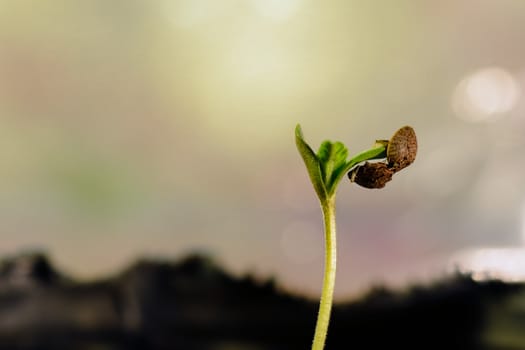
Browse the full 2026 seed catalogue
Every strain includes breeder-documented THC range, expected yield, and grow cycle data , so you can match genetics to your setup before you buy.
Shop All Cannabis Seeds in CanadaShop Premium Cannabis Seeds
Browse our curated selection of cannabis seeds, carefully chosen for Canadian growers. Fast shipping, germination guarantee, and discreet packaging across Canada.
Explore more seed categories: