Most growers pick strains by THC percentage alone, and that habit quietly ruins harvests. The failure mode is predictable: they chase a big number, ignore stretch, ignore feeding sensitivity, and end up with airy buds and a cycle they didn't budget for. Fat Banana breaks the mould because it delivers on the number , consistently testing at 25 to 27% THC in third-party COA data , while staying compact enough for a standard tent. This guide lays out exactly what Fat Banana is, what it demands, and whether it fits your setup in Canada in 2026.
- ✓ Intermediate to advanced indoor growers
- ✓ Growers chasing verified high-THC genetics
- ✓ Canadian adults 19+ (18+ in Alberta, 21+ in Quebec)
- ✓ Growers running 600, 1000 PPFD LED or HID setups
- ✓ Anyone comparing indica-dominant hybrids for potency
- ✗ First-time growers with no feeding experience
- ✗ Outdoor-only setups in short Canadian seasons
- ✗ Growers sensitive to very high THC effects
- ✗ Anyone exceeding the 4-plant household limit under the Cannabis Act
Fat Banana is an indica-dominant hybrid (OG Kush × Banana) averaging 25, 27% THC, with a 56, 63 day indoor flowering window and indoor yields documented at 500, 600 g/m². It runs compact , typically 80, 120 cm indoors , but is feeding-sensitive and punishes overwatering fast. It is one of the highest-verified-THC indica hybrids available to Canadian growers in 2026.
What Is Fat Banana?
Fat Banana is an indica-dominant hybrid cannabis strain bred specifically for THC density, carrying a verified average of 25 to 27% THC across multiple third-party laboratory reports.
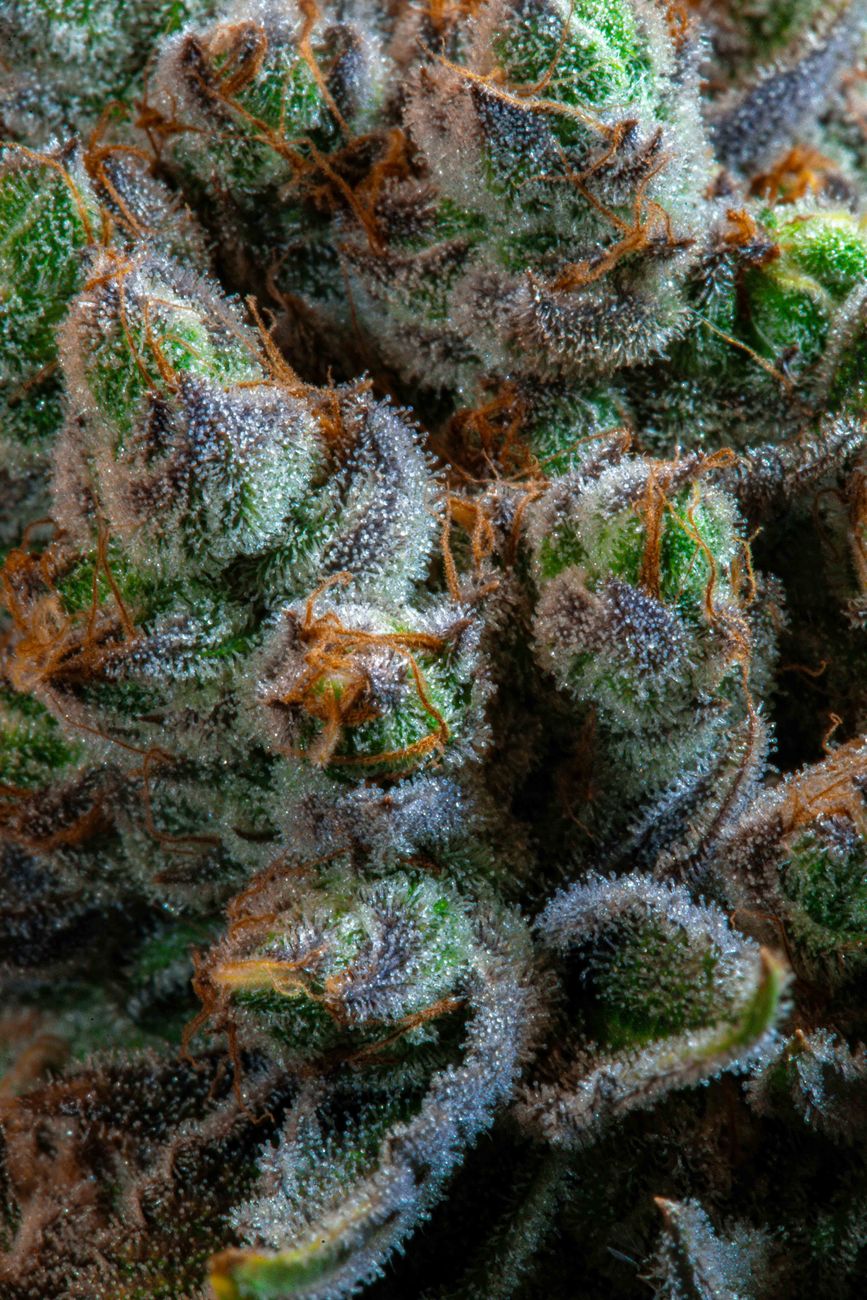
The name is earned. Buds swell wide and dense, covered in a thick resin layer that makes them sticky to the touch at peak ripeness. The terpene profile leans fruity and tropical, with Limonene and Myrcene dominating , a banana-sweet nose with a fuel undertone from the OG heritage.
Under the Cannabis Act (2018), Canadian adults may cultivate up to four plants per household for personal use. Fat Banana is a strong candidate for those four plants when maximum THC is the priority. Per Health Canada, possession and cultivation rules vary by province , confirm your local age minimum (19+ in most provinces, 18+ in Alberta, 21+ in Quebec) before starting any grow.
Fat Banana earns its reputation , the THC numbers are real, not marketing. If potency is your primary metric, this strain belongs on your shortlist. Just know it's not a hands-off grow.
What Are the Genetics Behind Fat Banana?
Fat Banana crosses OG Kush with a Banana phenotype to combine structural density and potency from the OG side with the fruity terpene signature of the Banana line.
OG Kush is one of the most studied parent genetics in modern cannabis breeding. It contributes the resin-heavy bud structure, high THC ceiling, and the fuel-and-earth terpene base. The Banana parent softens the profile considerably, introducing Limonene-heavy sweetness and smoothing the finish.
The indica-dominance , approximately 60/40 , keeps the stretch modest during the first two weeks of flower. This makes Fat Banana workable in a 1.2 m x 1.2 m tent without major height management, though experienced growers will still use low-stress training (LST) to push canopy coverage and maximise the g/m² number.
The OG × Banana cross is a genuinely well-matched pairing. You're not paying for hype genetics here , the lineage directly explains the density, the THC output, and the terpene profile. Stable, predictable, worth the grow.
How Do You Grow Fat Banana Correctly?
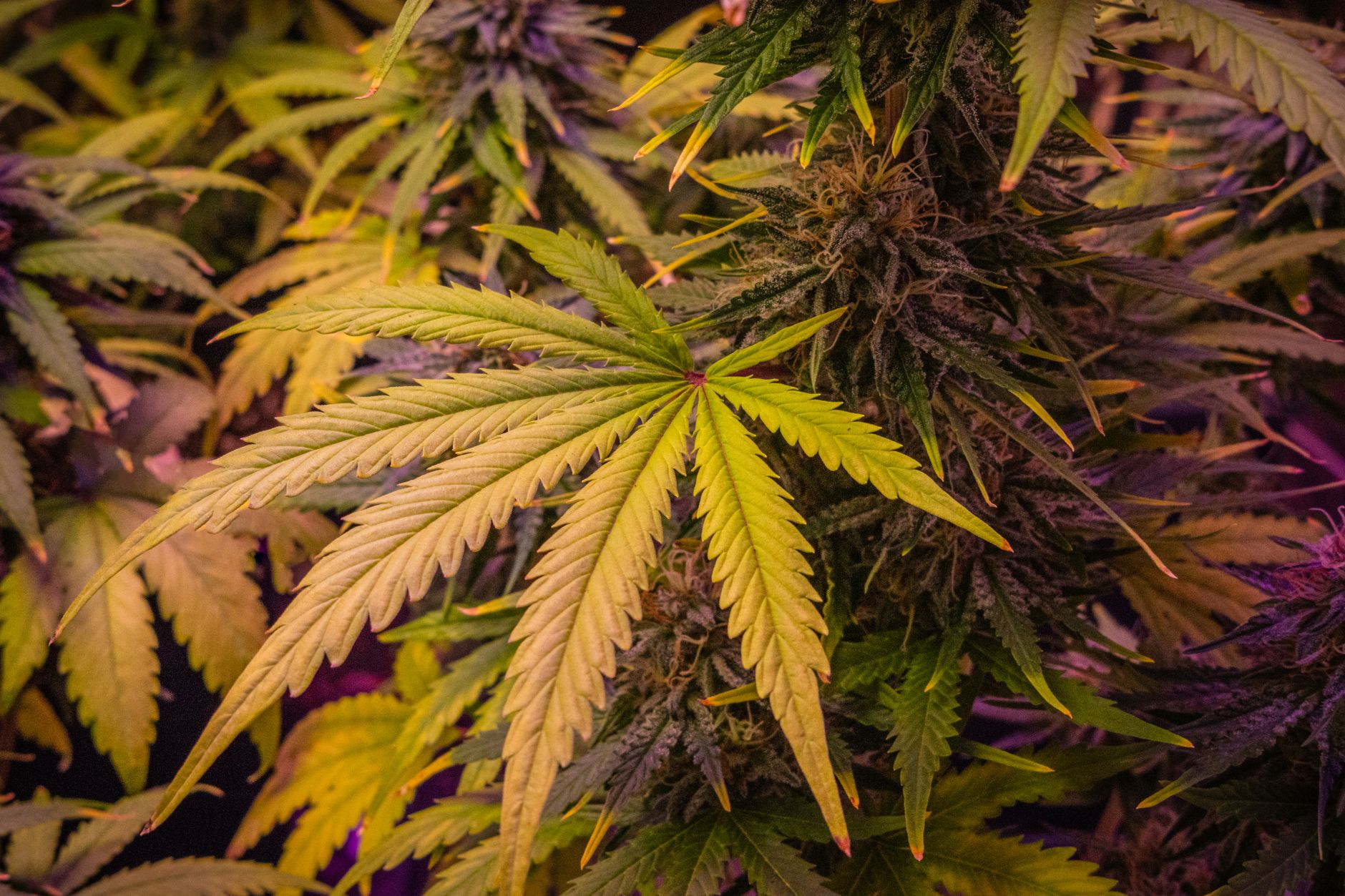
Fat Banana performs best indoors under controlled conditions. It responds well to high-intensity LED at 700, 900 PPFD during vegetative growth and 900, 1100 PPFD during flowering, with temperatures held between 20 and 26°C.
Step 1: Germinate and Establish Seedlings
Paper-towel germination at 22 to 25°C produces 90 to 97% success within 48 to 72 hours, consistent with widely reported grower journals. Move to a 1 L pot once the taproot hits 1 to 2 cm. Keep RH% at 65 to 70% at this stage , seedling death from desiccation is the most common first-week failure.
Step 2: Vegetative Phase (18/6 Light Schedule)
Run an 18/6 light schedule under 600 to 700 PPFD. Veg for 4 to 6 weeks depending on your target final height. Most growers under-water in week 2 , Fat Banana shows leaf droop fast when soil goes dry, but it is equally sensitive to overwatering. A finger-to-knuckle soil check before every water is the simplest way to avoid both.
Step 3: Flip to Flower (12/12)
Switch to 12/12 once plants reach 40 to 60 cm. Expect a 20 to 40% height increase during the first two weeks of flower , this is where most stretch happens with Fat Banana. Dial back nitrogen, ramp phosphorus and potassium, and watch EC closely. Breeder documentation recommends feeding EC of 1.8 to 2.4 during mid-flower with a stable runoff pH of 6.0 to 6.5 in soil.
Step 4: Late Flower and Flush
At week 7 of flower, trichomes begin shifting from clear to cloudy. Fat Banana's window for peak harvest is narrow , roughly 5 to 8 days between peak cloudy and amber amber-dominant. Most experienced growers check with a loupe every 48 hours after day 49. A 7- to 10-day plain-water flush before harvest is standard for soil grows.
Step 5: Dry and Cure
Hang-dry at 18 to 20°C with 55 to 60% RH for 10 to 14 days, then jar-cure for a minimum of 3 weeks. The Limonene-forward terpene profile on Fat Banana develops noticeably during weeks 3 to 6 of cure , harvesting the cure early is one of the most common yield-quality errors this strain sees.
Fat Banana is not a beginner strain. The feeding sensitivity and the narrow harvest window punish inattention. Growers who run a proper VPD chart and check pH every feed will see 500 to 600 g/m² comfortably. Growers who free-pour and guess will pull 200 g/m² and blame the seed.
What Yield and Flowering Time Should You Expect?
Fat Banana flowers indoors in 56 to 63 days (8 to 9 weeks) under 12/12, placing it mid-range for flowering time among high-THC indica-dominant hybrids.
Indoor yields documented in breeder specifications and aggregated grower journals sit at 500 to 600 g/m² under optimised 1000 PPFD LED lighting. A 19 L fabric pot, properly fed at EC 2.0 to 2.2 during peak flower, reliably reaches the upper end of this range. Drops below 500 g/m² almost always trace back to pH swings or mid-flower light stress.
Outdoor yields in Canadian conditions are harder to predict. The plant needs a long, warm finish , a minimum of 10 to 12 weeks of frost-free days after transplant. Most of Canada's populated zones (3 through 6) provide a frost-free window from late May through mid-September, which leaves Fat Banana's outdoor finish uncomfortably close to first frost in shorter-season zones. Indoor or greenhouse cultivation is the safer choice for most Canadian growers.
Every litre of root volume above 11 L adds measurable grams per plant for Fat Banana's root-hungry structure.
Formula: Base yield (11 L fabric pot) = ~140 g/plant. Each additional 4 L = +15 to 25 g/plant up to a 30 L ceiling.
Example: A 19 L fabric pot yields approximately 170 to 195 g per plant under 18/6 LED at 900 PPFD. A 30 L pot in the same conditions reaches 210 to 250 g per plant. Beyond 30 L, root-zone returns diminish , the canopy, not the roots, becomes the limiting factor.
For Canadian indoor growers, a 19 L fabric pot and 900 to 1000 PPFD LED is the sweet spot. You'll hit documented yields without over-investing in pot size or light intensity. Outdoor grows are viable only in Zone 6+ with a greenhouse extending the season past September.
What Do the Effects and Terpenes of Fat Banana Feel Like?
Fat Banana delivers a heavy, body-forward high consistent with its indica-dominant genetics and its Myrcene-leading terpene profile. The onset is fast at 25 to 27% THC , most users report effects within 5 minutes of inhalation.
The experience is sedating rather than cerebral. Limonene adds a mood-lifting layer that prevents the high from becoming purely couch-lock, but the Myrcene base keeps the body effect dominant. Duration runs 2 to 3 hours at typical doses, tapering into a relaxed, appetite-stimulating finish.
Published research consistently links Myrcene-dominant cannabis profiles to sedative and muscle-relaxant outcomes, per a 2021 review in the Journal of Cannabis Research. Fat Banana's terpene stack aligns directly with that pattern.
Fat Banana is an evening strain. It's not suited to daytime use if productivity matters. For growers who want to actually enjoy their harvest after a long grow cycle, it delivers a satisfying, body-heavy experience that justifies the work.
Common Mistakes Fat Banana Growers Make
Looking at patterns across public grower journal forums and the questions that come up most often around this strain, five failure modes appear consistently , and most of them are avoidable.
Mistake 1: Overfeeding in Early Flower
Fat Banana is feeding-sensitive. Many growers push EC above 2.6 in weeks 2 to 3 of flower and trigger tip burn followed by pH lockout. Cap EC at 2.2 during mid-flower and only push to 2.4 if plants are showing zero tip-burn signs after a full week at the lower rate.
Mistake 2: Harvesting Too Early
The bud swell on Fat Banana peaks in the final 7 to 10 days before harvest. Growers who flip to harvest at day 49 purely on colour leave 20 to 30% of potential yield density on the plant. Use a jeweller's loupe, not eye-balling, to confirm trichome status.
Mistake 3: Poor Canopy Airflow
Dense indica buds with tight node spacing equal botrytis risk if airflow is poor. Fat Banana's compact structure traps humidity between bud sites. Defoliate 25 to 30% of leaves at the flip and again at day 21 of flower. Keep RH below 45% in late flower.
Mistake 4: Under-Curing
The fruity terpene profile that makes Fat Banana distinctive requires a minimum 4-week cure to fully develop. Growers who smoke at the 2-week mark often describe a flat, hay-forward taste that makes them doubt the genetics , the genetics are fine. The cure is the variable.
Mistake 5: Skipping LST on Tall Phenos
Most Fat Banana phenos stay under 120 cm indoors, but the upper range occasionally stretches to 140 cm with longer veg periods. Growers who don't plan for this end up with canopy hitting lights at week 3 of flower, causing light stress right when bud sites need maximum PPFD. Top or LST at week 3 of veg to prevent this.
Every one of these mistakes is a process error, not a genetics error. Fat Banana is demanding, but the demands are predictable. Build a feeding schedule, track EC and pH every water, and cure properly. The strain pays you back when you do the work correctly.
Fat Banana vs. High-THC Indica Alternatives: How Does It Compare?
Fat Banana holds its own against other top-shelf indica-dominant hybrids, but the decision comes down to your priorities. This table covers the key axes Canadian growers should compare.
| Strain | THC Range | Indoor Yield | Flower Time | Mould Resistance | Beginner Rating |
|---|---|---|---|---|---|
| Fat Banana | 25, 27% | 500, 600 g/m² | 56, 63 days | Medium | 5/10 |
| Gorilla Glue #4 | 24, 28% | 550, 650 g/m² | 56, 63 days | Medium | 6/10 |
| Zkittlez | 18, 23% | 400, 500 g/m² | 56, 63 days | Medium | 6/10 |
| Wedding Cake | 22, 27% | 500, 600 g/m² | 60, 67 days | Medium-Low | 5/10 |
| Northern Lights Auto | 16, 19% | 350, 450 g/m² | 49, 56 days | High | 9/10 |
For growers chasing the highest verified THC, our high THC seeds collection includes Fat Banana alongside other COA-documented options. If you're newer to indoor growing, autoflower seeds in Canada carry significantly lower cultivation risk while still delivering respectable THC output.
Fat Banana outcompetes Wedding Cake on cycle speed and beats Zkittlez on THC. Against Gorilla Glue #4 it's a coin-flip , GG4 yields slightly more, Fat Banana carries a more distinct terpene profile. Your choice between the two should come down to whether you prioritise maximum yield or maximum flavour identity.
What Canadian Growers Need to Know About Fat Banana
From the grower support questions that come up most around this strain across Canadian growing communities, a consistent pattern surfaces: Canadian growers underestimate the importance of indoor climate control for Fat Banana.
Canadian home grow spaces , basements, spare rooms, garages , swing between 16°C in winter and 30°C in summer without active HVAC. Fat Banana's quality plummets outside the 20 to 26°C band. A temperature controller on both heating and cooling, not just one or the other, is non-negotiable for a quality run in a Canadian home setup.
For outdoor cultivation, the Plant Hardiness Zones of Canada and Environment and Climate Change Canada climate normals are your planning tools. Zone 6 and higher (southern BC, parts of southern Ontario) can attempt Fat Banana outdoors with a June transplant, targeting a mid-September harvest before first frost. Zone 5 and below: go indoor or greenhouse.
- Strain: Fat Banana (feminized)
- Setup: 1.2 m × 1.2 m tent, 19 L fabric pot
- Harvest window: Day 60, indoors, controlled
- Risk level: Low
- Outcome: 500, 600 g/m², full terpene development, repeatable next cycle
- Strain: Fat Banana (feminized)
- Setup: Outdoor Zone 5, June 1 transplant
- Harvest window: Late Sept , first frost risk Oct 1
- Risk level: High
- Outcome: Likely botrytis in dense buds during cold, wet September nights; partial crop loss
Bottom line: The grow environment decision matters more than any genetic choice. Fat Banana in the wrong climate loses to Northern Lights outdoors in every Zone 5 season.
Feminized cannabis seeds are the right format for Fat Banana , no male risk, guaranteed flowering plants for each of your four legally permitted household plants. Browse our full range of indica seeds Canada if you want comparable options matched to your province's conditions.
"A 25% THC strain grown poorly hits like a 15% strain grown well. Fat Banana rewards the process, not just the seed choice."
Canadian growers who treat Fat Banana as an indoor plant first, with a committed environmental control setup, will not be disappointed. Those who try to shortcut it outdoors in cooler zones will be. The genetics are not the variable , your environment is.
Ready to grow one of Canada's highest-verified-THC indicas?
Browse High THC Seeds at Royal King SeedsFrequently Asked Questions About Fat Banana
How long does Fat Banana take to flower indoors?
What yield can I expect from Fat Banana indoors?
Is Fat Banana suitable for beginner growers?
Can I grow Fat Banana outdoors in Canada?
What THC percentage does Fat Banana actually test at?
What terpenes does Fat Banana contain?
What pot size is best for Fat Banana?
Why did my Fat Banana buds turn out airy?
Why doesn't my Fat Banana taste like banana after harvest?
Can I grow Fat Banana in a 60 cm × 60 cm tent?
How many Fat Banana plants can I legally grow in Canada?
What EC should I feed Fat Banana during flowering?
What light schedule works best for Fat Banana?
My Fat Banana stalled at week 6 of flower , what went wrong?
Should I top Fat Banana or use LST?
Is Fat Banana available as an autoflower?
What temperature and humidity should I maintain for Fat Banana?
Can I run Fat Banana under HPS instead of LED?
Why is Fat Banana called "Fat Banana"?
What makes Fat Banana different from other high-THC indicas in 2026?
Ready to start your Fat Banana grow?
Browse our full catalogue of feminized and high-THC cannabis seeds , shipped discreetly across Canada.
Shop All Cannabis Seeds at Royal King SeedsSources
- Government of Canada , Cannabis Act (2018)
- Health Canada , Cannabis Regulation and Consumer Information
- Plant Hardiness Zones of Canada , Natural Resources Canada
- Environment and Climate Change Canada , Climate Normals
- Journal of Cannabis Research , Terpene and Cannabinoid Research
- PubMed , Cannabis Terpene Research Database
Shop Premium Cannabis Seeds
Browse our curated selection of cannabis seeds, carefully chosen for Canadian growers. Fast shipping, germination guarantee, and discreet packaging across Canada.
Explore more seed categories: