Mold doesn't arrive slowly in Canadian cannabis gardens. It arrives overnight. One cool, wet September night at 85% relative humidity is all it takes, and by morning an entire cola can look like it grew fur. Most growers who lose crops to bud rot didn't ignore the problem , they simply didn't recognize it until it was too late. The difference between a full harvest and a garbage bag of ruined buds comes down to one thing: knowing exactly what you're looking at, and acting within 24 hours of spotting it.
- ✓ Canadian outdoor growers dealing with humid late-season conditions
- ✓ Indoor growers struggling to keep RH below 50% in flower
- ✓ Growers who've lost buds to bud rot or powdery mildew before
- ✓ Anyone choosing genetics specifically for mold resistance
- ✓ Legal home growers under the 4-plant household limit (Cannabis Act 2018)
- ✗ Growers outside Canada looking for region-specific timing
- ✗ Commercial licensed producers operating under LP-scale protocols
- ✗ Growers looking for synthetic fungicide recommendations
Cannabis mold (most often Botrytis cinerea or powdery mildew) establishes when relative humidity climbs above 50% during flowering and airflow is poor. Catch it early: grey-brown internal bud discolouration is Botrytis; white powdery surface coating is powdery mildew. Remove affected tissue immediately, treat with potassium bicarbonate or 3% hydrogen peroxide spray, drop RH below 45%, and increase airflow. Switching to proven mold-resistant genetics is the most reliable long-term fix for Canadian climates.
Canadian Mold Risk: Key Numbers
50%
RH threshold , above this in flower, Botrytis risk increases sharply
48, 72 hrs
Time for Botrytis spores to colonize dense bud tissue after germination
Sept 15, 30
Highest-risk outdoor window across most of Canada (Zones 3, 6)
Jump to a Section
- What is cannabis mold and why does it happen?
- What are the main types of cannabis mold in Canada?
- How to identify cannabis mold before it spreads
- How to treat cannabis mold step by step
- The Canadian mold risk calendar
- Common mistakes Canadian growers make with mold
- Which cannabis strains resist mold best in Canada?
- What happens if you pick the wrong strain for your climate?
- The complete mold prevention checklist
- FAQ
- Sources
What is cannabis mold and why does it happen?
Cannabis mold is a fungal infection that invades plant tissue , most commonly the dense flower clusters (buds) , when environmental conditions tip in the fungus's favour.
The two main culprits are Botrytis cinerea (grey mould / bud rot) and powdery mildew species (Golovinomyces cichoracearum and related). Both are opportunistic: they require moisture, moderate temperatures, and stagnant air to take hold.
Canada's outdoor window makes the risk particularly acute. In Zones 3 to 6 , covering most of Ontario, Québec, Saskatchewan, and Manitoba , September brings dropping night temperatures (often 8 to 12°C) alongside elevated relative humidity. That combination is textbook Botrytis weather. Per Environment and Climate Change Canada climate normals, mean September RH across central Canada regularly exceeds 75% overnight.
Mold doesn't just happen , it's triggered by identifiable, controllable environmental conditions. Get RH below 50% during flower and keep air moving and you'll eliminate 80% of your risk before it starts.
What are the main types of cannabis mold in Canada?
Botrytis cinerea (Bud Rot / Grey Mould) is the most destructive. It starts inside dense colas where moisture is trapped, meaning you often don't see it until you pull a bud apart. The first visible sign is a small patch of brownish-grey necrotic tissue near the stem. Within 48 to 72 hours it spreads outward, converting healthy flower into soft, mushy, grey-furred rot.
Powdery Mildew is easier to spot. It presents as a white, chalky powder on leaf surfaces and occasionally on sugar leaves surrounding buds. Unlike Botrytis, it grows on the outside of tissue rather than inside. It spreads via airborne spores and can blanket a canopy in 3 to 5 days under the right conditions.
Sooty Mould is less common but worth noting. It appears as a black, greasy coating and typically follows aphid or whitefly infestations, growing on the honeydew insects secrete. Treating the underlying pest problem removes the food source.
| Mold Type | Visual Sign | Location | Ideal Conditions | Speed | Severity |
|---|---|---|---|---|---|
| Botrytis (Bud Rot) | Grey-brown necrotic core, grey fuzz | Inside dense buds, near stem | RH 70%+, 15, 20°C | 48, 72 hrs to destroy cola | Very High |
| Powdery Mildew | White chalky powder on leaf surface | Leaves, sugar leaves, calyxes | RH 50, 70%, 20, 27°C | Spreads canopy in 3, 5 days | High |
| Sooty Mould | Black greasy coating on leaves | Upper leaf surfaces, stems | Follows pest infestations | Slow, pest-dependent | Medium |
Botrytis is by far the most dangerous in Canadian outdoor gardens because it hides inside the bud until major damage is done. Learn to open buds and inspect the inner tissue during the last 3 weeks of flower , that's the only reliable way to catch it early.
How to identify cannabis mold before it spreads
Early identification is the only thing that separates a partial harvest from a total loss. Looking at the outside of a bud tells you very little about Botrytis , by the time the outside looks grey, the interior has been rotting for days.
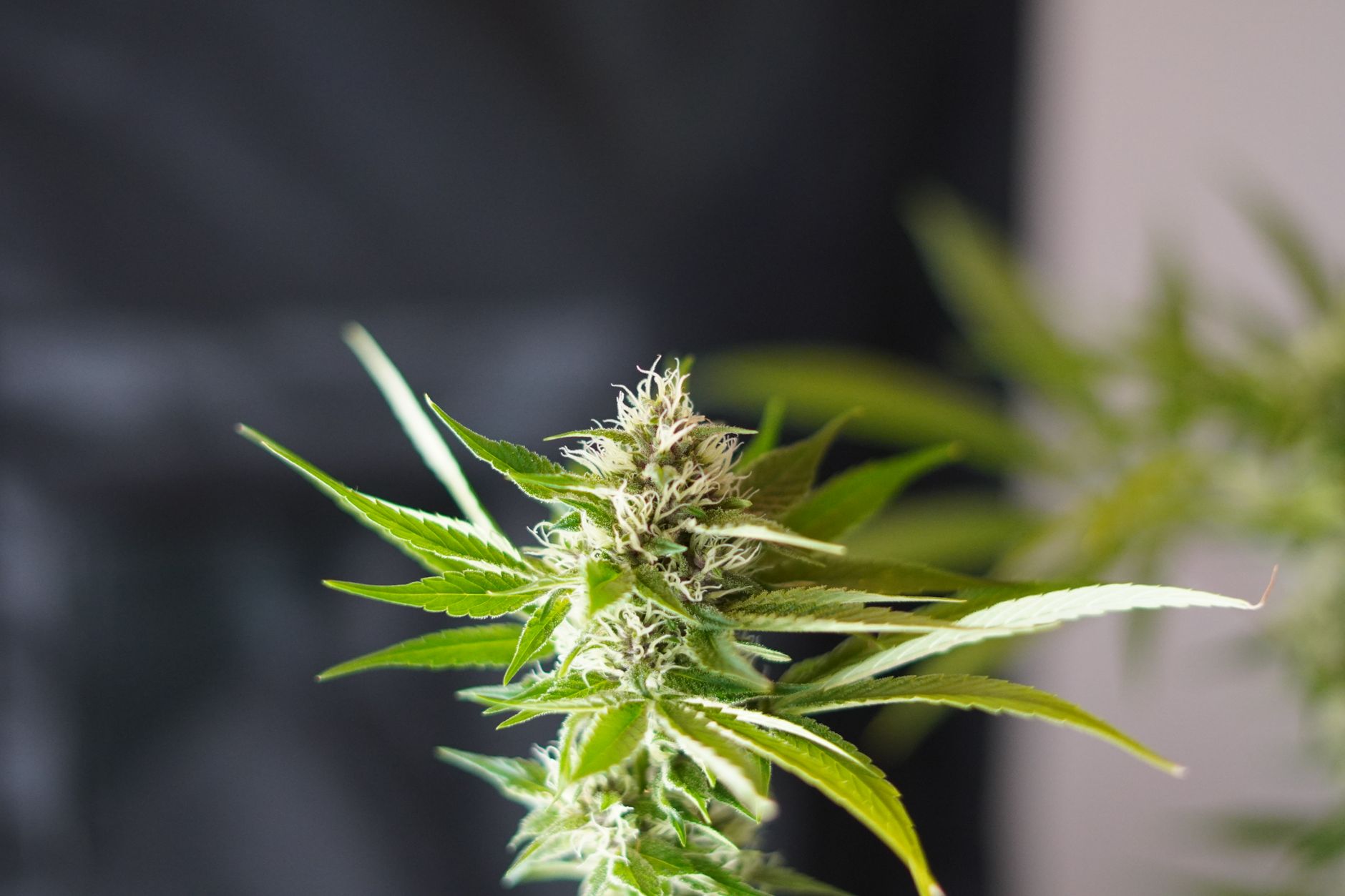
Here's what to look for at each stage:
- Stage 1 (Day 1, 2): One or two leaves inside the cola turn yellow or brown unexpectedly. No wilting on surrounding plant tissue. This is your earliest warning.
- Stage 2 (Day 2, 4): The affected leaves go limp and grey. Pull the bud open carefully , you'll see brown, necrotic tissue at the base of the affected calyx cluster. Faint grey fuzz may be visible in the interior.
- Stage 3 (Day 4, 7): The rot is now visible externally. Grey-white mycelia coat the surface. The bud is soft and mushy to the touch. At this stage, the entire cola is typically lost.
For powdery mildew, identification is simpler. Look at the tops of leaves under direct light. A white or grey powdery residue that doesn't wipe away cleanly (unlike dust) is powdery mildew. It often appears at nodes first, then spreads outward.
A UV/black light torch can reveal powdery mildew colonies that aren't yet visible to the naked eye. Under UV, PM fluoresces a faint yellow-green. This technique is used widely in Canadian greenhouse operations and is worth adding to your toolkit.
If you're growing outdoors in Canada, physically open and inspect the top two-thirds of every major cola twice a week from week 4 of flower onward. Five minutes of inspection per plant can save an entire harvest.
How to treat cannabis mold step by step
Speed is everything. The 24-hour response window is real , acting fast limits spread to neighbouring plants and potentially saves the remainder of your crop.
Step 1: Isolate the affected plant immediately
Move the plant away from healthy plants before touching anything. Botrytis and powdery mildew spread via airborne spores , handling an infected plant near others without isolating it first can contaminate your entire garden.
Step 2: Remove all visibly affected tissue
Cut a minimum of 5 cm beyond the visibly infected area. Botrytis mycelium extends further into tissue than is visible to the naked eye. Use sterilized scissors (dipped in 70% isopropyl alcohol between cuts). Place removed tissue directly into a sealed bag , do NOT compost it.
Step 3: Apply a safe fungicide treatment to remaining tissue
Two treatments are widely reported as safe for use on cannabis up to 2 to 3 weeks before harvest:
- Potassium bicarbonate solution (1 tsp per 1 L water): Raises surface pH, disrupting both Botrytis and PM. Apply as a light mist in early morning so the plant can dry fully before cooler night temperatures.
- 3% hydrogen peroxide solution (50 ml per 1 L water): Kills surface spores and oxidizes necrotic tissue. Do not exceed 3% concentration , higher concentrations damage trichomes and leaf tissue.
Step 4: Fix the environment , fast
Treatment without environmental correction is pointless. Target RH below 45% during the flowering stage. Indoors: run a dehumidifier, increase exhaust fan speed, and consider oscillating clip fans directly on the canopy. Outdoors: lollipopping and defoliation of dense inner canopy leaves removes moisture traps and significantly improves airflow around bud sites.
Step 5: Monitor daily for 7 days
Mold you think you've removed often reappears within 3 to 5 days if the environmental conditions haven't changed. Check the treated area and all surrounding plants daily. If re-emergence occurs, repeat Steps 2 through 4.
The treatment only works if the environment changes. If RH stays above 60% and airflow stays poor, you're fighting a losing battle. Environmental correction isn't optional , it's the treatment.
The 14-Day Mold Window Rule
Every outdoor cannabis plant in Canada enters peak mold risk during the final 14 days before harvest , when bud density is highest and temperatures drop.
Formula: If your strain's final 14 days of flower overlap with September 15 or later in Zones 3, 6, your mold risk is High to Very High, regardless of the weather forecast.
Example: A photoperiod strain finishing October 5 in Winnipeg (Zone 3b) spends its entire final 14 days in a period where overnight RH regularly exceeds 80% and temperatures drop to 5, 8°C. A mold-resistant autoflower started June 1 finishes by August 25 , clearing the risk window entirely.
The Canadian outdoor mold risk calendar
Looking at grower support questions that spike every September and the public forum data collected across Canadian cannabis communities, mold complaints cluster almost exclusively in a predictable 6-week window. Here's the risk breakdown by month for outdoor growers in Zones 3 to 6:
Very Low
Low
Low, Mod
Moderate
High
Very High
Reviewing public grower journals and Canada-wide forum data, the pattern is consistent: outdoor growers who finish harvest before September 10 report mold losses under 5% of their total yield. Growers finishing after September 20 report losses ranging from 15 to 40% without active environmental management.
For growers in British Columbia's Lower Mainland (Zone 8), the window shifts about 3 weeks later , mold risk peaks in mid-October. But BC's fall rains and coastal fog make the risk equally severe. Per Plant Hardiness Zones of Canada data, Zone variance across provinces is significant, and timing your genetics to your specific zone is non-negotiable.
If your strain is finishing in the red zone (September 15 onward in most of Canada), you have two options: early harvest at 70 to 80% trichome maturity to salvage the crop, or cover plants with a humidity-vented greenhouse tent during overnight hours.
Common mistakes Canadian growers make with cannabis mold
Mistake 1: Waiting for visible external signs before acting
By the time Botrytis is visible on the outside of a bud, the infection has been progressing internally for 3 to 5 days. The actionable sign is discolouration of inner leaves, not exterior fuzz. Act on the early sign, not the late one.
Mistake 2: Pruning too conservatively around infected tissue
Cutting right at the visible edge of infection leaves active mycelium in the plant. Always cut 5 cm minimum past the visible edge. One extra node of lost bud is far better than reinfection 48 hours later.
Mistake 3: Not sterilizing tools between plants
Spores transfer on scissors blades instantly. Using the same unsterilized tool across multiple plants during a mold treatment run is one of the fastest ways to spread an infection across an entire garden. Wipe with 70% isopropyl between every cut.
Mistake 4: Applying foliar treatments in the evening
Evening applications leave moisture on the bud surface overnight, which actively worsens the mold risk. Always apply treatments in early morning so plants dry completely before temperatures drop.
Mistake 5: Growing susceptible genetics in humid microclimates
Dense, Indica-dominant phenotypes with tightly packed flower clusters are structurally prone to bud rot in humid conditions. Growers in Ontario, Québec, New Brunswick, and Nova Scotia who repeatedly lose crops to mold are often fighting the wrong battle , the problem is genetics, not just environment. Switching to mold-resistant autoflower seeds in Canada that finish before the high-risk window is the structural fix.
Mistake 6: Over-watering in late flowering
Soil moisture contributes to the humidity microclimate immediately around your plants. In weeks 6 to 8 of flower, most strains need less frequent watering as transpiration slows. Over-watering during this phase keeps the root zone and canopy base humid, creating ideal conditions for Botrytis at the stem base.
Most mold losses in Canadian gardens are preventable. They're caused by late identification, insufficient cutting margins, poor tool hygiene, and wrong genetics for the climate. Fix those four things and you remove the majority of your risk.
Which cannabis strains resist mold best in Canada?
Mold resistance isn't a marketing term , it's a measurable genetic trait. Strains with Ruderalis heritage (autoflowers), Canadian landrace-influenced genetics, and those bred specifically for Northern European climates consistently outperform standard Indica or equatorial Sativa phenotypes in Canadian outdoor conditions.
Autoflowering cannabis seeds have a structural advantage: they finish in 70 to 85 days from germination regardless of light schedule, meaning a June 1 start in most of Canada produces a harvest by August 20 to 25 , well before the September risk window opens. That's the single most effective mold prevention strategy available to outdoor Canadian growers.
For indoor growers, keeping RH below 45% during weeks 5 through 9 of flower is achievable with a properly sized dehumidifier, but choosing mold-tolerant genetics adds a critical safety buffer. Per Health Canada's home cultivation framework, Canadian legal home growers are permitted up to 4 plants per household under the Cannabis Act (2018) , with 4 plants, losing one cola to mold is manageable; losing half your garden to it is a preventable disaster.
Royal King Seeds Mold Resistance Score
Methodology: Mold/Botrytis resistance 40% + Cycle speed (outdoor finish date) 30% + Bud density (lower = better for mold) 20% + Beginner friendliness 10% = Score out of 100.
- Northern Lights Auto , 91/100 (dense but finishes Aug; high Ruderalis tolerance)
- Blueberry Auto , 88/100 (loose bud structure, fast finish, proven cold tolerance)
- White Widow Auto , 85/100 (legendary PM resistance, finishes well before Sept)
- Critical Mass Feminized , 62/100 (dense buds, high yield, mold-prone in humid Sept)
- OG Kush Feminized , 58/100 (susceptible to PM; needs strict RH control)
Why Northern Lights Auto scored #1: Its Ruderalis genetics produce a looser calyx structure than most indica-dominant strains, reducing moisture trapping. The 75 to 80-day finish from seed means outdoor harvests happen before August 31 in most Canadian zones. Breeder documentation consistently reports high tolerance to temperature swings of 10°C or more, which is common in September across Zone 3, 5 growing regions.
Why Critical Mass dropped to 62/100: It produces exceptional yields (breeder data reports 500 to 600 g/m² indoor), but its signature trait , extremely dense, heavy colas , is also its vulnerability. In outdoor Canadian conditions above 60% RH, those dense buds trap moisture and become Botrytis incubators. Great strain for controlled indoor environments with excellent dehumidification; not ideal for late-season Canadian outdoor grows.
| Strain | Botrytis Risk | PM Risk | Finish Date (Zone 5, Jun 1 start) | Beginner Risk |
|---|---|---|---|---|
| Northern Lights Auto | Low | Low | ~Aug 20 | Low |
| Blueberry Auto | Low | Low, Med | ~Aug 22 | Low |
| White Widow Auto | Low, Med | Very Low | ~Aug 28 | Low |
| Critical Mass Fem | Very High | Medium | ~Oct 5 | High |
| OG Kush Fem | High | High | ~Oct 10 | High |
For growers in high-risk provinces like Québec, New Brunswick, Nova Scotia, and Manitoba, browsing our full range of autoflower seeds for Canada specifically selected for short-season performance is the most direct path to mold-free harvests.
Genetics is the upstream fix for mold. If you're consistently fighting Botrytis in late September, you're not failing at treatment , you're succeeding at growing the wrong strain for your climate. Switch genetics first, then refine your environment.
"The grower who fixes their genetics finishes clean. The grower who fights their environment every September eventually loses."
What happens if you pick the wrong strain for your Canadian climate?
- Strain: Northern Lights Auto
- Start date: June 1
- Harvest: August 20
- Buffer before Sept 15: 26 days
- Risk level: Low
- Outcome: Full harvest, dense trichome-covered buds, zero mold losses.
- Strain: Critical Mass Feminized
- Start date: June 1
- Harvest: October 5
- Buffer before Sept 15: 0 days (entire final 3 weeks in high-risk window)
- Risk level: Very High
- Outcome: 30, 40% bud loss to Botrytis reported across public Canadian grow journals for this strain type in Zone 5 fall conditions.
Bottom line: The strain decision made in spring determines whether you're harvesting clean in August or cutting rot in October. One decision, made before you even germinate, drives the entire season outcome.
The complete cannabis mold prevention checklist for Canadian growers
This reference checklist covers both indoor and outdoor prevention. Bookmark it for the start of each grow cycle.
- Choose autoflower or early-finishing strains that harvest before September 10 in your zone
- Plant in full sun with at least 6 hours of direct light , shaded microclimates stay damp
- Space plants minimum 1 m apart to allow airflow between canopies
- Defoliate lower 30% of plant at weeks 3 and 6 of flower to improve airflow
- Water in the morning, never in the evening
- Inspect inner cola tissue twice weekly from week 4 of flower onward
- Have a humidity-vented greenhouse cover or polytunnel available for wet spells
- Apply potassium bicarbonate preventatively (every 10 days) from August 15 onward
- Target RH 40, 50% in weeks 1, 4 of flower; drop to 40, 45% in weeks 5 onward
- Maintain canopy temperature 20, 24°C during lights-on; avoid drops below 16°C at night
- Run oscillating fans directly across the canopy surface at all times
- Size your exhaust fan for the room: minimum 1x air exchange per 2 minutes during flower
- Never allow standing water in the tent or grow room floor
- Sterilize all tools, pots, and surfaces between grows with diluted bleach or hydrogen peroxide
For growers building a new setup from scratch, our feminized cannabis seeds come with full strain-specific grow notes covering target RH, ideal flowering temperatures, and mold resistance ratings. Start with genetics that match your setup, not genetics you'll fight all season.
Growing in a humid Canadian climate?
Browse our mold-resistant autoflower and feminized strains selected specifically for short Canadian seasons and humid fall conditions.
Shop Mold-Resistant Autoflower SeedsFrequently Asked Questions: Cannabis Mold in Canada
Can I still smoke weed that has mold on it?
What does bud rot smell like?
How do I know if it's powdery mildew or just trichomes?
Why did my outdoor cannabis get mold in August when it's not even September yet?
Can I start autoflowers in July in Ontario to avoid the mold season entirely?
Does hydrogen peroxide kill bud rot?
My plant has white powder on the leaves but the buds look fine , is it too late?
Should I harvest early if I see bud rot starting?
What is the best mold-resistant cannabis strain for growing in Nova Scotia?
Why did my bud rot come back after I removed it?
Can autoflowers get bud rot?
Is neem oil effective against powdery mildew on cannabis?
How do I prevent mold when drying cannabis in a humid Canadian fall?
Ready to grow mold-free this season?
Browse our full collection of feminized and autoflowering cannabis seeds, including strains selected specifically for Canadian climates, short seasons, and mold resistance.
Shop All Cannabis Seeds , CanadaSources
- Plant Hardiness Zones of Canada , Natural Resources Canada
- Environment and Climate Change Canada , Climate Normals
- Health Canada , Cannabis Regulation and Home Cultivation
- NIH PubMed , Cannabis Fungal Contamination Research
- Government of Canada , Cannabis Act (2018)
- UBC Faculty of Land and Food Systems , Plant Disease Management
Shop Premium Cannabis Seeds
Browse our curated selection of cannabis seeds, carefully chosen for Canadian growers. Fast shipping, germination guarantee, and discreet packaging across Canada.
Explore more seed categories: