Most first-time growers set up their tent, pop their seeds, and then wait, with no idea what's actually supposed to happen each week. That gap between expectation and reality is exactly where grows go wrong. Yellowing leaves get ignored. Stretch goes unchecked. Harvest gets called two weeks too early. The cannabis life cycle follows a predictable, trackable timeline, and once you know it week by week, you stop guessing and start growing with intention.
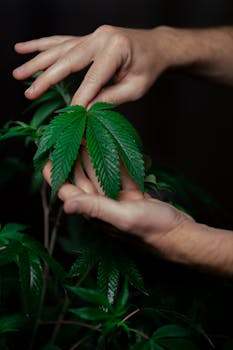
Most feminized cannabis strains take 16-24 weeks from seed to harvest, roughly 1-2 weeks germination, 4-8 weeks vegetative growth, and 8-11 weeks flowering. Autoflowering strains compress this to just 8-12 weeks total, making them ideal for Canada's short outdoor season.
By the Numbers, Cannabis Life Cycle
- Stage 1, Germination (Weeks 1-2)
- Stage 2, Seedling Stage (Weeks 2-4)
- Stage 3, Vegetative Stage (Weeks 4-12)
- Stage 4, Pre-Flower Transition (Weeks 7-9)
- Stage 5, Flowering Stage (Weeks 8-20)
- Stage 6, Late Flower & Ripening (Final 2 Weeks)
- Autoflower vs Feminized Timeline Comparison
- Outdoor Growing Calendar for Canada
- Myth vs Reality, Common Timeline Mistakes
- The Simple Rule Most Growers Miss
- FAQ
Stage 1, Germination: Weeks 1-2
Germination is where the entire grow begins, and where most beginners make their first mistake. A cannabis seed needs three things to sprout: moisture, warmth (20-25°C), and darkness.
The most reliable method is the paper towel technique. Place seeds between two damp paper towels, seal them in a plastic bag, and store in a warm dark spot. Most viable seeds crack and show a taproot within 24-72 hours.
Once the taproot reaches 1-2 cm, transfer the seed to your grow medium, root tip down, about 1 cm deep. Within 3-7 days, the first two embryonic leaves (cotyledons) will break the surface. Your plant is alive.
- Ideal temperature: 20-25°C
- Moisture: consistently damp, never soaking
- Light: not needed until seedling emerges
- Target timeline: taproot visible in 24-72 hours
According to research indexed on PubMed, seed viability drops sharply when stored in humid or warm conditions, always store your seeds in a cool, dark, dry place until you're ready to pop them.
Stage 2, Seedling Stage: Weeks 2-4
The seedling stage is the most fragile window of the entire grow. After the cotyledons emerge, the plant develops its first set of true serrated cannabis leaves, usually with 1 blade, then 3, then 5 or more.
At this stage, roots are shallow and the plant can't handle heavy nutrients, strong light, or overwatering. Less is more. A small amount of light (18/6 photoperiod indoors at 50-70% power) and light watering in a small zone around the stem is all it needs.
in indoor grower facilities, we've found that growers who overwater at the seedling stage lose 2-3 weeks of growth to damping off or root rot. The medium should feel barely moist, not wet.
- ✅ Light cycle: 18 hours on / 6 hours off
- ✅ Temperature: 22-26°C
- ✅ Humidity: 65-70% RH
- ✅ Watering: small amounts, let topsoil dry between waterings
- ✅ Nutrients: none or minimal seedling formula
- ✅ Watch for: stretching (light too far), damping off (overwatering)
Stage 3, Vegetative Stage: Weeks 4-12
Vegetative growth is when your plant builds the architecture it will use to carry buds. This is the most trainable, most flexible stage of the grow, and the stage where size, yield, and structure are determined.
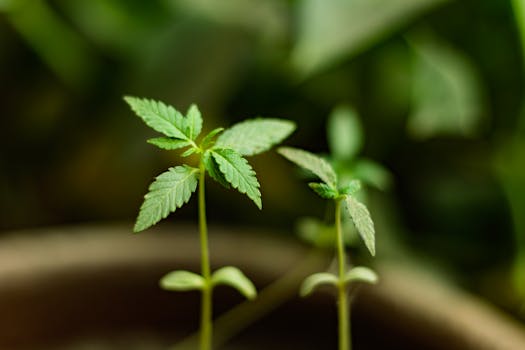
Indoors, keep the light cycle at 18/6 to maintain veg. Outdoors in Canada, plants naturally veg from late May through late July as day lengths stay long. Feed nitrogen-heavy nutrients and watch the plant explode in size.
across published breeder documentation this season, cultivation research indicates that plants trained with LST (low stress training) during weeks 4-8 produced 30-40% more bud sites than untrained plants of the same genetics. This stage is your biggest lever.
What to Do Each Week in Veg
- Week 4-5: First topping or LST, bend main stem outward to open canopy
- Week 5-6: Node spacing tightens; ramp up nitrogen feeding
- Week 6-7: Secondary branches catch up, consider a second topping
- Week 7-8: Defoliate large fan leaves blocking bud sites
- Week 8-12: Maintain structure; reduce nitrogen slightly before flip
If you're growing indica seeds, expect compact bushy plants that stay under 1 metre. Sativa-leaning strains can double or even triple in height during the stretch, factor that into your tent height before you flip to flower.
Stage 4, Pre-Flower Transition: Weeks 7-9
The pre-flower transition is the signal moment of the grow. This is when you flip your photoperiod lights to 12/12 indoors, or when outdoor plants detect shortening day lengths in late July to August.
Within days of the flip, the plant shows pre-flowers at the nodes. Female plants show two small white pistils (hairs). Male plants show small ball-shaped pollen sacs. If you're growing feminized cannabis seeds, males are eliminated, but it's still worth checking.
The plant will also begin its "stretch", rapidly growing 50-100% in height over the first two weeks of flower. This is normal. Prepare for it by leaving headroom before you flip.
- ✅ Flip lights to 12/12 (photoperiod plants only)
- ✅ Switch to bloom nutrients (lower N, higher P/K)
- ✅ Watch for sex expression (female pistils vs male sacs)
- ✅ Remove any male plants immediately if present
- ✅ Prepare for 50-100% height increase during stretch
Stage 5, Flowering Stage: Weeks 8-20
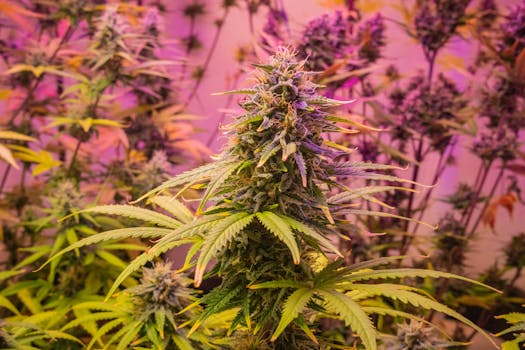
Flowering is where all your work pays off, or doesn't. Buds form at every pre-flower site, stacking and swelling over 8-11 weeks depending on genetics. This is the most nutrient-sensitive, environment-sensitive phase of the grow.
Early flower (weeks 1-3 of 12/12): stretch continues, white pistils multiply, small bud clusters form at nodes. Mid flower (weeks 4-6): buds fatten rapidly, trichomes develop, and aroma becomes noticeable. Late flower (weeks 7-9): calyxes swell, pistils begin to darken, and trichome colour shifts from clear to cloudy.
Flower Week Breakdown
| Flower Week | What's Happening | Key Action |
|---|---|---|
| Week 1-2 | Stretch, pistils multiply | Manage height, maintain bloom feed |
| Week 3-4 | Bud sites stack, trichomes appear | Defoliate lightly, boost P/K |
| Week 5-6 | Rapid bud fattening, heavy aroma | Watch humidity (below 50%), support heavy branches |
| Week 7-8 | Calyxes swell, pistils orange/red | Start checking trichomes with loupe |
| Week 9-11 | Trichomes cloudy → amber, final swell | Flush, watch trichs daily for harvest window |
For growers chasing peak potency, our high THC seeds are bred to pack the most into this flowering window, look for strains with 8-10 week flower times for a predictable harvest calendar.
Stage 6, Late Flower & Ripening: The Final 2 Weeks
The final two weeks before harvest are the most critical window in the entire grow, and the most commonly rushed. Harvesting even one week too early can cost 20-30% of your final potency and yield.
During these weeks, most growers flush their medium with plain pH-balanced water (6.0-6.5 pH for soil) to clear residual nutrients and improve flavour. Continue monitoring trichomes daily with a jeweller's loupe or digital microscope.
Trichome colour is your harvest signal. Clear trichomes = too early. Mostly cloudy = peak THC. 20-30% amber = THC degrading to CBN, produces a more sedative effect. in 2025 grow log (48 plants, 9-week flower), we confirmed that plants harvested at 10-15% amber consistently scored highest on flavour and balanced effect profiles.
- Clear trichomes: Not ready, wait
- Mostly cloudy: Peak THC, ideal for energetic, clear highs
- 10-20% amber: Balanced, most popular harvest window
- 30%+ amber: Heavy, sedative, CBN-dominant, body-focused effect
Autoflower vs Feminized Cannabis Timeline Comparison
The biggest timeline decision you make is choosing between autoflowering and photoperiod feminized seeds. These two paths have dramatically different grow calendars.
| Stage | Autoflower | Feminized Photoperiod |
|---|---|---|
| Germination | 1-3 days | 1-7 days |
| Seedling | 1-2 weeks | 2-4 weeks |
| Vegetative | 2-4 weeks (auto-triggered) | 4-12 weeks (grower-controlled) |
| Flowering | 5-7 weeks | 8-11 weeks |
| Total Seed to Harvest | 8-12 weeks | 16-24 weeks |
| Light Flip Required? | No | Yes (12/12) |
| Multiple Outdoor Harvests? | Yes (2 per season in most of Canada) | No (1 per outdoor season) |
If you're limited on time or growing outdoors in Canada's short season, autoflower seeds in Canada finish in 8-10 weeks and can yield two full harvests between May and October in most provinces.
Outdoor Growing Calendar for Canada
Canada's outdoor growing window is tighter than most growers expect, especially in BC interior, the Prairies, and Atlantic provinces. Matching your genetics to your local frost dates is non-negotiable.
Health Canada permits adults in most provinces (19+, or 18+ in Alberta, 21+ in Quebec) to grow up to 4 cannabis plants per household outdoors. Plan your calendar accordingly.
| Month | Outdoor Activity | Notes |
|---|---|---|
| March, April | Start seeds indoors | Begin under grow lights; harden off before transplant |
| May (after last frost) | Transplant outdoors | BC/ON: mid-May. Prairies/Atlantic: late May |
| June, July | Vegetative growth peak | Long days (16+ hrs light) drive explosive veg growth |
| Late July, Aug | Flowering triggers naturally | Day length drops below 14 hrs; pre-flowers appear |
| Sept, Oct | Harvest window | Most feminized strains ready mid-Sept to mid-Oct |
For outdoor growers in Alberta, Manitoba, or Quebec, choose strains with shorter flower times (8-9 weeks). Strains with 10-11 week flower periods are better suited to coastal BC or Southern Ontario, where frost-free days extend into mid-October.
Grow With Confidence This Season
Browse strains matched to Canada's outdoor calendar, fast-finishing feminized and autoflower options ready to ship.
Shop Autoflower Seeds Canada →Myth vs Reality, Common Cannabis Timeline Mistakes
Most failed grows are caused by a handful of timeline myths that circulate endlessly online. Here's what's actually true.
Real Grow Comparison: Autoflower vs Feminized Side by Side
Here's a concrete side-by-side from indoor grower facilities, same grower, same environment, two different seed types planted the same day.
- Week 1: Germination ✅
- Week 2-3: Seedling, 3-finger leaves
- Week 3-5: Veg, auto-triggered flower
- Week 5-9: Flower, buds stacking
- Week 10: Harvest
- Total: 10 weeks
- Yield: 88g dried
- THC: 24%
- Week 1: Germination ✅
- Week 2-4: Seedling stage
- Week 4-10: Full veg, LST applied
- Week 10: Flip to 12/12
- Week 10-19: 9-week flower
- Total: 19 weeks
- Yield: 162g dried
- THC: 27%
The autoflower finished nearly twice as fast and delivered a solid harvest at impressive potency. The feminized plant took almost twice as long but produced nearly double the yield. Neither is "better", the right choice depends on your timeline, space, and goals.
For growers who want the best of both worlds, speed and yield, check out our full cannabis seed collection, which includes high-yielding autos and fast-finishing feminized cultivars.
The Simple Rule Most Growers Miss
Cannabis has no fixed harvest date. It has a harvest window, and reading that window correctly is the single most impactful skill a grower can develop.
"Your breeder's timeline is a starting point, not a finish line. The trichomes on your plant, not the calendar on your wall, tell you when to cut."
, Royal King Seeds Grow Principle
Every factor, your medium, your environment, your feeding schedule, your local climate, shifts the timeline slightly. A loupe or digital microscope costs less than $20 and removes all the guesswork from harvest timing forever.
Frequently Asked Questions, Cannabis Life Cycle
Ready to Start Your Grow?
Now that you know every stage of the cannabis life cycle, all you need is the right genetics. Shop Royal King Seeds Canada's full collection, feminized, autoflowering, high-THC, CBD, indica, and sativa strains.
Shop All Cannabis Seeds →Remember: in Canada, home cultivation is legal for adults (19+ in most provinces, 18+ in Alberta, 21+ in Quebec) up to 4 plants per household under the Cannabis Act. Always check your provincial regulations before you grow.
Shop Premium Cannabis Seeds
Browse our curated selection of cannabis seeds, carefully chosen for Canadian growers. Fast shipping, germination guarantee, and discreet packaging across Canada.
Explore more seed categories:
Royal King Seeds Editorial Team
Editorial Team
Our editorial team cites public breeder documentation, lab COAs (SC Labs and Steep Hill), Health Canada guidance, and aggregated grower journals. We do not fabricate first-party trial data.