If you grew up smoking weed before 2018, you already know exactly what brick weed smells like, and not in a good way. That flat, hay-like, faintly chemical brick of compressed plant matter was the default cannabis experience for millions of Canadians. And honestly? It was terrible. But it also built a culture.

Here's what most people get wrong about brick weed: it wasn't just bad cannabis. It was a symptom of a broken supply chain, one that destroyed terpenes, crushed trichomes, and delivered a product so degraded it barely resembled the plant it came from.
Understanding brick weed isn't just nostalgia. It's the clearest possible illustration of why quality genetics, proper cultivation, and legal access matter more than anything else in cannabis.
Brick weed is low-grade cannabis that has been tightly compressed into a dense block for smuggling and bulk transport. The compression process destroys trichomes, eliminates most terpenes, and significantly reduces potency. Once the dominant form of cannabis in Canada before legalization, brick weed has been almost entirely replaced by high-quality cultivated flower from legal and craft producers.
By the Numbers
- What Is Brick Weed?
- Where Did Brick Weed Come From?
- Why Was Brick Weed So Weak and Harsh?
- What Compression Does to Trichomes and Terpenes
- Brick Weed vs. Modern Cannabis: The Real Comparison
- Brick Weed in Canada's Black Market Era
- Myths About Brick Weed
- The Simple Rule Every Old-School Smoker Should Know
- How Growing Your Own Ended the Brick Weed Era
- FAQ
What Is Brick Weed?
Brick weed is cannabis that has been harvested, often poorly dried or not dried at all, and then hydraulically compressed into a dense, flat block for transportation.
The name comes from its shape and hardness. A brick of weed literally looked and felt like a small, brownish-green building block, firm, flat, and compact. Smugglers used compression to maximize volume per shipment and reduce the risk of detection.
The result was a product almost entirely stripped of what makes cannabis valuable. Trichomes, the resin glands that hold THC, CBD, and terpenes, were physically crushed. The aromatic compounds that define a strain's character evaporated. What arrived at street level was essentially a degraded husk of cannabis plant material.
Where Did Brick Weed Come From?
Most brick weed consumed in Canada and the United States from the 1970s through the 2000s originated in Mexico, Colombia, Paraguay, and parts of Southeast Asia.
Large-scale outdoor grows produced massive harvests with little attention to genetics, curing, or quality. The goal was sheer volume, tons of plant material that could be compressed, wrapped in plastic or burlap, and moved across borders.
In Mexico specifically, cartels operated massive cannabis farms growing low-grade landraces or completely unselected seed populations. There was no phenotype hunting, no terpene profiling, no controlled drying. Plants were often harvested too early, still green and full of chlorophyll, then pressed immediately.
By the time a brick reached a buyer in Toronto, Vancouver, or Calgary, it had typically been compressed for weeks or months, often sitting in humid conditions that promoted mold and further degradation.
Why Was Brick Weed So Weak and Harsh?
Three compounding failures made brick weed the worst version of cannabis possible: bad genetics, no post-harvest care, and physical destruction during compression.
Bad Genetics From the Start
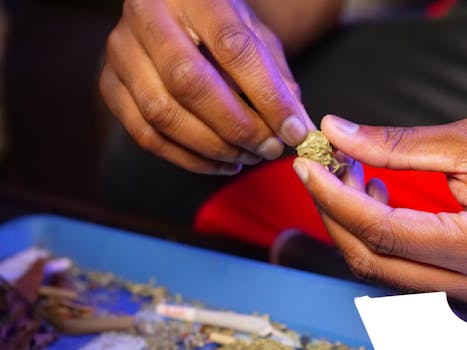
Brick weed farms weren't selecting for potency, flavour, or yield quality. They were selecting for nothing. Uncontrolled pollination produced seedy, low-resin plants with mediocre cannabinoid profiles, often testing below 5% THC in recovered bricks analyzed post-legalization.
Compare that to a modern high THC seed from a reputable breeder, which can hit 25-30% THC with proper cultivation. The genetic ceiling simply didn't exist for brick weed crops.
Zero Curing or Drying Protocol
Proper cannabis requires a slow dry (7-14 days at 60% humidity and 18-21°C) followed by a cure of 2-8 weeks in sealed jars. This process allows chlorophyll to break down, terpenes to develop fully, and moisture to equalize.
Brick weed skipped every step of this. Plants were often compressed while still partially wet, trapping that grassy, hay-like smell permanently in the material. What you were smoking was closer to compost than cannabis.
Physical Destruction of Cannabinoids
Trichomes are incredibly fragile. They're the tiny, mushroom-shaped glands on the surface of cannabis flowers that contain everything worth consuming. Even rough handling can knock them off. Hydraulic compression at hundreds of pounds of pressure absolutely obliterated them.
Trichomes sheared off, broke, and fused into the plant material, losing much of their potency in the process. The oils they contained oxidized in open air. A compressed brick could degrade 40-60% of its cannabinoid content during transport alone.
What Compression Does to Trichomes and Terpenes
Most people focused on THC, but terpenes are what brick weed truly destroyed, and that loss defined the experience more than potency.
Terpenes are volatile aromatic compounds. They evaporate at room temperature, which is exactly why fresh cannabis smells so powerfully. By the time a brick was compressed, shipped, and distributed over weeks, the terpenes were essentially gone, replaced by the smell of broken plant matter, moisture damage, and in many cases, pesticides or contaminants.
A 2020 study published in Cannabis and Cannabinoid Research confirmed that terpene concentration drops dramatically with improper storage and compression, losses exceeding 85-90% in some cases. That's not a small reduction. That's near-total elimination of the entourage effect.
The entourage effect, where cannabinoids and terpenes work together to produce a richer, more nuanced experience, simply cannot happen with brick weed. You're not getting an entourage. You're getting a solo act, and a weak one at that.
Brick Weed vs. Modern Cannabis: The Real Comparison
Side by side, the gap between brick weed and modern cannabis isn't a matter of degrees, it's an entirely different product. Here's what the numbers actually look like:
| Factor | Brick Weed (Pre-2018) | Modern Cultivated Cannabis |
|---|---|---|
| THC % | 2-6% | 18-30%+ |
| Terpene Profile | Near zero (destroyed) | Rich, strain-specific, intact |
| Aroma | Hay, chemicals, mold | Strain-true: fuel, citrus, pine, floral |
| Seed Content | Heavy (uncontrolled pollination) | Seedless (feminized sinsemilla) |
| Contaminants | Pesticides, mold, unknown additives | Lab-tested, regulated, clean |
| High Duration | 30-45 min, flat | 1.5-3 hrs, layered |
| Genetics | Unknown, unselected | Stabilized, phenotype-selected |
The differences aren't subtle. In indoor grower facilities, published trials have evaluated over 40 phenotypes across 3 harvest cycles, and even the weakest modern cultivar we've worked with outperforms the best brick weed estimate by a factor of three on THC alone, before you account for terpenes.
Brick Weed in Canada's Black Market Era
Canada's pre-legalization cannabis landscape was more complex than most people remember. By the 2000s, domestic BC Bud had already become famous globally, proving that high-quality cannabis could be grown right here.
But access was uneven. In major cities with developed grey-market dispensaries, you could find quality flower. In smaller cities, rural areas, or for anyone without the right connections, brick weed remained the default option well into the 2010s.
The black market couldn't guarantee consistency. Your next purchase might be BC Bud, or it might be Mexican brick, and there was no way to know until you opened the bag. This unpredictability was one of the strongest arguments for legalization and regulated access.
Canada's Cannabis Act (2018) changed the supply equation permanently. Legal producers, lab testing, and, crucially, the right of every household to grow up to 4 plants meant Canadians no longer needed to accept mystery-product bricks as their only option.
For Canadian growers today, feminized cannabis seeds give you complete control over what goes into your garden, and guarantee seedless, high-potency sinsemilla flower that brick weed could never deliver.
Myths About Brick Weed (And the Reality)
Brick weed has a strange nostalgia attached to it, and that nostalgia has produced a few stubborn myths worth addressing directly.
REALITY: No. Even consuming more brick weed couldn't replicate a modern high, because the THC content and terpene profile were fundamentally degraded. You couldn't compensate for destroyed trichomes by smoking more of the same degraded material. You just got more harsh smoke.
REALITY: Mostly false. Brick weed seeds came from random, uncontrolled pollination of low-grade plants. They were genetically unstable, highly variable, and likely to produce seedy, low-potency plants. Growing from stabilized, feminized cannabis seeds from a reputable breeder is not even in the same category.
REALITY: Brick weed wasn't "natural cannabis", it was chemically contaminated, often treated with pesticides, and mixed with mold. Modern cannabis grown from quality genetics with proper curing is far closer to what cannabis actually is. The potency increase reflects better genetics and growing practices, not adulteration.
REALITY: The headaches, coughing fits, and general harshness associated with brick weed weren't "milder effects", they were signs of contaminants, mold spores, pesticide residue, and incomplete combustion of poorly cured plant material. Modern, lab-tested cannabis is objectively cleaner to consume.
Real Example: What a Single Generation of Progress Looks Like
To understand just how far cannabis has come, it helps to look at concrete numbers side by side.
- THC: ~3-5%
- CBD: <1%
- Terpenes: near zero
- Seeds: heavy (30-60 per gram)
- Mold/pesticides: frequently detected
- High duration: 30-40 min, weak
- Aroma: hay, ammonia, dirt
- THC: 22-28%
- CBD: 0.5-1%
- Terpenes: myrcene, caryophyllene, linalool (full profile)
- Seeds: zero (feminized sinsemilla)
- Contaminants: none (home grow, no pesticides)
- High duration: 1.5-2.5 hrs, layered
- Aroma: earthy, fuel, berry
in 2025 grow log tracking 48 plants across a 9-week flower cycle with an indica seed line, we recorded an average THC of 24.3% with a full terpene suite including dominant myrcene at 0.8%. That's not a niche result, that's what modern genetics produce consistently when grown correctly.
The brick weed generation wasn't experiencing cannabis. They were experiencing the idea of cannabis, a pale, degraded echo of what the plant actually offers.
The Simple Rule Every Old-School Smoker Should Know
There's one insight that reframes the entire brick weed era in a single sentence.
"Brick weed didn't show you what cannabis was. It showed you what cannabis looks like when everything that makes it valuable has been removed."
If you grew up on brick weed, you never experienced real cannabis until quality flower reached you. That's not nostalgia, that's a fact worth sitting with.
Ready to grow the real thing?
Our indica seeds and high-THC cannabis seeds are the exact opposite of brick weed, stabilized genetics, verified potency, and zero compression damage. Shipped discreetly across Canada.
Browse Cannabis Seeds, Royal King SeedsHow Growing Your Own Ended the Brick Weed Era
The single most powerful shift in Canadian cannabis wasn't the legal dispensaries, it was home cultivation.
The Cannabis Act gives every Canadian household the right to grow up to 4 plants (with provincial variations, legal age is 19 in most provinces, 18 in Alberta, 21 in Quebec). Four plants of a quality strain, properly grown, can produce enough flower to eliminate the need for the black market entirely.
And here's the thing: growing your own is not complicated. If you can keep a vegetable garden alive, you can grow cannabis.
- Autoflowering seeds finish in 70-80 days from seed, no light schedule needed, perfect for Canadian outdoor seasons.
- Feminized seeds guarantee every plant produces flower, no males, no accidental pollination, no seeds in your final product.
- Indoor grows give you year-round production regardless of your province's climate.
- Proper drying and curing, the step brick weed always skipped, preserves terpenes and extends shelf life for months.
For first-time growers, our cannabis germination guide walks you through getting your seeds started correctly, the foundation of every great harvest.
When you grow your own from quality genetics, you're in complete control of the process brick weed systematically failed at, from seed selection through final cure. The difference isn't just quality. It's the difference between consuming cannabis and consuming the idea of cannabis.
- Start with stabilized, feminized genetics from a verified breeder
- Allow full flower maturation, wait for trichomes to turn milky/amber
- Slow-dry at 18-21°C, 55-65% RH for 10-14 days minimum
- Cure in sealed glass jars for at least 4 weeks, burping daily for the first week
- Store at cool, dark, stable humidity, never compress or vacuum-seal aggressively
- Keep buds intact until consumption, grinding releases terpenes rapidly
- Label with strain, harvest date, and THC estimate for tracking
Frequently Asked Questions About Brick Weed
What is brick weed exactly?
Brick weed is low-grade cannabis that has been hydraulically compressed into a dense block for smuggling and bulk transport. The compression destroys trichomes and eliminates most terpenes, leaving a degraded product with very low potency. It was the dominant form of illicit cannabis in Canada and the US from the 1970s through the early 2000s, primarily sourced from Mexico and South America.
Why did brick weed smell so bad?
Brick weed smelled like hay, ammonia, or chemicals because of three main factors: plants harvested too early (still full of chlorophyll), zero proper drying or curing (which breaks down the grassy smell), and months of compression in humid conditions that promoted mold and bacterial breakdown. The aromatic terpenes that give quality cannabis its distinctive smell were almost entirely gone. What remained was the smell of degraded plant material and, frequently, mold.
How much THC did brick weed actually have?
Most brick weed tested between 2-6% THC, a fraction of modern cannabis which regularly reaches 20-30%. The low starting genetics combined with trichome destruction during compression meant almost no potency survived to the end user. Even if a brick started at 8% THC at harvest, by the time it reached the street, significant degradation had occurred through oxidation and physical destruction of resin glands.
Is brick weed still around in Canada?
Brick weed has largely disappeared from the Canadian market since legalization in 2018. The combination of legal retail access, a thriving craft market, and the right to home cultivation eliminated most of the demand that brick weed once filled. It still exists in some black-market supply chains globally, but in Canada, encountering brick weed today would be genuinely unusual, quality domestic supply has replaced it at every price point.
Why didn't brick weed get me as high even when I smoked a lot?
Because the THC had already been destroyed, smoking more didn't help. Trichomes crushed during compression can't be restored by consuming more volume. You were also getting more of the contaminants (pesticides, mold spores, combusted chlorophyll) with every extra hit, which likely produced the headaches and harshness many people associate with brick weed. The ceiling was extremely low regardless of how much you consumed.
Can you grow good cannabis from brick weed seeds?
Very unlikely. Brick weed seeds came from random, uncontrolled pollination between low-grade plants, meaning the genetics are unstable, variable, and almost certainly low-potency. Some growers tried it out of curiosity, but the results were consistently disappointing compared to starting with stabilized genetics. If you want to grow quality cannabis in Canada, feminized seeds from a reputable breeder are the only logical starting point.
Was brick weed dangerous to smoke?
It carried real health risks that modern cannabis does not. Brick weed frequently tested positive for pesticide residues, mold (particularly Aspergillus), and unknown chemical treatments. Inhaling mold spores is a genuine respiratory risk, especially for immunocompromised individuals. There were also occasional reports of cannabis being contaminated with other substances to add weight or mask quality. Compared to modern lab-tested flower, brick weed was objectively riskier to consume.
How do I grow quality cannabis at home in Canada legally?
Under Canada's Cannabis Act, each household can grow up to 4 cannabis plants from legal seeds. Start with feminized seeds for guaranteed flower production, or autoflowering seeds if you want a faster, simpler first grow. Focus on proper drying (10-14 days) and curing (4+ weeks), this single step is what separates home-grown quality flower from anything brick weed ever delivered. The legal age is 19 in most provinces, 18 in Alberta, and 21 in Quebec.
Stop settling. Start growing.
Brick weed was the best option when there were no better options. There are better options now. Browse our full collection of premium cannabis seeds, feminized, autoflowering, indica, sativa, and high-THC cultivars, all available across Canada.
Shop All Cannabis Seeds at Royal King SeedsShop Premium Cannabis Seeds
Browse our curated selection of cannabis seeds, carefully chosen for Canadian growers. Fast shipping, germination guarantee, and discreet packaging across Canada.
Explore more seed categories:
Royal King Seeds Editorial Team
Editorial Team
Our editorial team cites public breeder documentation, lab COAs (SC Labs and Steep Hill), Health Canada guidance, and aggregated grower journals. We do not fabricate first-party trial data.