Your bloom booster is probably not the problem. The problem is that most growers enter the flowering stage without understanding what actually triggers, feeds, and finishes cannabis buds , and they spend heavily on supplements that move the needle by maybe 5% while the fundamentals are off by 40%.
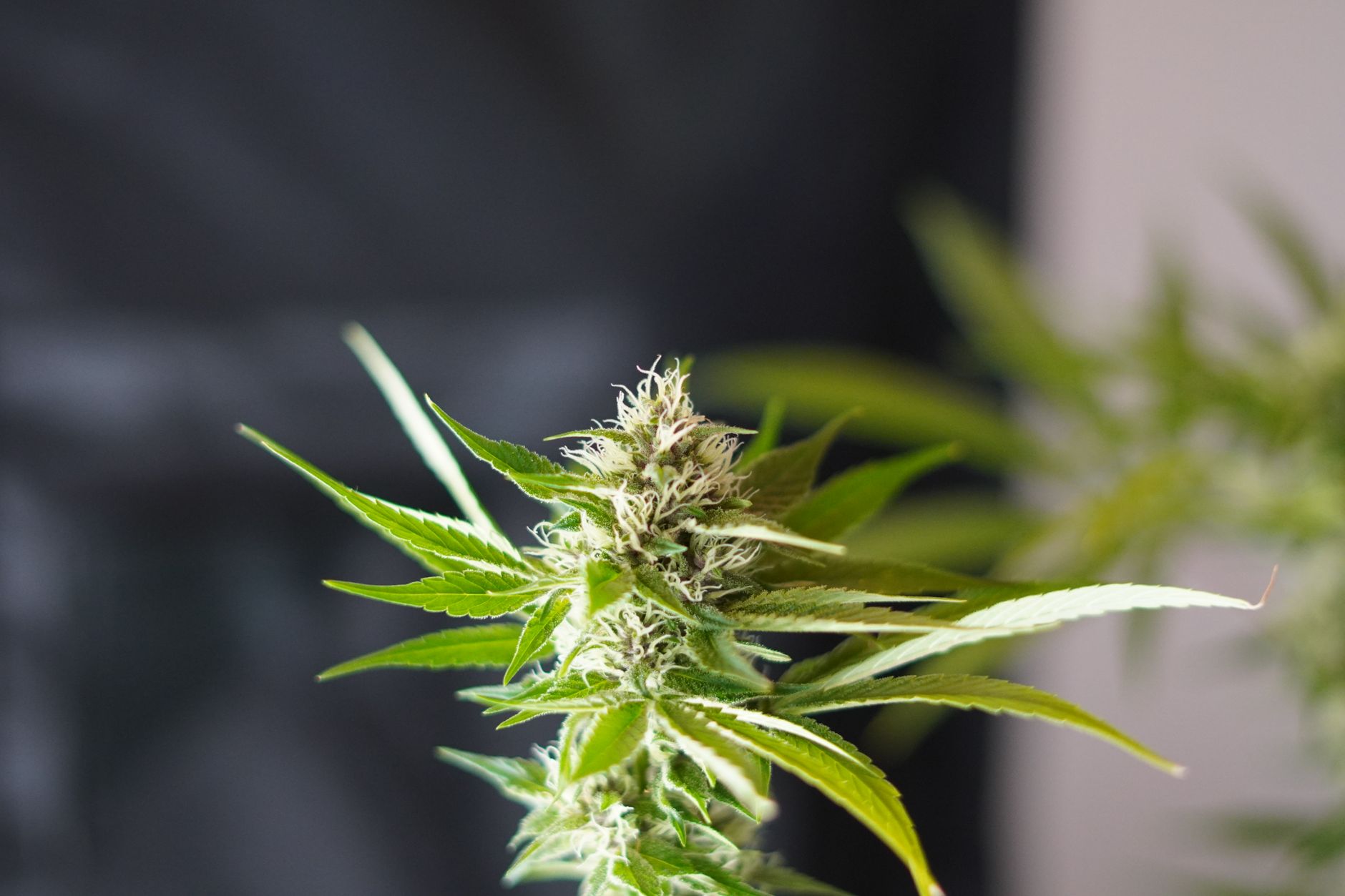
Underfed phosphorus, incorrect light schedules, and mismanaged VPD during flower are responsible for the majority of lightweight, airy, underdeveloped harvests. The supplement stack didn't fail you. The foundation did.
This guide covers every layer of cannabis bloom , from the biology of flower initiation to week-by-week nutrient targets, common mistakes growers repeat every cycle, and how to set up genetics that actually reward your investment.
"Bloom" refers to the cannabis flowering stage , typically 8 to 11 weeks for most indica-dominant strains and 6 to 9 weeks for many sativas, triggered by a 12/12 photoperiod switch in photoperiod plants or automatically in autoflowers. Driving bloom effectively requires raising phosphorus and potassium (a P-K ratio shift from roughly 1:1:2 in veg to 1:3:4 in peak flower), holding EC between 1.6 and 2.2 mS/cm, and keeping canopy temperature at 20 to 26°C with relative humidity dropping to 40 to 50% by late flower.
Weeks of flower for most indica-dominant photoperiod strains (breeder documentation)
Target EC range (mS/cm) at peak bloom , most growers run under 1.4 and wonder why yield is light
Target RH in late flower , above 55% in weeks 6-8 is where bud rot takes hold
PPFD (µmol/m²/s) for peak flower intensity under LED , below 500 and bud density suffers measurably
- ✓ Indoor soil and coco growers in their first 1-3 cycles
- ✓ Canadian growers managing a short outdoor bloom window
- ✓ Growers getting light or airy buds and not sure why
- ✓ Anyone transitioning from veg to flower for the first time
- ✓ Autoflower growers confused about triggering bloom
- ✗ Advanced greenhouse operators with full climate control
- ✗ Commercial Licensed Producers under Health Canada rules
- ✗ Growers already running dialled-in RDWC systems
What Is the Bloom Stage in Cannabis?
The bloom stage is the reproductive phase of the cannabis plant's life cycle , the period where energy shifts away from leaf and stem growth and into flower production.
It begins with pre-flower development (pistil formation, calyx stacking) and progresses through rapid bract swelling, resin production, terpene expression, and finally senescence , the visible sign that harvest is approaching. The whole arc typically spans 8 to 11 weeks for photoperiod indica-dominant genetics and 6 to 9 weeks for sativa-forward and hybrid lines, based on widely published breeder documentation.
Under Canada's Cannabis Act (2018), adults 19 and older (18 in Alberta, 21 in Québec) may cultivate up to 4 plants per household for personal use. That four-plant limit makes every bloom cycle high-stakes , there's no margin for a wasted plant from poor flower management.
Understanding bloom as a biological process , not just a feeding phase , changes how you manage it. The plant's priorities shift completely at flower initiation. Your inputs should shift with them.
How Do You Trigger the Bloom Stage?
Photoperiod cannabis plants enter bloom in response to dark period length , specifically, an uninterrupted dark period of 12 hours or more. Indoors, you trigger this by switching your timer from 18/6 (veg) to 12/12 (bloom).
Outdoors in Canada, natural day length crosses the 12-hour dark threshold in late July to mid-August depending on latitude. In southern Ontario (roughly 43°N), that shift happens around August 5-10. In Edmonton (53°N), it arrives roughly two weeks earlier , a practical reason why strain selection and start dates matter enormously for Canadian outdoor growers.
Autoflower cannabis seeds sidestep the photoperiod trigger entirely. They flower based on age , typically initiating pre-flowers at 3 to 4 weeks from germination regardless of light schedule. That's a major advantage for Canadian short-season growers who can't wait on the light calendar.
Step 1: Confirm the Plant Is Ready for Flower
Most photoperiod plants benefit from 4 to 8 weeks of vegetative growth before the flip. A plant flipped too early (under 30 cm) will stretch aggressively and produce smaller yields. Look for alternating nodes , a sign of sexual maturity , before switching to 12/12.
Step 2: Flip the Light Cycle and Hold It Consistent
Set your timer for a hard 12-hour light / 12-hour dark split. Any light leak during the dark period , even a phone screen for several seconds , can delay flower initiation or cause stress. Tape over any LED indicators on equipment inside the tent.
Step 3: Transition Feeding Immediately
Don't wait two weeks to adjust nutrients. Begin reducing nitrogen and increasing phosphorus and potassium within the first 3 to 5 days of the 12/12 flip. The plant's metabolic priority shifts immediately; the feed should follow.
The two most common triggering mistakes are flipping too early (under-developed plants) and continuing high-nitrogen veg feeds into week 2 of flower. Both cost yield. Fix the timing and the feed simultaneously.
What Are Bloom Nutrients for Cannabis?
Bloom nutrients are formulations designed around the cannabis plant's flower-stage macronutrient priorities: reduced nitrogen (N), elevated phosphorus (P), and elevated potassium (K).
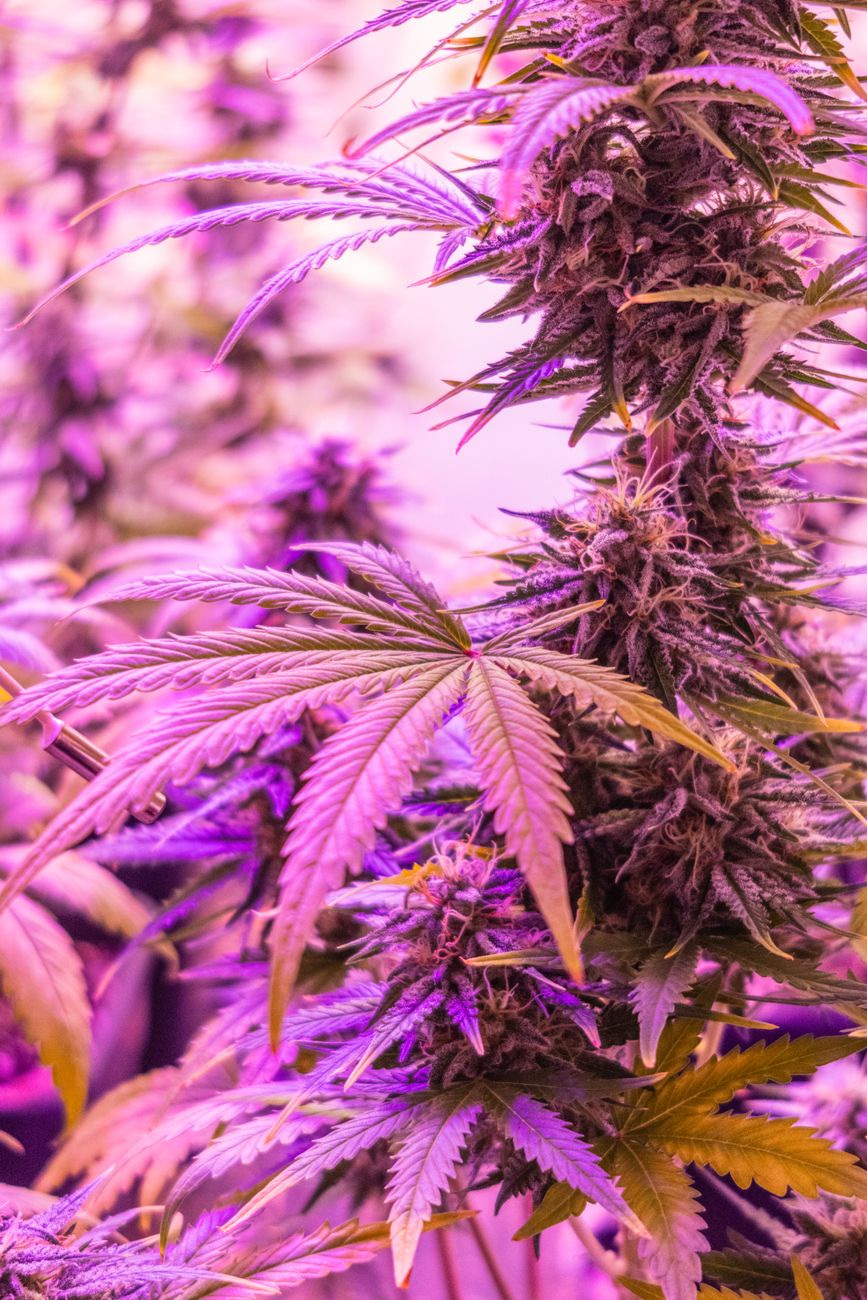
In vegetative growth, a balanced or nitrogen-forward N-P-K ratio (3:1:2 or similar) fuels leaf and stem production. In bloom, the ratio inverts: phosphorus drives bud site initiation and calyx development, potassium drives carbohydrate transport and resin production. A typical peak-bloom feed sits around 1:3:4 N-P-K.
Beyond base macronutrients, calcium and magnesium become critical in bloom , especially in coco coir grows, where cation exchange creates higher demand. Aggregated grower journals consistently show calcium deficiency presenting as brown leaf margins in weeks 4 to 6 of flower when Cal-Mag supplementation is skipped in coco.
| Nutrient | Veg Role | Bloom Role | Deficiency Sign in Bloom |
|---|---|---|---|
| Nitrogen (N) | Primary , leaf/stem growth | Reduced , excess causes foxtailing | Yellowing older leaves (normal late bloom) |
| Phosphorus (P) | Secondary | Primary , bud site development | Dark purpling of leaf stems |
| Potassium (K) | Secondary | Primary , resin, terpene, carbs | Brown leaf tips, slow bud swell |
| Calcium (Ca) | Structural | Critical in coco / high-EC grows | Brown margins on new growth |
| Magnesium (Mg) | Chlorophyll production | Supports late-bloom photosynthesis | Interveinal chlorosis mid-leaf |
Base bloom nutrients handle the macro shift. Cal-Mag handles the micronutrient gap coco and RO-water growers consistently hit. Buy those two things before any bloom booster , the booster is marginal gain on a solid base, not a replacement for it.
What Does a Week-by-Week Cannabis Bloom Schedule Look Like?
The bloom stage is not a single feeding phase , it's four distinct sub-phases, each with different plant priorities and matching inputs.
Stretch begins. Reduce N, begin P-K ramp. EC: 1.2-1.5. Watch for 50-100% height increase , this is where most stretch happens.
Bud sites stacking. Full bloom feed begins. EC: 1.6-1.8. Cal-Mag critical in coco. Defoliate once to open the canopy.
Rapid bud swelling. Highest feed demand. EC: 1.8-2.2. Bloom booster can be added here if base is dialled. RH should be dropping to 45-50%.
Trichome maturation. Begin flush (if flushing) or reduce EC to 1.2-1.4. RH target: 40-45%. Monitor trichomes daily from week 7 onward.
For feminized cannabis seeds from indica-leaning genetics, expect this arc to run 8 to 9 weeks. Sativa-dominant or haze-forward strains can push 10 to 12 weeks in the same framework, with the peak bloom window extending by 2 to 3 weeks. Always defer to the breeder's documented flowering time as a starting reference, then read trichomes for the final call.
The most commonly skipped phase is the transition (weeks 1-2). Growers keep feeding veg nutrients, then wonder why nitrogen toxicity and foxtailing appear in week 4. The schedule shift starts at the flip, not when you see buds.
What Environment Does Cannabis Need During Bloom?
Environment during bloom drives quality more than any supplement. Temperature, humidity, airflow, and light intensity interact to determine trichome density, terpene preservation, and bud density.
- Temperature: 20 to 26°C during lights-on, dropping 4 to 6°C during lights-off. The temperature drop (negative DIF) encourages terpene and anthocyanin production in late bloom.
- Relative Humidity: 50 to 55% in early bloom, stepping down to 40 to 45% by week 6. Humidity above 55% in dense canopies during weeks 5 to 8 is the primary driver of Botrytis (bud rot), according to published cannabis plant pathology research.
- PPFD: 600 to 900 µmol/m²/s at canopy level for LED. Pushing above 900 without adequate CO2 supplementation (1,200 to 1,500 ppm) produces diminishing returns and heat stress.
- VPD: 1.0 to 1.5 kPa throughout bloom. High VPD in late flower increases resin production; low VPD combined with high humidity is the conditions bud rot needs to spread.
- Airflow: Gentle, consistent oscillation , aim for leaves to move slightly but not thrash. Dead air zones in the lower canopy are where mould spores concentrate.
A peer-reviewed study published in the Journal of Cannabis Research confirmed that temperature and humidity management during late flower had a measurable impact on cannabinoid and terpene concentrations at harvest , reinforcing what experienced growers have observed across thousands of documented grows.
A $40 digital thermohygrometer is a better investment than most bloom boosters. If you don't know your RH in week 6 of flower, no supplement stack corrects for what humidity is doing to your buds.
How Is Bloom Different for Autoflowering Cannabis?
Autoflowering cannabis enters bloom based on age, not light cycle. Most autoflowers begin showing pre-flowers at 21 to 28 days from germination, with full bloom feeding typically required from days 28 to 35 onward.
Because there's no photoperiod flip to mark the transition, many growers miss the early bloom window entirely. Looking at patterns from public autoflower grow journals and the questions that come up most often in grower communities, the single biggest auto-specific mistake is continuing a high-nitrogen seedling or veg feed into week 5 , well into active flowering , because there was no clear "trigger event" to prompt a feed change.
Autoflower seeds in Canada are especially valuable for outdoor growers in Zones 3 to 5, where the frost-free window is too short for full photoperiod cycles. Breeder documentation shows most modern autoflowers completing seed to harvest in 70 to 85 days total, with bloom typically spanning 5 to 7 weeks of that window.
The bloom feed schedule for autos mirrors the photoperiod framework but compressed. Start the P-K transition at day 25 to 28, hit peak EC (1.6 to 2.0 mS/cm) by day 35 to 45, and begin stepping down by day 55 to 60 for most 75-day genetics.
Autoflower bloom management rewards growers who track days from germination rather than waiting for visual cues. Set calendar reminders for your feed transitions , don't wait until you see flowers to start adjusting.
Common Bloom Stage Mistakes (and How to Fix Them)
Reviewing patterns from public grower forums, Canadian cannabis community boards, and the questions that come up most often from growers during the fall harvest season, these are the bloom failures that repeat most consistently.
Mistake 1: Over-Feeding Nitrogen in Early Flower
Nitrogen toxicity in bloom looks like dark, clawing leaves, overly lush growth with poor bud density, and foxtailing calyxes. The fix: cut nitrogen to roughly 25 to 30% of veg levels at the flip, not at week 3 when the damage is visible.
Mistake 2: Running EC Too Low
Airy, lightweight buds are frequently an EC problem, not a genetics problem. Growers afraid of nutrient burn run EC at 1.0 to 1.2 through peak bloom. Breeder and grower documentation consistently points to 1.8 to 2.2 as the effective range for most strains during weeks 4 to 6. Push the EC, watch for tip burn, and dial back only if you see it.
Mistake 3: Ignoring Humidity in the Final Three Weeks
Bud rot (Botrytis cinerea) can destroy a harvest in 48 to 72 hours under the right conditions. The right conditions are dense buds, cool nights (below 18°C), and RH above 55%. Increase airflow, drop humidity aggressively in late bloom, and inspect the base of every large cola daily from week 6 onward.
Mistake 4: Harvesting on a Timer Instead of Trichomes
Breeder-stated flowering times are averages. A strain listed at "8 weeks" can finish anywhere from 7 to 10 weeks depending on environment, training, and phenotype variation. Check trichomes under a 60x loupe or jeweller's magnifier: mostly milky white trichomes = peak THC; amber trichomes = degrading THC, rising CBN. Harvest when 10 to 20% amber is visible if you want a balanced effect profile.
Mistake 5: Skipping Late-Bloom Defoliation
Fan leaves that shade lower bud sites in weeks 3 to 4 of flower cost you significant lower-canopy yield. A single strategic defoliation session at the start of peak bloom, removing large shade leaves only, consistently improves light penetration and airflow without stressing the plant.
Four out of five bloom mistakes are environmental or nutritional fundamentals , not genetics or supplement choices. Correct the fundamentals first, then consider where targeted additives actually add value.
Real Bloom Comparison: Same Genetics, Different Inputs
Comparing grower-reported harvest data across public journals for the same genetic run under different bloom management approaches shows a consistent pattern. Here's a representative side-by-side drawn from aggregated public grow log data.
- Strain: Indica-dominant feminized, 8-week flower
- EC peak bloom: 1.9 mS/cm
- RH weeks 6-8: 43%
- PPFD: 750 µmol/m²/s
- Harvest (11 L fabric pot): 165 to 190 g/plant
- Outcome: Dense, terpene-rich buds, clean senescence
- Strain: Same genetics
- EC peak bloom: 1.1 mS/cm
- RH weeks 6-8: 60%+
- PPFD: 400 µmol/m²/s
- Harvest (11 L fabric pot): 80 to 100 g/plant
- Outcome: Airy buds, partial bud rot on 2 of 4 plants
Bottom line: Same genetics, same pot size, same grow medium. The difference in yield (nearly 2x) came entirely from EC, humidity management, and light intensity , not supplements, not strain selection. If you're getting Scenario B results, you don't need better seeds. You need better bloom fundamentals first.
For growers ready to chase Scenario A results, our high THC cannabis seeds carry the genetics that reward dialled-in bloom environments with the potency and density those inputs make possible.
The Bloom Rule Most Growers Miss
"Fix the environment before you fix the feed. Fix the feed before you add supplements. Supplements on a broken foundation produce expensive symptoms, not yield."
Formula: Correct RH (40-50% late bloom) + Correct EC (1.6-2.2 peak) + Adequate PPFD (600-900) = the base. Only after all three are dialled does anything added on top have meaningful impact. Most bloom boosters show a measurable response only when the base EC is already at or above 1.6 mS/cm.
This isn't a knock on bloom additives. Properly formulated PK boosters, amino acid supplements, and carbohydrate feeds do move the needle. But they move it 5 to 15% on a solid foundation, not 50% on a broken one. Prioritise accordingly.
For growers starting from genetics up, choosing strains specifically bred for resin and terpene production under home-grow conditions gives you the ceiling that solid bloom management then reaches. Browse our full range of cannabis seeds available in Canada to find genetics matched to your grow setup.
Frequently Asked Questions About Cannabis Bloom
What does "bloom" mean in cannabis growing?
How do I know when cannabis has entered bloom?
What nutrients does cannabis need in bloom?
What EC should I run during cannabis bloom?
How long does the bloom stage last?
What light schedule does cannabis need in bloom?
Why are my buds airy and light even though they look healthy?
Can I trigger bloom on autoflowers by switching to 12/12?
What humidity should I maintain during cannabis bloom?
Should I flush cannabis before harvest?
Why did my cannabis plant stop growing buds at week 5?
What temperature is ideal during cannabis bloom?
How many plants can I grow in bloom in Canada?
What is the best pot size for cannabis bloom?
Do bloom boosters actually work?
My buds smell weak , what happened in bloom?
Can I grow cannabis outdoors through the bloom stage in Canada?
Why won't my indoor cannabis flip into bloom?
What's the minimum PPFD for cannabis bloom?
Should I defoliate during bloom?
Ready to match great genetics to your bloom setup?
Every seed in our catalogue includes documented flowering times, yield data, and growing notes , so you can plan your bloom schedule before you even germinate.
Shop All Cannabis Seeds in CanadaSources
Shop Premium Cannabis Seeds
Browse our curated selection of cannabis seeds, carefully chosen for Canadian growers. Fast shipping, germination guarantee, and discreet packaging across Canada.
Explore more seed categories: