That purple bud in your friend's jar didn't turn violet because of nutrients, stress, or luck. It happened because the grower knew something most buyers and first-time cultivators don't: colour is written in the genetics first, and temperature is just the trigger. Grow a strain without the right anthocyanin coding and you can drop your tent to near-freezing for weeks , you'll get stressed buds, not purple ones.
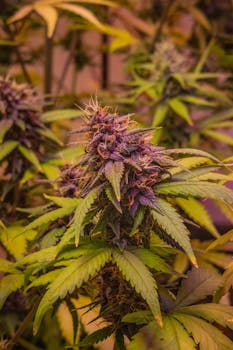
The purple cannabis market is full of misleading marketing. Plenty of strains are sold as "purple" but produce only the faintest blush under ideal conditions. A handful of verified genetics reliably run deep violet, indigo, and near-black in Canadian late-season outdoor conditions or a properly managed cold-night tent cycle.
This guide breaks down exactly which strains carry proven anthocyanin expression, what temperature window actually triggers the colour shift, and how to set up your environment to get the most dramatic results , without sacrificing yield or potency.
What are purple cannabis strains?
Purple cannabis strains are cultivars that produce elevated levels of anthocyanins , a class of water-soluble pigments responsible for red, blue, and violet colours in plants , when environmental conditions activate the relevant gene expression.
The colour itself sits in the leaves, calyxes, and sometimes the sugar leaves surrounding the bud. The most dramatic purple phenotypes turn the entire bud structure violet to near-black, with the trichome layer giving finished flower a frosted, deep-purple appearance that photographs unlike anything else in the cannabis world.
Virtually all modern purple genetics trace their lineage back to Hindu Kush mountain landraces, Afghani cultivars, and in some cases Northern California strains that adapted to cold, high-altitude growing seasons over decades. The cold-night adaptation is essentially baked into the lineage.
What causes purple colour in cannabis plants?
Anthocyanins are the direct cause. These pigments are produced by the flavonoid biosynthesis pathway and accumulate in plant vacuoles when specific environmental or developmental triggers activate the relevant enzyme cascade.
In cannabis, cold temperatures during the dark cycle reduce chlorophyll production and simultaneously signal the plant to ramp up anthocyanin synthesis. The result is that green pigment fades and purple, blue, or red pigment takes over , similar to autumn leaf colour change in deciduous trees.
According to research published in peer-reviewed plant science literature, including studies indexed on PubMed, anthocyanin accumulation in cannabis is strongly correlated with both genotype and environmental stress, with temperature being the most reliable non-damaging trigger available to cultivators.
pH also plays a minor role in hue: acidic cell pH shifts anthocyanins toward red, while neutral to slightly alkaline pH shifts them toward blue-violet. Most purple cannabis lands in the blue-violet range given typical growing media pH of 6.0 to 6.5.
Does cold actually make cannabis turn purple?
Cold helps , but only if the genetics are already there. This is the single most misunderstood point in purple cannabis cultivation.
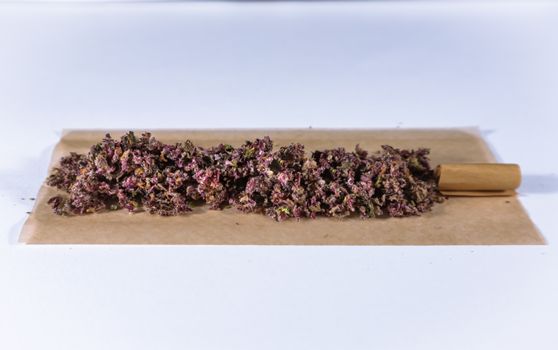
A strain without significant anthocyanin genetic coding will not turn meaningfully purple regardless of how cold the nights get. You'll stress the plant, potentially reduce yields, and end up with brown-ish or muddy-green buds rather than the deep violet you were chasing.
For genetics that do carry the coding, night temperatures of 10 to 15°C during weeks 6 to 8 of flower reliably trigger visible colour expression. A 10°C or greater differential between daytime canopy temperature (ideally 24 to 26°C during the light period) and nighttime low is widely reported as the minimum threshold across grower communities and breeder documentation for verified purple phenotypes.
Canadian outdoor growers in BC, Ontario, and Quebec often get this differential for free in September and early October , which is why late-season outdoor purple harvests can look extraordinary without any deliberate temperature management.
What are the best purple cannabis strains for Canadian growers?
The strains below are recognised across breeder documentation and aggregated grower reports for consistent, deep anthocyanin expression under proper cold-night conditions. These aren't strains that might go slightly purple , these are genetics that run reliably violet to near-black when triggered correctly.
Purple Kush
A pure indica cross of Hindu Kush and Purple Afghani, Purple Kush is arguably the benchmark purple strain. Breeder documentation places THC at 17 to 22%, with a flowering window of 8 weeks indoors. The entire bud structure , not just the leaves , turns deep violet under cold nights. Aggregated grower reports consistently describe this as one of the most reliable colour-expressors available, with even marginal cold exposure (nights around 15°C) producing visible purple calyxes.
Granddaddy Purple (GDP)
GDP, a cross of Purple Urkle and Big Bud, became the reference point for West Coast purple genetics. THC typically ranges from 17 to 24% per breeder documentation, with large, dense buds that express deep indigo colouring across the calyx structure. Its Big Bud parent contributes heavy yields , breeder data suggests 450 to 550 g/m² indoors , making it one of the few purple strains that doesn't sacrifice production for aesthetics. For indica seeds in Canada, GDP-lineage genetics are among the most requested.
Purple Punch
Larry OG crossed with Granddaddy Purple produces Purple Punch , a strain that expresses colour earlier than most, often showing purple hues as early as week 5 of flower. THC sits at 18 to 22% in documented phenotypes. The terpene profile leans heavily toward myrcene, caryophyllene, and limonene, giving finished buds a grape-candy aroma that complements the visual. Widely reported as one of the most beginner-friendly purple genetics for indoor cultivation.
Zkittlez
Zkittlez (Grape Ape x Grapefruit) expresses more blue-purple than deep violet, but its colour consistency under cold-night conditions is exceptional. Breeder documentation places flowering at 8 to 9 weeks with THC around 19 to 23%. The terpene load , particularly terpinolene and myrcene , is reported to be among the highest in the purple category, which is part of why Zkittlez-derived genetics appear in so many modern purple crosses.
Black Cherry Gelato
A newer addition to the verified purple category, Black Cherry Gelato carries genetics from Black Cherry Funk and Acai , both deep-colour expressors. Documented THC of 20 to 25% with a flower window of 9 weeks. Under a 10°C night drop, this strain develops near-black calyxes with a burgundy-to-indigo gradient that's become highly sought-after in the premium Canadian flower market.
If you want to start with proven purple genetics, our selection of feminized cannabis seeds includes several of these lineages , feminized seeds eliminate the male-plant gamble, which is especially important when you're chasing a specific phenotype like deep purple expression.
Purple autoflower vs photoperiod: which runs deeper colour?
Photoperiod purple strains generally express deeper, more saturated colour than autoflowers , but the gap is smaller than it used to be.
Early autoflower genetics introduced Ruderalis genetics that diluted anthocyanin expression. Modern F4 and F5 autoflower purple lines have largely bred this out. Purple autoflower strains like Auto Purple Kush and Auto Zkittlez now produce genuine colour under the same cold-night trigger, finishing in 9 to 11 weeks from seed , roughly 4 to 6 weeks faster end-to-end than their photoperiod equivalents.
The practical difference for Canadian growers: autoflowers can complete a full outdoor cycle before September night temperatures get genuinely cold, meaning colour development is harder to achieve naturally outdoors. Indoor autoflower growers running a cold-night protocol have more control and often achieve comparable colour depth to photoperiod plants.
Autoflower seeds in Canada are a strong choice for growers who want a faster cycle and don't mind managing the temperature differential manually in a controlled indoor space.
| Factor | Purple Photoperiod | Purple Autoflower |
|---|---|---|
| Total cycle | 14, 18 weeks | 9, 11 weeks from seed |
| Colour depth | Deeper / more saturated | Good in modern lines |
| Cold-night control needed | Easier outdoors (Sep/Oct) | Easier indoors |
| Yield (indoor, 11 L fabric pot) | 140, 200 g per plant | 80, 130 g per plant |
| Best for | Maximum colour + yield | Speed + indoor simplicity |
How to trigger purple colour in your grow
Temperature management is the primary tool. Here's a step-by-step approach that's consistent with widely documented grower protocols for anthocyanin expression:
Step 1: Confirm your genetics carry anthocyanin coding
Before adjusting any environment, verify your strain is a documented purple expressor. Breeder descriptions should reference purple or violet phenotypes explicitly , not just "hints of colour." Lineages with Hindu Kush, Afghani, Purple Urkle, or Grape Ape in the cross are the most reliable starting points.
Step 2: Establish a stable daytime canopy temperature
Run your light-period canopy temperature at 24 to 26°C through weeks 1 to 5 of flower. This is standard for most indica-dominant strains and builds plant health before the cold-night protocol begins. Keep RH at 45 to 55% during this phase to avoid early bud rot risk.
Step 3: Begin the cold-night drop at week 5 to 6
Start dropping night temperatures gradually from your usual baseline (often 18 to 20°C) down to 10 to 15°C over 10 to 14 days. A drop of 2°C every two or three nights is less stressful than an abrupt shift. The target is a 10°C or greater differential between your light-period high and dark-period low.
Step 4: Maintain the differential through weeks 7 and 8
Hold the cold-night protocol for at least 2 full weeks to allow colour to saturate fully. Many growers see colour begin appearing within 5 to 7 days of hitting 12 to 13°C nights, with full expression taking 10 to 14 days. Don't drop below 10°C , temperatures under this threshold risk cell damage and reduced trichome production.
Step 5: Monitor RH carefully during cold nights
Cold air holds less moisture, which means RH can spike during dark periods even when your humidifier is off. Keep RH below 50% during the cold-night phase, and ideally run a small oscillating fan to prevent moisture layering on bud surfaces. Botrytis thrives in cold, still, humid conditions.
Purple strain head-to-head: real data
Here's how the top five purple strains compare across the metrics that matter most to Canadian cultivators. Data is sourced from breeder documentation and aggregated grower reports:
| Strain | THC Range | Flower Time | Indoor Yield | Colour Intensity |
|---|---|---|---|---|
| Purple Kush | 17, 22% | 8 weeks | 350, 450 g/m² | Deep violet / full bud |
| Granddaddy Purple | 17, 24% | 8, 9 weeks | 450, 550 g/m² | Deep indigo / calyx-heavy |
| Purple Punch | 18, 22% | 8 weeks | 400, 500 g/m² | Purple from week 5 |
| Zkittlez | 19, 23% | 8, 9 weeks | 400, 480 g/m² | Blue-purple / consistent |
| Black Cherry Gelato | 20, 25% | 9 weeks | 400, 500 g/m² | Near-black / burgundy gradient |
Two clear conclusions from the data: if yield is your priority alongside colour, Granddaddy Purple offers the best combination. If you want the deepest, darkest colour expression in a premium-looking finished product, Black Cherry Gelato is the standout. Both are excellent candidates for high THC seeds in Canada that also deliver visual impact.
Myths about purple weed, debunked
REALITY: Anthocyanin pigment has no known effect on THC, CBD, or terpene levels. A purple bud and a green bud from the same plant will test identically on a COA. Colour is an aesthetic trait, not a potency indicator. Per documentation from testing labs including Frontiers in Plant Science research, flavonoid content (which includes anthocyanins) is separate from the cannabinoid and terpene biosynthesis pathways.
REALITY: Without the genetic coding for anthocyanin expression, cold nights produce stressed plants, not purple ones. No nutrient additive creates genuine anthocyanin production in genetically non-predisposed cultivars. Products marketed as "purple boosters" are not supported by plant science.
REALITY: While the most famous purple genetics are indica-dominant, some sativa-leaning hybrids also express anthocyanins. Purple Haze is the classic example , a sativa-leaning strain with genuine purple expression. The indica dominance in the purple category exists because Hindu Kush mountain landraces (the primary anthocyanin source) are indica-origin, not because indicas are inherently more capable of purple expression.
REALITY: Anthocyanins are stable pigments that hold their colour through a proper slow dry (10 to 14 days at 15 to 18°C, 50 to 55% RH) and cure. What causes purple buds to turn brown is high-heat drying or oxidation from poor jar practices , not an inherent property of the pigment. Properly dried purple cannabis retains its colour for months.
The one rule most purple growers miss
"If the strain doesn't have anthocyanin genes, no environment in the world will make it purple. Start with the right genetics , the cold night is just the finishing touch."
The genetics come first. Always.
Most growers who are disappointed with their purple results bought the wrong seeds. They bought a strain marketed as "purple-tinged" or "can show purple in cold conditions" , which is breeder language for "this might go slightly blush at the very tips if conditions are perfect."
The strains in this guide are verified, documented, full-expression purple genetics. Start with those, run the cold-night protocol correctly, and the colour is almost unavoidable. According to Health Canada regulations under the Cannabis Act (2018), Canadian adults 19 and older (18 in Alberta, 21 in Quebec) are legally permitted to cultivate up to 4 plants per household , enough to run at least one dedicated purple pheno hunt alongside your regular grow.
If you want to explore our current catalogue of purple-lineage genetics alongside our broader seed collection, browse all cannabis seeds available in Canada at Royal King Seeds. Every strain comes with documented lineage and breeder data so you know exactly what you're growing before you germinate.
Ready to grow your first purple harvest?
Our indica-dominant purple genetics are feminized, fully documented, and ship discreetly across Canada.
Shop Indica Seeds CanadaFrequently asked questions about purple cannabis strains
Explore our full cannabis seed catalogue
Feminized, autoflower, indica, sativa, and high-THC genetics , all shipping discreetly to Canadian growers.
Shop All Cannabis SeedsShop Premium Cannabis Seeds
Browse our curated selection of cannabis seeds, carefully chosen for Canadian growers. Fast shipping, germination guarantee, and discreet packaging across Canada.
Explore more seed categories: