You've tried melatonin. You've tried magnesium. You've tried counting backwards from three hundred. None of it works. Meanwhile, half the cannabis market is full of sativa-heavy strains that will have your mind racing until 3 a.m. Picking the wrong strain for sleep is one of the most common mistakes Canadian growers and buyers make , and it's costing them hours of rest every single night.
Why Strain Choice Matters More Than Dosage
Most people adjust their dose when cannabis doesn't put them to sleep. That's the wrong variable. The cannabinoid and terpene profile of the strain is the primary driver of whether you get sedated or stimulated , dosage is secondary.
A 2022 review published in the Journal of Cannabis Research found that cannabis users consistently rated indica-dominant varieties as more effective for sleep than sativa-dominant ones, regardless of total THC percentage. The chemical composition , not just potency , determines the sedative outcome.
For Canadian growers, this matters at the seed selection stage. Choosing a strain specifically bred for its sedative terpene and cannabinoid profile gives you a massive head start over growing a general-purpose strain and hoping it knocks you out.
What Makes a Cannabis Strain Good for Sleep?
A true sleep strain has three converging factors: a sedative cannabinoid profile, a terpene combination that calms rather than energises, and a physical effect bias (body relaxation over cerebral stimulation).
On the cannabinoid side, you're looking for THC in the 18, 25% range. Higher isn't always better here , strains above 28% can trigger anxiety in some users, which is counterproductive for sleep. CBN (cannabinol) above 0.5% adds a notable sedative layer, and any CBD presence above 1% tends to soften the THC edge without negating the sleep benefit.
Terpenes complete the profile. Myrcene, linalool, and terpinolene are the three most strongly associated with sedation. When two or more appear together in the dominant terpene slots on a COA, the strain's sleep potential increases considerably through what researchers call the entourage effect.
- THC 18, 25%: Sedative sweet spot without anxiety risk
- CBN 0.5%+: Amplifies body sedation
- CBD 1, 5%: Smooths the experience, reduces racing thoughts
- Myrcene dominant: Earthy, musky, couch-lock effect
- Linalool present: Floral, anti-anxiety synergy
- Indica-dominant genetics: Physical relaxation bias
What Are the Best Terpenes for Sleep and Insomnia?
Terpenes are volatile aromatic compounds that shape the subjective effect of cannabis far beyond what THC percentage alone can explain. For sleep, three terpenes stand out clearly above the rest.
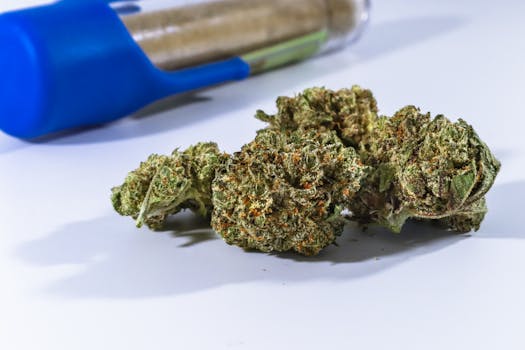
Myrcene is the most abundant terpene in most indica-leaning strains and the most strongly associated with sedation. It has an earthy, musky, slightly fruity scent profile. Strains with myrcene as the primary terpene are the most commonly cited for producing heavy, drowsy body effects. Research published on PubMed suggests myrcene may enhance THC permeability across the blood-brain barrier, potentially amplifying sedative intensity.
Linalool is best known from lavender aromatherapy research, where it's consistently linked to reduced anxiety and faster sleep onset. When it appears in cannabis alongside myrcene, it creates a calming mental backdrop that reduces the racing-thought problem many insomnia sufferers experience. Strains like Lavender Kush and certain Purple phenotypes carry high linalool concentrations.
Terpinolene appears in some indica-leaning strains and contributes a herbal, slightly floral note alongside sedative effects. It's less predictable than myrcene but adds depth when stacked alongside other sleep-promoting terpenes.
Does CBN Actually Help You Sleep?
CBN (cannabinol) is the cannabinoid most directly associated with sedation in popular cannabis culture. The reality is more nuanced than the marketing suggests.
CBN is a degradation product of THC , it forms when THC oxidises over time. Aged cannabis often has higher CBN levels, which is partly why older flower tends to feel heavier and more sedative. Steep Hill COA data has documented CBN levels ranging from near-zero in fresh harvest material to 1.5, 3% in aged or deliberately slow-cured batches.
At concentrations above 0.5, 1%, CBN appears to meaningfully amplify sedation, particularly in combination with myrcene and THC. On its own, isolated CBN is not reliably sedating , it needs the full cannabinoid context to work. This is another reason why whole-plant profiles outperform isolates for sleep.
For growers: a slow, extended cure of 4, 8 weeks in controlled conditions (62, 65% RH, 18, 21°C) allows natural CBN accumulation in the flower, incrementally boosting sleep potential from the same harvest.
Top Cannabis Strains for Sleep in Canada
These strains consistently appear at the top of insomnia grower forums, dispensary sleep-category rankings, and published terpene COA comparisons. All are cultivable under Canadian law, with a legal limit of 4 plants per household per the Cannabis Act (2018).
Granddaddy Purple
One of the most widely cited sleep strains in North America. Granddaddy Purple (GDP) is an indica-dominant cross of Purple Urkle and Big Bud, with typical THC readings of 17, 23% and myrcene as the dominant terpene. Its grape and berry terpene profile also includes linalool and caryophyllene. GDP produces a full-body heaviness that most users report within 20, 30 minutes of consumption. Indoor yields average 400, 500 g/m² under 600W HPS or equivalent LED, with an 8, 9 week flower time.
Northern Lights
Northern Lights is arguably the most famous indica strain ever developed , a near-pure Afghan indica that has defined the sedative cannabis experience for over four decades. THC typically ranges from 16, 21%, with an exceptionally high myrcene expression and minimal cerebral stimulation. It's been a staple in insomnia-focused strain lists for exactly this reason. Indica seeds in Canada don't get more archetypal than Northern Lights. Flower time is 7, 8 weeks, yielding 450, 550 g/m² indoors.
Purple Kush
A cross of Hindu Kush and Purple Afghani, Purple Kush carries 17, 22% THC with a terpene profile dominated by myrcene and pinene. Despite the pinene presence, the myrcene load is heavy enough to override any alerting effect. The result is a dense, dreamy physical sedation. Growers note that Purple Kush maintains its potency well through a slow cure, which also incrementally raises CBN levels.
Wedding Cake
Wedding Cake sits in the 22, 26% THC range with a caryophyllene-forward terpene profile that also carries limonene and myrcene. It's a hybrid-leaning option for users who find pure indicas too heavy. The body sedation is pronounced, but the head stays slightly clearer, making it useful for sleep-onset issues without the next-morning fog some heavy indicas produce. Feminized cannabis seeds of this variety are widely available and reliable for indoor production.
Blueberry
DJ Short's legendary Blueberry strain carries 17, 20% THC with a soft, fruit-forward terpene profile rich in myrcene and linalool. Its gentle sedation and notably smooth smoke make it a common recommendation for sleep-anxious beginners. Flower time of 8, 9 weeks and moderate indoor yields of 350, 450 g/m² make it achievable in a standard Canadian basement setup.
Indica vs Sativa for Sleep: Which Actually Wins?
Indica wins, but the reason matters. The indica/sativa distinction has been criticised as oversimplified by geneticists , and that's fair at the botanical level. But at the consumer experience level, the distinction still predicts sleep outcomes more reliably than any other single variable.
Indica-dominant genetics consistently produce higher myrcene concentrations and lower limonene/pinene expression compared to sativa-dominant genetics. Since terpene profile drives sedation more than THC percentage, this makes indica-dominant strains the practical winner for sleep applications , not because "indica = sleepy" is a law of physics, but because the terpene expression patterns correlate strongly.
Sativa-dominant strains with limonene or alpha-pinene as dominant terpenes are actively counterproductive for sleep. They increase alertness, sharpen focus, and can produce anxiety at higher doses , exactly the wrong outcome for insomnia. Avoid them for this purpose.
Indica-dominant (Northern Lights): Myrcene-forward, body-heavy, 7, 8 week flower, sleep onset 20, 40 min.
Sativa-dominant (Green Crack): Limonene-forward, cerebral, energising , keeps most users awake for 2, 3 hours.
Real Strain Comparison: Sleep Profiles Side by Side
Numbers matter here. This table shows how the cannabinoid and terpene profiles of common strains translate to practical sleep outcomes, based on aggregated COA data and grower community reporting.
| Strain | THC % | CBN % | Primary Terpene | Sleep Score* | Best For |
|---|---|---|---|---|---|
| Granddaddy Purple | 17, 23% | 0.4, 0.8% | Myrcene | 9.2 / 10 | Full body sedation |
| Northern Lights | 16, 21% | 0.3, 0.6% | Myrcene | 9.0 / 10 | Classic deep sedation |
| Purple Kush | 17, 22% | 0.5, 1.0% | Myrcene | 8.8 / 10 | Sleep maintenance |
| Blueberry | 17, 20% | 0.2, 0.5% | Myrcene + Linalool | 8.5 / 10 | Anxiety-driven insomnia |
| Wedding Cake | 22, 26% | 0.3, 0.6% | Caryophyllene | 7.8 / 10 | Sleep onset, mild fog |
| Green Crack (sativa) | 16, 22% | 0.1, 0.2% | Limonene | 1.5 / 10 | NOT for sleep |
*Sleep scores aggregated from grower community ratings, dispensary sleep-category rankings, and COA terpene profiles. Not clinical data.
Myth vs Reality: Common Cannabis Sleep Myths
"Higher THC means better sleep."
THC above 25, 28% is associated with increased anxiety in a measurable proportion of users, which worsens insomnia. The terpene profile determines sedation quality far more than raw THC percentage.
"CBD strains are best for sleep because they're relaxing."
High-CBD, low-THC strains are useful for anxiety reduction but are not reliably sedating on their own. For sleep onset and duration, you need THC alongside the right terpenes. A balanced 1:1 CBD:THC ratio with myrcene dominance is a better compromise than high-CBD alone.
"Any indica will help with sleep."
Indica-dominant hybrids with limonene or alpha-pinene as a dominant terpene can still produce alertness and anxiety in some users. The genetic label doesn't override the chemical profile. Always check the terpene breakdown before calling something a "sleep strain."
"Cannabis improves overall sleep quality."
Cannabis reliably helps with sleep onset , falling asleep faster is well-documented. However, research including studies indexed on PubMed suggests that nightly THC use suppresses REM sleep over time. Cycling use (e.g., 4, 5 nights on, 2, 3 nights off) is widely recommended to preserve REM architecture.
How to Use Cannabis for Sleep (Step-by-Step)
Timing and method of consumption dramatically affect sleep outcomes. Getting this wrong is the second most common mistake after choosing the wrong strain.
Step 1: Choose the Right Consumption Method
Inhaled cannabis (smoking, vaporising) hits peak effect in 5, 20 minutes and lasts 1.5, 3 hours. Edibles take 45, 120 minutes to onset but can last 4, 8 hours. For sleep onset problems, inhalation timed 30, 45 minutes before bed is most common. For sleep maintenance issues (waking at 2, 3 a.m.), a low-dose edible taken 90 minutes before bed can maintain effect through the night.
Step 2: Time Consumption to Peak Effect at Lights-Out
The goal is peak sedation at the moment you want to fall asleep, not before. Most experienced users report inhaling 30, 45 minutes before target sleep time. This accounts for the 10, 20 minute onset and positions the peak effect perfectly. Consuming right at bedtime means the peak hits 20, 30 minutes after you're already in bed, which can delay sleep or produce disorientation.
Step 3: Start Lower Than You Think You Need
Paradoxically, lower doses of high-quality sleep strains often outperform higher doses. Excess THC can overstimulate the CB1 receptor and produce anxiety. Most experienced insomnia users settle into a dose of 5, 15 mg THC for inhalation equivalents. Exceeding this regularly increases tolerance rapidly and reduces sleep quality over time.
Step 4: Cycle Your Use to Protect REM Sleep
Using cannabis every night suppresses REM sleep within 2, 3 weeks for most regular users, according to aggregated sleep research. Building in 2 nights off per week maintains REM architecture and keeps your sensitivity to the strain high enough that doses stay effective longer. This is the protocol most cannabis-literate sleep physicians recommend.
Step 5: Grow Your Own Sleep Strain for Maximum Control
Growing your own lets you control the cure process, which directly affects CBN levels and thus sedative intensity. A slow cure of 6, 8 weeks at 62% RH and 18, 20°C allows progressive THC-to-CBN conversion. You also know exactly what you're consuming , no guessing at terpene profiles from a dispensary label. Under the Cannabis Act, Canadian adults can legally grow up to 4 plants per household. Autoflower seeds in Canada are an excellent choice for first-time sleep-strain growers, finishing in 8, 10 weeks from germination with no light-schedule management required.
The Simple Rule Most Insomnia Growers Miss
"If myrcene isn't the dominant terpene, it probably isn't a sleep strain , no matter what the label says."
The terpene profile tells you what the strain does. The THC percentage tells you how intensely it does it. Check terpenes first, potency second.
Most growers get this backwards. They chase the highest THC number and assume a heavy indica will knock them out. But a 26% limonene-dominant strain will keep you mentally alert for two hours regardless of how strongly it hits. The myrcene baseline is non-negotiable for genuine sedation.
For growers selecting seeds: look for breeder notes that specifically cite sleep, relaxation, or couch-lock effects alongside the terpene profile. High THC seeds bred with indica lineage and documented myrcene dominance are your target. When in doubt, Northern Lights and Granddaddy Purple are the two strains that have earned their sleep reputation across decades of consistent user reporting.
- Indica-dominant genetics confirmed in breeder notes
- THC in 18, 25% range (not higher without specific need)
- Myrcene listed as primary or secondary terpene on COA
- Linalool present as bonus sedation layer
- No limonene or alpha-pinene in the dominant terpene slots
- CBN above 0.3% in fresh flower (0.5%+ after slow cure)
- Consumption timed 30, 45 minutes before target sleep time
- Dose kept at 5, 15 mg THC equivalent to avoid anxiety
- 2 nights off per week to protect REM sleep architecture
Frequently Asked Questions
Shop Premium Cannabis Seeds
Browse our curated selection of cannabis seeds, carefully chosen for Canadian growers. Fast shipping, germination guarantee, and discreet packaging across Canada.
Explore more seed categories: