High THC is not your friend if anxiety is the problem. In fact, strains pushing 25 to 30% THC are among the most reliable triggers of cannabis-induced anxiety and paranoia reported across clinical literature. Yet most seed banks lead with THC numbers like a trophy. That's the wrong metric entirely if you're growing for calm.
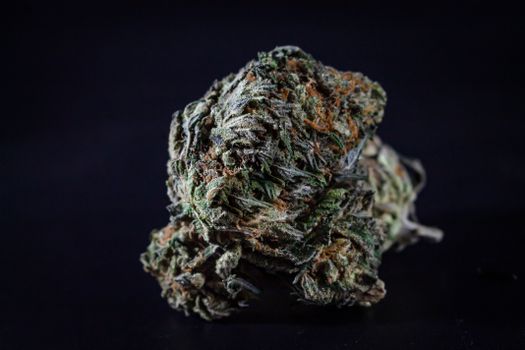
The genetics that actually help anxiety look completely different: high CBD, moderate or low THC, and a terpene profile built around linalool, myrcene, and beta-caryophyllene. Pick the right strain and you can grow your own anxiety relief. Pick the wrong one and you've spent a full grow cycle producing something that makes the problem worse.
Here's exactly what to look for, strain by strain, number by number.
Strains with 10 to 20% CBD and under 1% THC consistently show the fewest anxiety side-effects in both published research and aggregated grower reports. Balanced 1:1 CBD:THC ratios (around 8 to 12% each) offer a middle ground for those who want mild psychoactive effects alongside calming CBD. Indica-dominant genetics with high myrcene and linalool content deliver the sedating, body-focused effect that most anxiety sufferers are actually after.
By the Numbers: Anxiety and Cannabis Genetics
10, 20%
CBD range with lowest anxiety side-effects (published clinical reviews)
<1%
THC threshold below which psychoactive anxiety reactions are rare
1:1
CBD:THC ratio widely reported as the calming "sweet spot" for moderate users
3
Key calming terpenes: myrcene, linalool, beta-caryophyllene
What Is CBD in Cannabis Genetics?
CBD (cannabidiol) is a non-psychoactive cannabinoid produced naturally in the cannabis plant. Unlike THC, it does not bind strongly to CB1 receptors in the brain, which means it does not produce the intoxicating "high" associated with standard cannabis strains.
Instead, CBD interacts with serotonin receptors (5-HT1A), GABA pathways, and endocannabinoid tone in ways that published research increasingly links to anxiolytic (anxiety-reducing) effects. A 2019 review published in Frontiers in Plant Science and complementary clinical work cited by the NIH National Center for Complementary and Integrative Health highlight CBD's activity at these pathways as a key mechanism behind its calming properties.
In cannabis genetics, CBD content is determined by the CBDA synthase enzyme. High-CBD strains carry gene variants that favour CBD production over THC. Breeders select and stabilize these traits across multiple generations, producing seed lines that reliably express 10 to 20% CBD at harvest.
Why High THC Makes Anxiety Worse
THC activates CB1 receptors in the amygdala, the brain region responsible for fear and threat-detection. At low doses this can feel pleasant. At high doses, or in people with anxiety sensitivity, it amplifies the exact neural circuits that produce anxiety and paranoia.
Strains above 20% THC dramatically raise this risk. Aggregated grower journals and clinical case reports consistently show that high-THC products are the most common trigger for cannabis-induced anxiety events, particularly in new or infrequent users.
CBD partially counteracts this effect. When CBD is present alongside THC, it appears to modulate the amygdala response and reduce THC's anxiety-amplifying properties. This is the pharmacological rationale behind 1:1 and high-CBD genetic profiles for anxiety management.
Which Terpenes Actually Calm Anxiety?
Terpenes are aromatic compounds that shape the character of a cannabis high well beyond what THC or CBD percentages alone can predict. For anxiety, three terpenes consistently appear in calming strain profiles.
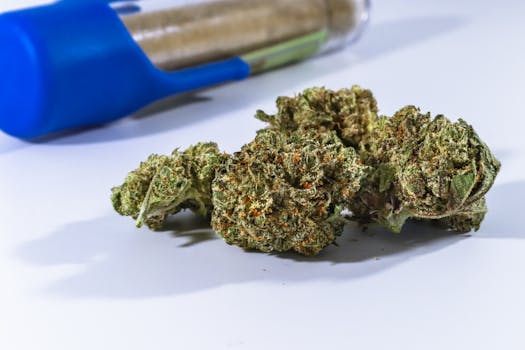
- Myrcene: The most abundant terpene in cannabis. Associated with sedating, body-heavy effects. High-myrcene strains often have a "couch-lock" quality that reduces mental overactivity. Common in OG and Kush genetics.
- Linalool: Also found in lavender. Research links linalool to GABA modulation , the same pathway targeted by benzodiazepines, though with far milder effect. Strains high in linalool tend to feel genuinely relaxing rather than just sedating.
- Beta-Caryophyllene: Unique among terpenes because it binds directly to CB2 receptors. This produces anti-inflammatory and potentially anxiolytic effects without psychoactivity. Found in high concentrations in many hemp-derived CBD strains.
When choosing seeds for anxiety, look for breeder notes or COA data showing elevated myrcene (above 0.5%), linalool presence, and beta-caryophyllene above 0.3%. These numbers appear frequently on SC Labs and Steep Hill COAs for leading CBD cultivars.
Best Cannabis Strains for Anxiety (With Real Numbers)
These are the genetic profiles , documented across breeder specifications and aggregated grower journals , most consistently associated with calming, anxiety-friendly effects.
Charlotte's Web Lineage (High CBD, Ultra-Low THC)
Charlotte's Web descendants typically express 15 to 20% CBD with THC below 0.3%. This profile is essentially non-psychoactive. Breeder documentation places myrcene and beta-caryophyllene as dominant terpenes. This is the most referenced strain lineage in clinical CBD research, making it the go-to genetic anchor for anxiety-focused growing.
Cannatonic (1:1 Balanced CBD:THC)
Cannatonic typically finishes at 8 to 12% CBD alongside 6 to 10% THC, producing a mild psychoactive experience that many anxiety sufferers describe as manageable and calming. Linalool is a standout terpene in most phenotypes. This is a strong choice for experienced users who want some psychoactivity alongside the CBD buffer.
ACDC (High CBD, Trace THC)
ACDC is a sativa-dominant phenotype of Cannatonic that stabilizes at very high CBD (14 to 20%) with THC consistently below 1%. Despite the sativa genetics, reported effects skew toward mental clarity and reduced anxiety rather than stimulation, largely due to the dominant CBD and beta-caryophyllene profile.
Harlequin (Sativa-Dominant, ~5:2 CBD:THC)
Harlequin typically finishes around 10% CBD and 5 to 6% THC. The sativa lineage means effects are more alerting than sedating, but the dominant CBD keeps anxiety suppressed. Aggregated grower reports consistently place this among the best daytime options for anxiety where function must be maintained.
Indica-Dominant CBD Hybrids (OG x CBD Crosses)
OG Kush crosses bred with CBD-rich genetics produce 10 to 14% CBD alongside 8 to 12% THC, in an indica-dominant body that's heavily myrcene and linalool forward. These are evening or night-time strains. The physical sedation reduces anxious physical tension while CBD moderates the psychoactive edge of the THC content.
Our CBD strains collection carries several of these genetic profiles, all available as feminized seeds for Canadian growers.
High CBD vs Balanced 1:1 Strains for Anxiety: Side-by-Side
Choosing between a pure high-CBD strain and a balanced 1:1 depends on your sensitivity to THC and what kind of relief you need.
| Factor | High CBD (<1% THC) | Balanced 1:1 (8, 12% each) |
|---|---|---|
| Psychoactive effect | None to negligible | Mild, manageable |
| Anxiety risk | Very low | Low (CBD buffers THC) |
| Best time of day | Any time | Evening preferred |
| Who it suits | THC-sensitive, new users, daytime use | Experienced users wanting mild euphoria with calm |
| Example genetics | Charlotte's Web, ACDC | Cannatonic, CBD OG hybrids |
| Grow difficulty | Easy (stable genetics) | Moderate (phenotype variation possible) |
For most first-time CBD growers in Canada, a high-CBD low-THC feminized seed is the safer starting point. Feminized cannabis seeds eliminate the male-plant variable entirely, ensuring every plant in your 4-plant household allotment produces usable flower.
How to Read a Lab Report for an Anxiety-Friendly Strain
A Certificate of Analysis (COA) from a licensed testing lab tells you exactly what's in a strain before you commit to a full grow. Here's how to read one specifically for anxiety suitability.
Step 1: Find the CBD:THC ratio
Look at the total CBD and total THC percentages side by side. For anxiety use, you want CBD at least 2x higher than THC, or ideally 10x higher (the <1% THC zone). A COA showing 15% CBD and 0.5% THC is ideal. A COA showing 15% CBD and 10% THC is a 1:1 balanced strain.
Step 2: Check the terpene panel
A good lab report includes a terpene breakdown. For anxiety, prioritize myrcene above 0.4%, linalool above 0.1%, and beta-caryophyllene above 0.2%. If the report only shows cannabinoids, ask the seller for a full-panel COA. Strains without terpene data are harder to evaluate for anxiety suitability.
Step 3: Verify the testing lab
SC Labs, Steep Hill, and Confidence Analytics are among the most-cited third-party cannabis testing labs in North America. COA data from accredited labs carries more credibility than in-house breeder claims. When reviewing a seed line, check whether the breeder cites third-party lab documentation or only self-reported numbers.
Step 4: Cross-reference phenotype variation
Some strains, Cannatonic being a well-known example, show significant phenotype variation where individual plants can range from 6% CBD to 17% CBD from the same seed batch. Breeder documentation on stabilized lines will indicate how consistent the CBD expression is across the phenotype. More stabilized lines give you more predictable results harvest-to-harvest.
Growing High-CBD Strains in Canada
High-CBD feminized strains are generally forgiving to grow, but a few specifics matter for maximizing CBD expression and terpene retention at harvest.
- Light schedule: Photoperiod CBD strains follow standard 18/6 for veg and 12/12 for flower. Harvest timing affects cannabinoid ratios, so use a loupe and target cloudy trichomes with minimal amber for peak CBD with lowest THC conversion.
- Temperature: Keep flowering temps at 20 to 24°C. High heat (above 28°C) accelerates terpene degradation, reducing linalool and myrcene content by the time you reach harvest.
- Humidity: 40 to 50% RH during late flower prevents mould on dense CBD-rich buds and preserves terpene integrity.
- Pot size: 11 L fabric pots are widely reported to suit most indoor CBD cultivars, with 19 L pots used when growers want to push yield further. Aggregated grower journals show 11 L pots typically produce 90 to 140 g per plant under 18/6 LED at 600 to 800 PPFD for CBD-dominant genetics.
- Canada-specific note: The Cannabis Act 2018 permits up to 4 plants per residence for personal cultivation across most of Canada. Check your provincial rules at laws-lois.justice.gc.ca before starting your grow.
Canada's outdoor season (roughly May to October in most provinces) accommodates photoperiod CBD strains that finish in 8 to 10 weeks of flowering. If your season is shorter, autoflower seeds in Canada with CBD genetics finish in 8 to 10 weeks total from germination , no light schedule management required.
For a complete walkthrough of germination through harvest, our growing guides cover the full process for both indoor and outdoor Canadian conditions.
Myth vs Reality: Cannabis and Anxiety
MYTH: Indica strains always calm anxiety, sativas always cause it.
Reality: Indica vs sativa is a morphological distinction, not a pharmacological one. A high-THC indica can absolutely trigger anxiety, while a CBD-rich sativa like ACDC reliably calms it. Cannabinoid and terpene profile predicts effect far more accurately than the indica/sativa label.
MYTH: More CBD always means more calming effect.
Reality: CBD response follows an inverted U-curve in published research. Very high doses can become less effective than moderate doses for anxiety. Terpene content alongside CBD matters as much as the raw percentage. A 12% CBD strain rich in linalool may outperform a 20% CBD strain with a flat terpene profile.
MYTH: Growing CBD strains is harder than growing THC strains.
Reality: Stabilized feminized CBD genetics are among the easiest to grow. Many CBD cultivars were developed in part from hemp genetics, giving them strong disease resistance, broad climate tolerance, and reliable performance across Canadian growing conditions. Indica-dominant CBD seeds in particular are noted for compact structure and cold-weather resilience.
The One Rule Most Buyers Miss When Choosing Strains for Anxiety
Most buyers focus entirely on the CBD number. That's only half the equation.
"The ratio matters more than the number. A 10% CBD strain with 0.5% THC will consistently outperform a 20% CBD strain with 15% THC for anxiety relief , because the THC undoes what the CBD is doing."
Check the ratio first. Then check the terpenes. The raw CBD number is the last thing to optimize. This one shift in how you evaluate strains will make every future purchase decision clearer and more predictable.
Browse our full range of CBD strains available in Canada, all documented with cannabinoid profiles and breeder genetics data to help you make the right call before you plant a single seed.
Ready to grow your own calming genetics?
Our CBD and balanced-ratio seed collection ships discreetly across Canada with guaranteed germination.
Shop CBD Seeds in CanadaFrequently Asked Questions
What is the best cannabis strain for anxiety?
Can THC make anxiety worse?
What CBD:THC ratio is best for anxiety?
What terpenes reduce anxiety in cannabis?
Why doesn't my CBD strain feel calming?
Are indica strains better than sativa for anxiety?
Can I legally grow CBD strains in Canada for personal use?
How long do high-CBD strains take to grow in Canada?
Explore the full Royal King Seeds collection
From high-CBD feminized seeds to balanced 1:1 genetics and calming indica hybrids , all available with discreet Canadian shipping.
Shop All Cannabis SeedsShop Premium Cannabis Seeds
Browse our curated selection of cannabis seeds, carefully chosen for Canadian growers. Fast shipping, germination guarantee, and discreet packaging across Canada.
Explore more seed categories: