Most cannabis buyers have no idea how much they're actually getting , or whether the price makes sense. That's not an accident. Confusing weight terminology is the single most common reason new buyers overpay, under-buy, or get caught off guard at checkout. Seven grams sounds abstract until you understand exactly what it represents on a scale, in a bag, and in your rolling tray. This guide translates every common purchase size into something you can see, feel, and verify , starting with the quarter ounce.
- ✓ Canadian adults (19+, or 18+ in AB, 21+ in QC) buying legally
- ✓ First-time buyers trying to decode weight labels
- ✓ Home growers estimating per-plant yield in real-world terms
- ✓ Anyone comparing licensed-producer prices to value-per-gram
- ✓ Growers deciding how much seed inventory to plan for
- ✗ Advice on purchasing above personal-possession limits
- ✗ Unlicensed or commercial resale guidance
- ✗ Medical dosing recommendations
What exactly is 7 grams of cannabis?
Seven grams is one quarter of a standard ounce. A full ounce of cannabis weighs 28.35 grams (the imperial-to-metric conversion), so dividing by four gives you 7.09 g , universally rounded down to an even 7 g in the cannabis trade.
The "quarter ounce" nickname is shortened to "quarter" in everyday buying conversations. You'll see it listed on licensed-producer websites as "7 g" and on recreational store shelves as either a single large pre-packaged unit or a combination of smaller 3.5 g (half-quarter) bags.
Per Canada's Cannabis Act (2018), adults are permitted to possess up to 30 grams of dried cannabis (or its equivalent) in public , meaning a single 7 g purchase sits well within the legal possession limit at roughly 23% of the maximum.
Seven grams is the sweet spot for regular buyers: enough volume to last a week or two at casual use, priced at a per-gram discount versus single-gram purchases, and comfortably inside Canada's 30 g public possession limit. If you're buying for the first time, a quarter ounce is the most practical entry point.
Full cannabis weight chart: from a gram to an ounce
Every cannabis measurement traces back to the ounce. Here's the complete breakdown with what each size is called in Canada:
| Common Name | Grams | Fraction of Oz | Joints (0.5 g) | Joints (1 g) | CAD Avg. (LP Retail) |
|---|---|---|---|---|---|
| Single gram | 1 g | 1/28th oz | 2 | 1 | $8, $14 |
| Eighth | 3.5 g | 1/8 oz | 7 | 3, 4 | $18, $35 |
| Quarter ounce | 7 g | 1/4 oz | 14 | 7 | $30, $60 |
| Half ounce | 14 g | 1/2 oz | 28 | 14 | $55, $100 |
| Full ounce | 28.35 g | 1 oz | 56 | 28 | $100, $190 |
Prices above reflect aggregated licensed-producer retail and provincial OCS/AGLC store pricing as of 2024, 2025. Budget-tier cannabis typically sits at the lower end of each range; craft or premium lines push toward the ceiling.
The per-gram cost drops meaningfully as you scale up. A single gram at $10 works out to $70 per 7 g equivalent. Buying a quarter at $42 cuts that to $6 per gram , a 40% saving for the same product. Buying in quarter-ounce units is almost always the most cost-efficient starting point for regular use.
What does 7 grams of cannabis look like?
Visual volume varies more than most buyers expect , and that's where the confusion starts.
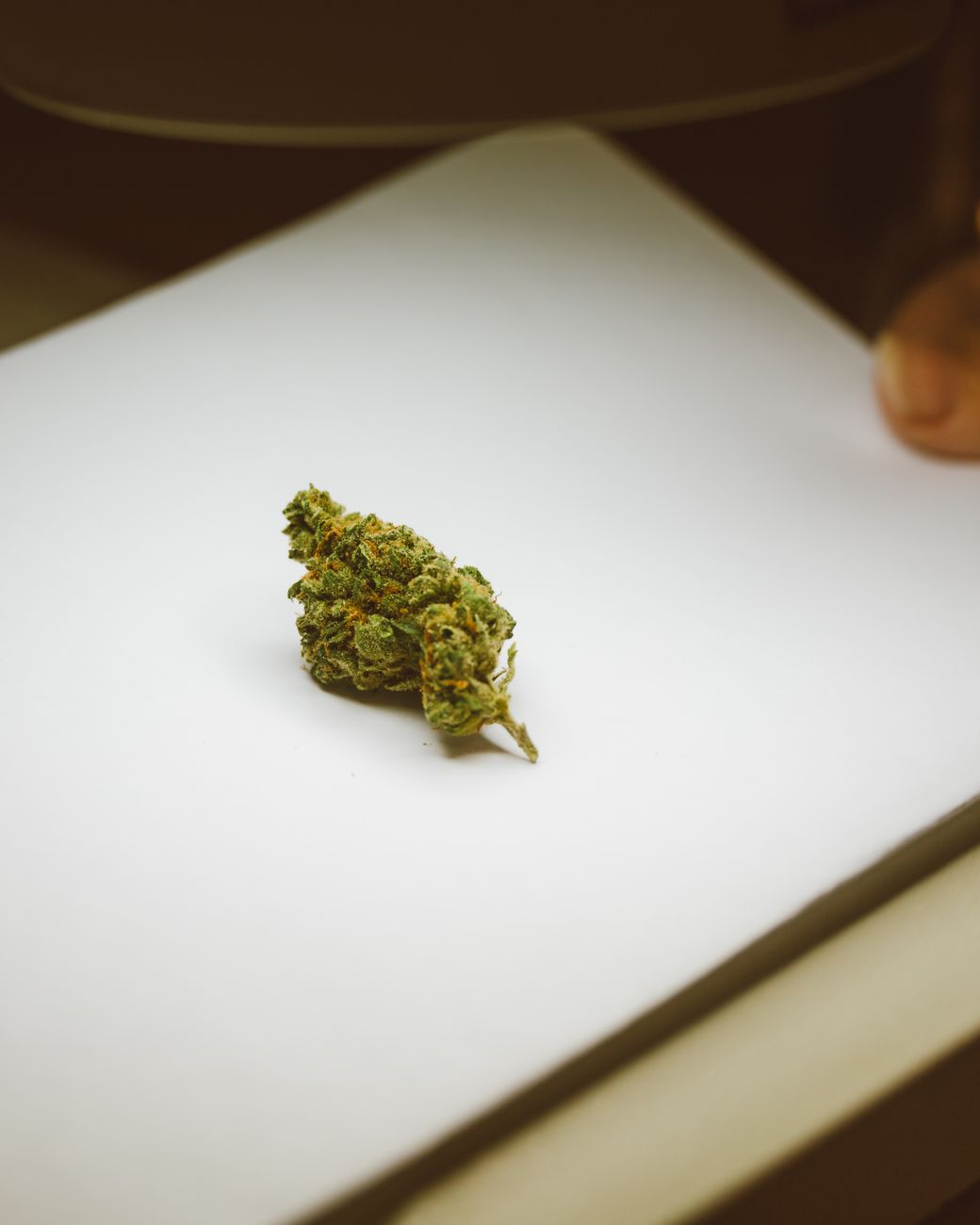
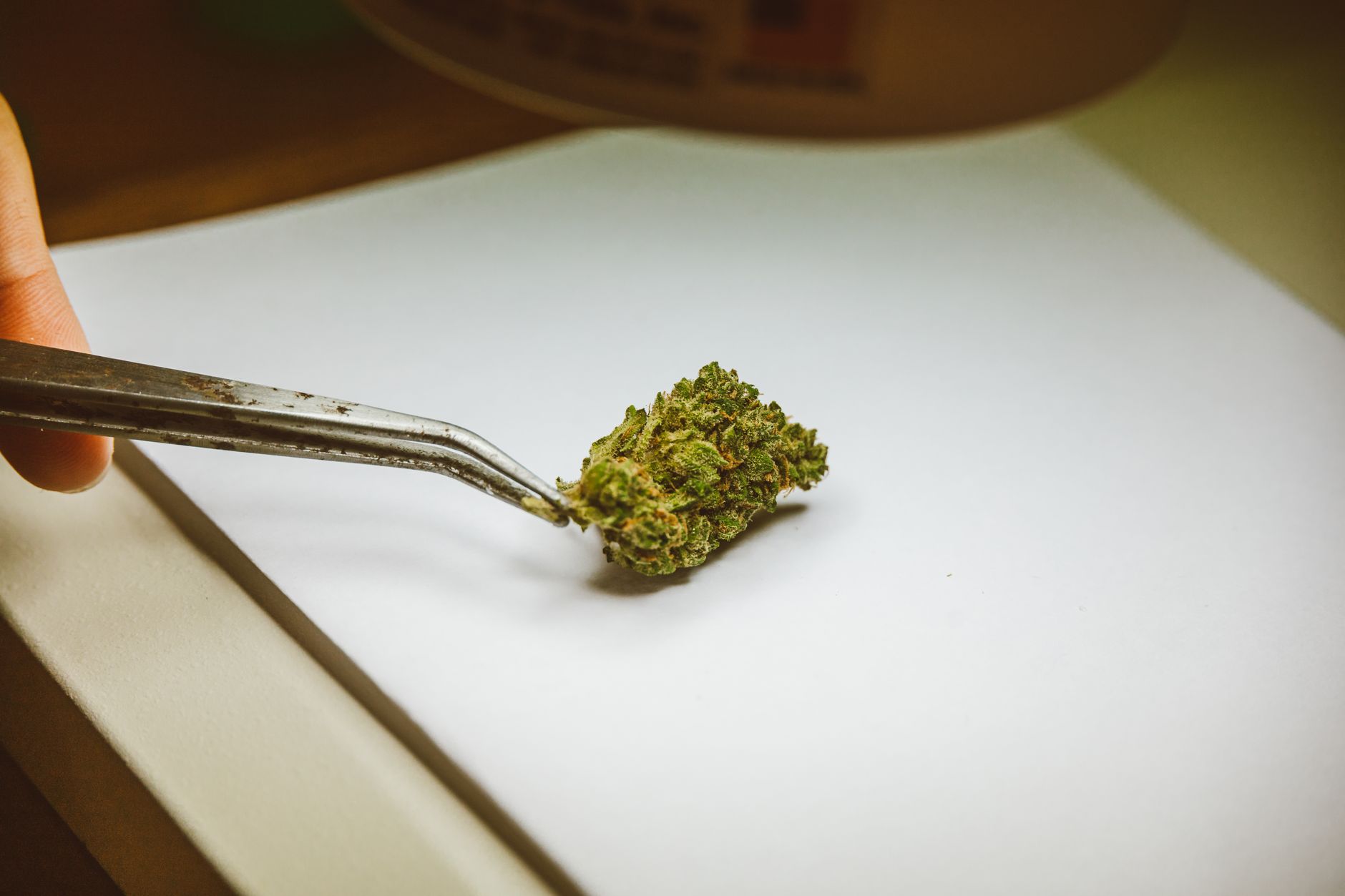
Dense indica-dominant buds with tight, compact structure pack a lot of mass into a small footprint. Seven grams of a strain like a dense OG Kush phenotype can look like 4, 5 medium-sized nuggets. Loose, airy sativa-dominant buds from the same 7 g can look like twice the volume in the bag.
A reliable visual reference: 7 g fills a 60 mL (2 oz) glass jar to roughly the halfway mark when buds are lightly packed. In a standard sandwich-size zip-lock, it looks like a small, loosely clenched fist of flower. On a flat surface, it spreads to roughly the size of your open palm.
- Dense indica nugs: 4, 6 medium nuggets
- Fluffy sativa buds: 8, 12 smaller, irregular pieces
- Pre-ground: fills roughly a 1/3 cup measuring cup loosely
- Kief or trim: much denser , 7 g looks like a very small pile
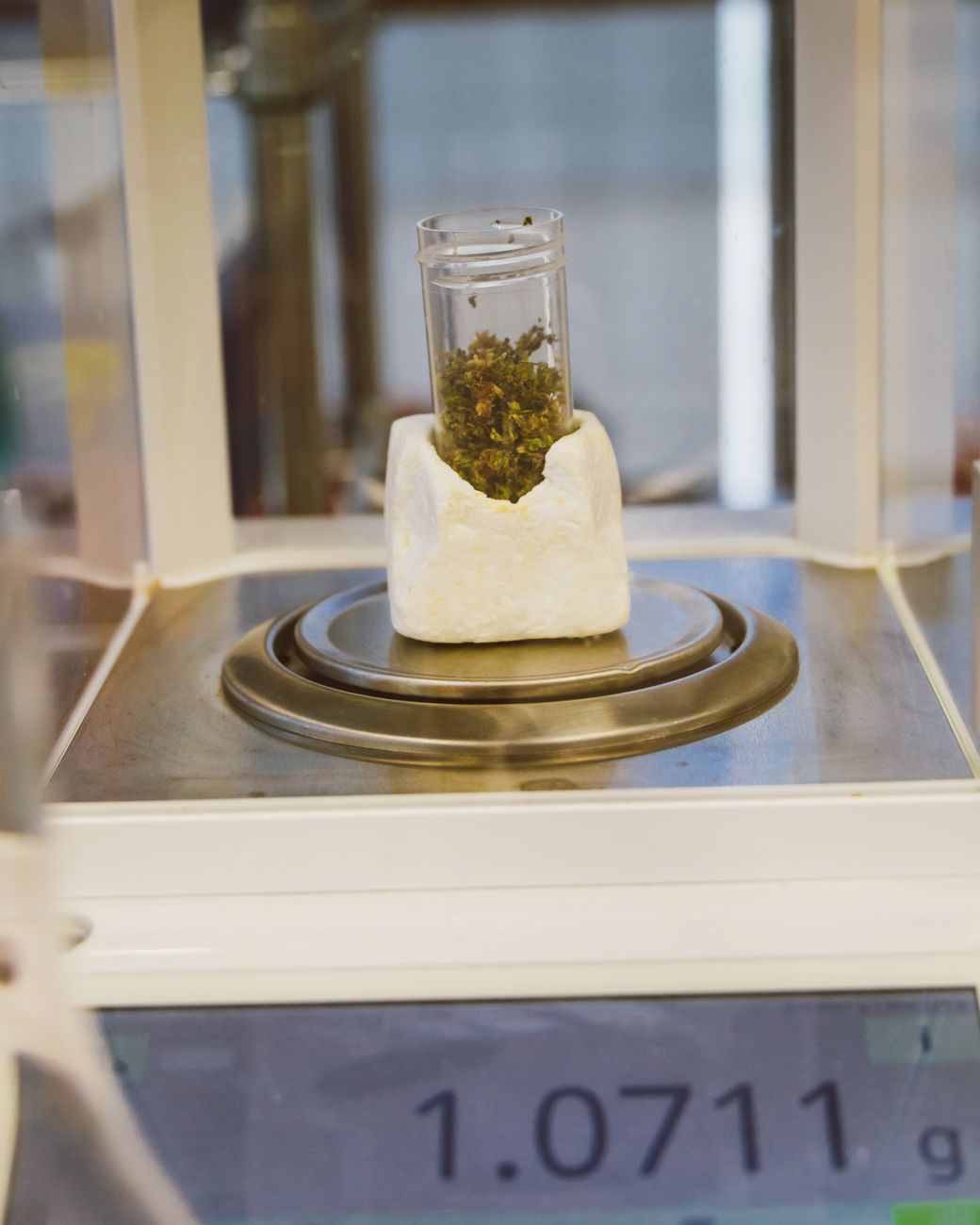
The only reliable measurement is a digital scale. Eyeballing 7 g without experience leads to errors of 1, 2 g in either direction, which at $6, $10 per gram is real money. A basic digital pocket scale accurate to 0.1 g costs CAD $10, $20 and pays for itself on the first quarter purchase.
Don't trust the visual alone. Bud density varies dramatically by strain and cure. If you're buying unsealed flower, weigh it. Licensed-producer pre-packs are legally required to meet stated weight within a small tolerance, which is one genuine advantage of buying through regulated channels.
What does 7 grams cost in Canada?
Canadian cannabis pricing has compressed significantly since 2018 legalization. Budget flower has fallen to as low as CAD $4, $5 per gram from licensed producers, while craft and artisan lines hold at $12, $16 per gram.
For a 7 g quarter ounce, expect these ranges by tier:
- Value / budget tier: CAD $25, $35 (common at OCS, BCCS, AGLC value shelves)
- Mid-range: CAD $36, $50 (most mainstream LP brands, typical recreational store)
- Premium / craft: CAD $51, $70 (small-batch LPs, hand-trimmed, COA on label)
- Ultra-premium / designer: CAD $70, $90+ (rare genetics, competition strains)
According to Health Canada's cannabis market data reports, the average retail price for dried flower across Canadian provinces hovered around CAD $7.50, $8.50 per gram through 2023, 2024, putting a typical 7 g quarter at roughly $52, $60 at the median.
Every size jump in cannabis purchasing reduces per-gram cost by roughly 20, 35%. Formula: (single-gram price × 7) vs. actual quarter price = your savings percentage. Example: $11/g single gram × 7 = $77 theoretical. Actual quarter at $48 = 38% saving. If your actual quarter price is within 25% of your single-gram price × 7, you're getting a fair deal. If it's only 10% less, you're not getting the volume discount you should be.
The licensed Canadian market has driven prices down dramatically. A quality mid-range quarter at $40, $50 from a regulated retailer is genuinely competitive, comes with tested THC/CBD percentages, and carries no legal risk. For home growers, the math gets even better , see the section below on growing your own.
How long does 7 grams last?
Duration depends entirely on consumption frequency and method. Here's a practical breakdown by use pattern:
| Use Pattern | Daily Consumption | 7 g Lasts |
|---|---|---|
| Occasional (1, 2 sessions/week) | ~0.3, 0.5 g/day average | 2, 3 weeks |
| Regular (daily, 1 session) | 0.5, 1 g/day | 7, 14 days |
| Heavy (2, 3 sessions/day) | 2, 3 g/day | 2, 4 days |
| Group session (4, 6 people) | 7 g in one sitting | Single session |
Vaporizers are more efficient than combustion , most desktop vaporizers extract usable cannabinoids at 0.2, 0.3 g per session versus 0.5, 0.7 g for a rolled joint (accounting for sidestream loss). Switching to a vaporizer effectively stretches a 7 g quarter 30, 50% further.
For a casual-to-moderate consumer, 7 g is a solid 1, 2 week supply. It's the most logical buying unit , big enough for a meaningful per-gram discount, small enough to stay fresh before the next purchase. Dried cannabis stored in an airtight glass jar away from light holds quality for 6, 12 months, so buying a quarter never means wasting product.
Common mistakes when buying cannabis by weight
Mistake 1: Confusing volume for weight
A fluffy sativa bud and a dense indica bud that look the same size can differ by 0.5, 1 g per piece. Never buy by eye alone , especially at prices above $8/g where even a 0.5 g shortfall is $4 in your pocket.
Mistake 2: Not accounting for moisture content
Improperly cured flower retains more moisture, which adds weight without adding cannabis. Freshly cut, poorly dried flower can be 10, 15% water by weight. Licensed-producer products must meet Health Canada drying standards, which is another reason regulated retail has real advantages for buyers who care about getting what they pay for.
Mistake 3: Assuming higher THC always means better value
Published research cited in the Journal of Cannabis Research consistently shows the relationship between THC percentage and subjective potency is weak once you account for terpene profile and individual tolerance. A 24% THC strain with a rich terpene profile often outperforms a 30% isolate-dominant product. Don't pay a premium purely for THC numbers.
Mistake 4: Buying too large a quantity before trying a strain
A quarter (7 g) is a reasonable commitment to an untested strain. An ounce (28 g) you don't enjoy is expensive. Always try a gram or an eighth first with any new genetics before scaling up.
Mistake 5: Ignoring the per-gram math entirely
Retailers sometimes price 3.5 g eighths at nearly the same cost as a 7 g quarter, especially during promotions. Running the per-gram calculation before purchase takes 10 seconds and can save $5, $15 on a single transaction.
Most mistakes around cannabis weights come down to one thing: not running the numbers. A scale, a calculator, and a few seconds of math before any purchase above $20 is a habit worth building.
Growing your own: what 7 grams means in yield terms
Canada's Cannabis Act allows each household to grow up to 4 plants from legally obtained seeds. For home growers, understanding weight benchmarks like 7 g reframes what a single plant can produce.
A single autoflower plant in an 11 L fabric pot under 18/6 LED lighting commonly yields 40, 120 g of dried flower , that's roughly 6, 17 quarters per plant. Aggregated grower journals report a median closer to 60, 80 g per plant for autoflowers in a 300 PPFD to 600 PPFD grow under typical Canadian indoor conditions.
Feminized photoperiod seeds in a 19 L pot under 12/12 flowering typically yield 100, 200 g per plant indoors , 14 to 28 quarters from a single well-run plant. Outdoors in Zones 5, 7, breeder documentation reports 200, 500 g per plant depending on genetics and season length.
At licensed-producer mid-range pricing of $7, $8 per gram, a 100 g indoor harvest from one high-THC feminized seed represents CAD $700, $800 worth of product , from a seed that costs $8, $15. The math is the strongest argument for home growing under Canada's 4-plant allowance.
For growers new to the process, our growing guides walk through germination, vegetative feeding, and harvest timing to help you hit those upper-range yields consistently.
If you're regularly buying 7 g quarters, a single grow cycle from quality cannabis seeds will produce months of supply at a fraction of retail cost. The 4-plant household limit under the Cannabis Act is enough to supply a moderate consumer year-round with the right strain selection.
Myth vs. reality: cannabis weight misconceptions
"A bigger bag means more grams."
Packaging size is unrelated to weight. Always check the declared gram weight on the label.
"A quarter ounce is 8 grams."
A quarter ounce is 7.0875 g , universally traded as 7 g. Anyone charging for 8 g per quarter is doing their own math.
"Licensed-producer cannabis is always more expensive per gram."
Budget LP flower regularly sells at CAD $4, $6/g, which is competitive with or below many grey-market sources , while coming with tested potency data and a legal receipt.
"Stems and seeds weigh almost nothing , don't bother removing them."
Heavy stems in a purchased bag can account for 0.5, 1 g of the 7 g total. That's 7, 14% of your purchase weight with near-zero cannabinoid content. Quality product has minimal stem weight.
Frequently Asked Questions
Sources
Shop Premium Cannabis Seeds
Browse our curated selection of cannabis seeds, carefully chosen for Canadian growers. Fast shipping, germination guarantee, and discreet packaging across Canada.
Explore more seed categories: